
250 300tph Stone Crushing Plant Fabricators


1. PAINPOINT DRIVEN OPENING
Are you managing a midtolarge scale aggregate production operation and facing persistent bottlenecks that erode profitability? For plant managers and engineering contractors, a 250300tph stone crushing plant represents a critical production tier where inefficiencies translate into significant financial exposure. Common challenges include:
Unscheduled Downtime: Component failures in key crushers or conveyors can halt your entire line, costing thousands per hour in lost production and idle labor.
Inconsistent Final Product Gradation: Fluctuations in output size lead to product rejection, recrushing cycles, and failure to meet strict project specifications, directly impacting revenue.
High Operational & Maintenance Costs: Energyinefficient designs, frequent liner changes, and complex maintenance routines drive up your costperton metric.
Scalability Limitations: Inflexible plant layouts cannot easily adapt to changing feed material or market demand for different aggregate products, limiting business agility.
Dust and Noise Compliance: Increasingly stringent environmental regulations pose risks of work stoppages and fines if the plant is not designed with effective suppression systems.
The central question is: how do you achieve reliable, costeffective 250300 tonperhour output while ensuring product quality and minimizing operational risk?
2. PRODUCT OVERVIEW
A 250300tph stationary stone crushing plant is a complete, hardwired processing system designed for highvolume production of aggregates for construction, road base, and railway ballast. This solution is engineered for contractors and quarry owners requiring consistent output for largescale projects or sustained commercial supply.
Operational Workflow:
1. Primary Crushing: Large feed material (up to 750mm) is reduced by a robust jaw crusher or gyratory crusher.
2. Secondary & Tertiary Crushing: Material is conveyed to cone crushers for further size reduction, shaping the aggregate.
3. Screening & Classification: Vibrating screens separate crushed material into precise product sizes; oversize material is recirculated.
4. Material Handling: A network of belt conveyors with regulated transfer points moves material efficiently between stages.
5. Dust Suppression: Integrated spray systems at crusher inlets/outlets and transfer points control particulate emissions.
Application Scope & Limitations:
Scope: Ideal for processing granite, basalt, limestone, and other mediumtohigh abrasion rocks. Suited for permanent quarry sites or longduration project bases.
Limitations: Not mobile or trailermounted. Requires substantial foundational work and grid power connection. Initial capital investment is significant compared to smaller portable setups.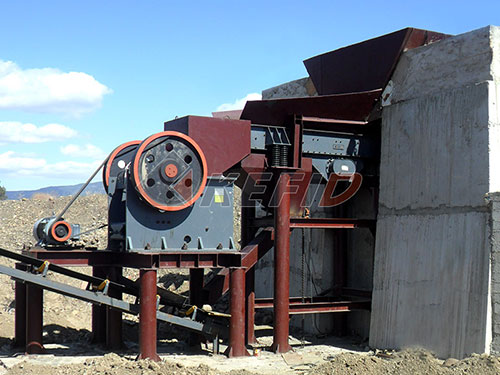
3. CORE FEATURES
Modular Structural Design | Technical Basis: Prefabricated, bolttogether steel modules with precision alignment guides | Operational Benefit: Reduces onsite installation time by up to 40%, ensures structural integrity and simplifies future layout modifications | ROI Impact: Lower installation labor costs and faster commissioning generate revenue sooner.
Intelligent Crushing Chamber Automation | Technical Basis: Hydroset or similar hydraulic adjustment systems on cone crushers with ASRi automation | Operational Benefit: Maintains optimal crusher setting in realtime for consistent product size; allows remote adjustment for wear compensation | ROI Impact: Improves product yield within spec by an estimated 1520%, reducing waste.
Centralized PLC Control & Monitoring | Technical Basis: Programmable Logic Controller with humanmachine interface (HMI) panels | Operational Benefit: Operators can start/stop sequence, monitor motor loads, conveyor statuses, and bin levels from a single station | ROI Impact: Enables operation with fewer personnel and provides data for predictive maintenance scheduling.
HeavyDuty Vibrating Screen with Deck Flexibility | Technical Basis: HighGforce screens with interchangeable screen media decks (wire mesh, polyurethane) | Operational Benefit: High screening efficiency prevents clogging and allows quick changeover for different product grades | ROI Impact: Maximizes throughput capacity of the entire circuit and reduces downtime for screen changes.
Engineered Dust Control System | Technical Basis: Strategically placed nozzles creating a fine mist curtain at dust generation points, paired with dry filter units on conveyors | Operational Benefit: Meets PM10/PM2.5 emission standards without waterintensive flooding | ROI Impact: Avoids regulatory fines and work stoppages; reduces water consumption costs.
AbrasionResistant Material Flow Path | Technical Basis: AR400 steel liners in hoppers, impact beds at conveyor loading zones, and ceramic lagging on pulley shells | Operational Benefit: Dramatically extends service life in highwear areas, protecting core structures | ROI Impact: Lowers longterm replacement part costs and associated downtime.
4. COMPETITIVE ADVANTAGES
| Performance Metric | Industry Standard (250300tph Plant) | Our 250300tph Stone Crushing Plant Solution | Advantage (% Improvement) |
|||||
| Power Consumption per Ton | ~0.8 1.0 kWh/t | ~0.68 0.75 kWh/t | Up to 20% lower energy cost |
| Crusher Liner Life | Varies widely; ~450550 hours for abrasive rock | Consistent performance through ~600700 hours | ~20% longer service life |
| Screening Efficiency | ~8590% | Configurations achieving >93% | ~5% increase in throughput |
| Mean Time Between Failures (Structural) | Requires major inspection at ~5 years | Designed structural review interval of ~7 years | Extended operational lifespan |
| Installation & Commissioning Time | 1216 weeks | 810 weeks | ~30% faster deployment |
5. TECHNICAL SPECIFICATIONS
Designed Throughput Capacity: 250 300 metric tons per hour (varies based on feed material hardness & size distribution).
Primary Crusher Options: Jaw Crusher (900x1200mm) or Gyratory Crusher (4265).
Secondary/Tertiary Crushers: Two units of Cone Crushers (e.g., HP300 or equivalent).
Screening Units: Two sets of TripleDeck Inclined Vibrating Screens (2400x6000mm).
Total Installed Power: Approximately 550 650 kW.
Key Material Specifications: Main frame structure from heavyduty Hbeam steel; Conveyor belts with ST2000 rating; Wear parts from high manganese steel or chromium iron alloys.
Overall Plant Footprint (L x W): Approximately 85m x 45m (subject to layout customization).
Environmental Operating Range: Designed for temperatures from 20°C to +45°C; dust emission control to meet <50 mg/Nm³ standards.
6. APPLICATION SCENARIOS
Highway Construction Project Base Plant
Challenge A contractor needed a guaranteed supply of multiple aggregate sizes (base course, subbase) for a multiyear highway project but faced volatile pricing from local suppliers.
Solution A dedicated stationary crushing plant was installed at the project's central gravel source pit.
Results The contractor achieved direct control over supply costs,
producing over
650,
000 tons meeting strict DOT specifications,
reducing material costs by an estimated
22%
versus external procurement,
and ensuring no project delays due to material shortage.
Commercial Granite Quarry Expansion
Challenge An existing quarry operation sought to increase production from
150tph to
280tph to fulfill new contracts but was constrained by space limitations on the processing pad.
Solution A compact,
verticaldesigned modular crushing plant was implemented,
integrating secondary
and tertiary crushing stages more efficiently than the previous linear layout.
Results Throughput increased to
290tph within the existing footprint;
the improved automation reduced required operating personnel by two per shift;
and product cubicity was enhanced,
commanding a higher market price.
7.COMMERCIAL CONSIDERATIONS
Pricing tiers are typically structured around core equipment configuration:
Tier I Base Configuration Includes primary jaw crusher secondary cone crusher screening units basic conveyors PLC control panel steel structure Pricing reflects this standard scope
Tier II Enhanced Configuration Adds tertiary cone crusher automated setting regulation advanced dust suppression system upgraded screen decks onboard generators
Optional Features Onboard weighing systems remote monitoring telematics packages sound attenuation enclosures wash plants
Service Packages Annual inspection plans wear part kits guaranteed emergency response times training programs
Financing Options Available through partner institutions including equipment leasing longterm loans milestonebased project financing
8.FAQ
What type of electrical power supply is required?
A stable threephase industrial grid connection is mandatory typically in the range of
600 kVA Specific requirements are detailed in preinstallation documentation
Can this plant process river gravel or only hard rock?
While optimized for hard rock it can process river gravel Configuration adjustments particularly at the primary stage may be recommended based on feed analysis
How many operators are needed to run the plant?
Field data indicates efficient operation can be maintained with two operators one at the control panel one performing ground inspections depending on automation level
What is the expected delivery timeline from order placement?
For standard designs delivery of major components occurs within
16 weeks Custom designs require additional engineering time
Are spare parts readily available?
Critical wear parts are standardized globally Major components are supported by regional warehouse stock ensuring availability