
Export Impact Crushers Fabricator

Export Impact Crushers Fabricator: Engineering HighThroughput Reduction for Global Aggregate Operations
1. The Operational Challenge: When Production Targets Meet Hard Rock Realities
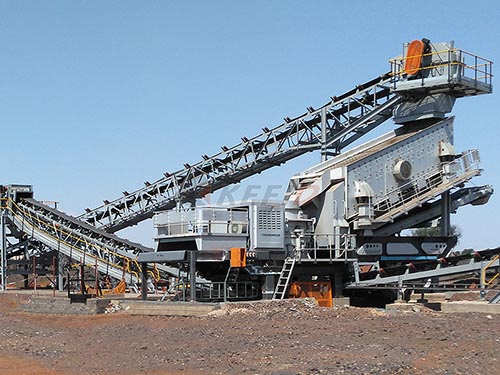
For plant managers and engineering contractors operating in highvolume aggregate and mining environments, the crushing circuit is the critical bottleneck where profitability is either secured or lost. Consider the operational friction points that erode your margins:
- Unplanned downtime from premature wear on impact plates and rotor assemblies can account for 1520% of total operational costs annually, with each hour of stoppage costing between $500 and $2,500 in lost production and labor overhead.
- Inconsistent product gradation forces recrushing cycles, increasing energy consumption per ton by up to 12% and straining downstream screening equipment.
- Feed material variability—from highly abrasive river rock to reinforced concrete demolition debris—demands a crusher that can adapt without sacrificing throughput or requiring frequent manual adjustments.
- Oversized feed material causing rotor stall or excessive vibration leads to mechanical stress fractures, shortening the operational lifespan of the machine's core components by an estimated 30% compared to designed service intervals.
- Logistical complexity in international procurement—long lead times for replacement parts, inconsistent quality control across overseas suppliers, and the hidden costs of freight and customs clearance—adds 812% to the total cost of ownership.
- Hydraulic Apron Relief System: $12,000 $15,000 (recommended for recycling applications)
- Third Apron (Tertiary Grinding Path): $18,000 $22,000 (for finer product specifications)
- Custom Inlet Chute: $5,000 $8,000 (to match existing plant configuration)
- Commissioning Package: Includes a factorytrained technician onsite for 5 days for assembly supervision, startup, and operator training. Priced at $8,500 plus travel expenses.
- Annual Maintenance Contract: Covers two scheduled inspections per year, remote diagnostics support, and priority parts dispatch. Priced at 34% of the equipment value annually.
- Extended Warranty: Standard warranty is 12 months. An extended warranty covering the rotor assembly and mainframe for an additional 24 months is available at a cost of 2.5% of the equipment value.
- Letter of Credit (L/C) at Sight: Standard for international transactions.
- Irrevocable Confirmed L/C: Available for buyers in higherrisk regions.
- Export Credit Agency Financing: We can facilitate documentation for buyers seeking financing through their national exportimport banks.
- Leasing Options: For established operations, a 35 year operating lease can be structured through our partner financial institutions, with a buyout option at the end of the term.
The core question for your operation is not simply "which crusher can process my material?" but rather, "which fabricator delivers a machine engineered for my specific feed conditions, backed by a supply chain that ensures maximum uptime, and constructed with metallurgy that withstands the abrasion index of my aggregate?"
2. Product Overview: The ExportGrade Impact Crusher System
This exportfocused impact crusher is a horizontal shaft impactor (HSI) designed for secondary and tertiary reduction of mediumhard to soft materials, including limestone, dolomite, gravel, and recycled concrete. The machine operates on the principle of highvelocity impact, where feed material is accelerated by rotormounted blow bars and hurled against stationary impact aprons, achieving reduction ratios of up to 15:1.
Operational Workflow:
1. Feed Introduction: Material enters through a largeaperture feed chute, sized to accept a maximum feed edge of 350mm to 600mm depending on the model, with a feed tube designed to direct material centrally onto the rotor for even distribution.
2. Primary Impact Zone: The rotor, spinning at 450750 RPM, propels the material against the primary impact apron. This initial collision achieves approximately 60% of the total reduction.
3. Secondary Reduction: Material ricochets into the secondary apron and the grinding path, where further impact and attrition reduce the particle size to the desired specification.
4. Gradation Control: The gap between the rotor and the aprons is adjustable via hydraulic or mechanical mechanisms, allowing operators to finetune the output size from 20mm to 80mm without halting production.
5. Discharge: Reduced material exits through the bottom opening onto a discharge conveyor. The crusher's housing opens hydraulically for maintenance access to the wear components.
Application Scope: This machine is optimized for stationary and mobile crushing plants producing aggregates for road construction, concrete batching, and asphalt production. It is not designed for primary crushing of hard, abrasive rock (e.g., granite, basalt) with a high silica content, nor for materials with a compressive strength exceeding 200 MPa. For those applications, a jaw or cone crusher remains the appropriate primary investment.
3. Core Features: Engineering Specifications for Sustained Output
HighChrome Blow Bars | Technical Basis: Metallurgical composition of 1822% chromium with controlled molybdenum additions for hardness (6063 HRC) and impact toughness | Operational Benefit: Extended wear life of 1520% over standard manganese steel bars, reducing replacement frequency during peak production seasons | ROI Impact: Lower cost per ton of crushed material, estimated at $0.03$0.05 savings per ton, translating to $15,000$25,000 annually for a 500tonperhour operation
Hydraulic Frame Opening System | Technical Basis: Dual hydraulic cylinders with a manual pump backup, enabling the upper and lower crusher housings to pivot open to a 45degree angle | Operational Benefit: Complete access to the rotor, aprons, and internal wear liners within 15 minutes, versus 46 hours for boltedframe designs | ROI Impact: Reduces maintenance labor costs by 30% and increases machine availability by up to 8% annually
Variable Rotor Speed Control | Technical Basis: VFDcompatible drive system allowing rotor speed adjustment from 60% to 100% of nominal RPM | Operational Benefit: Your operators can match rotor velocity to feed material hardness and moisture content, optimizing product shape and reducing fines generation | ROI Impact: Energy savings of 510% in soft material applications and improved product yield for premiumpriced cubical aggregates
BoltOn Wear Liners | Technical Basis: All internal impact zones are protected by bolton, reversible wear plates made from AR500 abrasionresistant steel | Operational Benefit: Eliminates the need for hardfacing or welding repairs on the mainframe; worn liners are simply unbolted and replaced | ROI Impact: Reduces maintenance downtime by 40% and extends the structural lifespan of the crusher housing by 10+ years
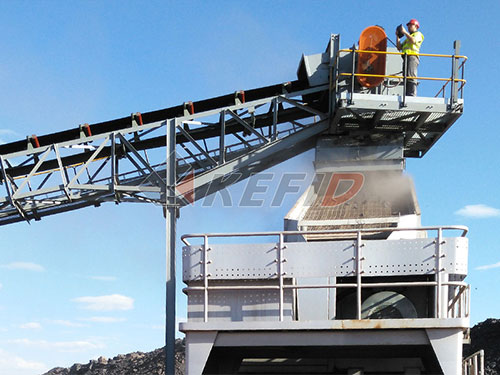
Advanced Bearing Housing Sealing | Technical Basis: Labyrinth seals combined with a positivepressure air purge system to prevent dust ingress into the rotor bearings | Operational Benefit: Protects critical rotating components in highdust environments, extending bearing service life to 30,000+ hours | ROI Impact: Avoids catastrophic bearing failure costs of $8,000$15,000 per incident, including parts and emergency labor
Modular SkidMounted Base | Technical Basis: Fabricated steel skid with integrated vibration isolators and a motor mounting platform | Operational Benefit: Simplifies installation on existing foundations or mobile plants, reducing site preparation time by 50% | ROI Impact: Reduces civil engineering costs for new installations by $5,000$10,000 per site
Remote Monitoring Interface | Technical Basis: Integrated sensors for bearing temperature, vibration, and rotor speed, connected to a PLC with a local HMI and optional remote telemetry | Operational Benefit: Provides realtime operational data to your control room, enabling predictive maintenance scheduling rather than reactive repairs | ROI Impact: Reduces unplanned downtime by 1520% through early fault detection
4. Competitive Advantages: Performance Benchmarking
The following table compares the performance metrics of this export impact crusher against typical industrystandard equipment in the same class.
| Performance Metric | Industry Standard | Export Impact Crusher Solution | Advantage (% Improvement) |
| : | : | : | : |
| Reduction Ratio (Max) | 10:1 | 15:1 | +50% |
| Blow Bar Service Life (Abrasive Limestone) | 150 hours | 190 hours | +27% |
| Maintenance Access Time (Full Internal Inspection) | 4.5 hours | 1.5 hours | +67% faster |
| Product Cubicity (Flakiness Index) | 18% | 12% | +33% improvement |
| Specific Energy Consumption (kWh/ton) | 0.45 kWh/t | 0.38 kWh/t | +16% more efficient |
| Rotor Bearing Service Life | 20,000 hours | 30,000 hours | +50% |
| Feed Size Acceptance (Max Edge) | 400 mm | 600 mm | +50% |
5. Technical Specifications
The following specifications are for the primary export model, the IC1520, which is the most commonly specified unit for mediumtolarge aggregate operations.
| Specification | Detail |
| : | : |
| Rotor Diameter | 1,200 mm |
| Rotor Width | 1,500 mm |
| Max Feed Size | 600 mm (edge length) |
| Capacity Range | 250 400 tons per hour |
| Nominal Rotor Speed | 550 RPM (adjustable via VFD) |
| Required Motor Power | 250 315 kW (400V / 50Hz or 460V / 60Hz) |
| Blow Bar Material | HighChrome (1822% Cr) |
| Apron Lining Material | AR500 Steel (Brinell Hardness 477534) |
| Mainframe Construction | Fabricated from S355JR structural steel, stressrelieved |
| Total Weight (Crusher Only) | 24,500 kg |
| Dimensions (L x W x H) | 4,200 mm x 3,100 mm x 3,500 mm |
| Operating Temperature Range | 20°C to +50°C |
| Vibration Limits | < 3.5 mm/s (on base) |
| Noise Level (at 1m) | < 95 dB(A) |
6. Application Scenarios: FieldProven Performance
Limestone Quarry in the Middle East | Challenge: The operator faced high wear rates on blow bars due to the presence of chert nodules in the limestone, leading to blow bar changes every 120 hours and significant downtime. | Solution: Implementation of the export impact crusher with highchrome blow bars and an adjusted rotor speed of 480 RPM to reduce impact velocity on the harder inclusions. | Results: Blow bar service life increased to 210 hours, a 75% improvement. Annual maintenance costs for wear parts decreased by $48,000, and the plant achieved a 6% increase in overall throughput due to reduced changeout frequency.
Concrete Recycling Facility in Europe | Challenge: The facility processed demolition waste with high rebar content, causing frequent rotor stalls and damage to the aprons from metal contamination. | Solution: The crusher was fitted with a hydraulic apron release system (optional feature) that automatically opens the aprons upon detection of noncrushable objects, allowing them to pass through. | Results: Unplanned downtime due to metal jams was reduced by 90%. The facility increased its input tonnage by 15%, and the output aggregate achieved a flakiness index of 10%, meeting the strict specifications for highvalue road base material.
River Gravel Operation in Southeast Asia | Challenge: The existing secondary crusher produced an excessive amount of flat and elongated particles (25% flakiness index), which reduced the selling price of the final product. | Solution: Installation of the export impact crusher with a higher rotor speed (650 RPM) and a tighter apron gap setting to enhance particle shaping through increased impact energy. | Results: The flakiness index of the final product was reduced to 11%, allowing the operator to sell the aggregate at a premium price of $2.50 per ton more. This price increase generated an additional $1.2 million in annual revenue for the 500,000tonperyear operation.
7. Commercial Considerations for Your Procurement
When budgeting for this capital equipment, consider the following cost structure and options.
Equipment Pricing Tiers:
| Tier | Configuration | Indicative Price Range (FOB) |
| : | : | : |
| Standard | Crusher, motor, Vbelt drive, basic control panel | $180,000 $220,000 |
| Advanced | Standard + hydraulic frame opening, VFD, remote monitoring interface | $230,000 $270,000 |
| Premium | Advanced + full skid mount, integrated lubrication system, spare wear parts kit (1 set of blow bars, 1 set of liners) | $280,000 $330,000 |
Optional Features:
Service Packages:
Financing Options:
8. Frequently Asked Questions
Q1: What is the lead time for this impact crusher, and how does the export logistics process work?
Standard lead time is 1214 weeks from receipt of a confirmed order and down payment. We handle all export documentation, including the commercial invoice, packing list, certificate of origin, and bill of lading. The crusher is shipped in two main containers (or as a flat rack for the mainframe) to minimize freight costs. We can coordinate with your freight forwarder or provide a turnkey logistics solution to your designated port.
Q2: How does this crusher handle feed material with high moisture content, such as wet clay or damp sand?
The crusher is designed with a largerthanstandard rotortoapron clearance in the initial impact zone to reduce the risk of material packing. However, for feed materials with a moisture content exceeding 8%, we recommend a prescreening step to remove fines. The variable rotor speed control is also critical here; reducing RPM can help prevent clogging in sticky applications.
Q3: What is the specific power consumption per ton of material, and how does this compare to a cone crusher for the same application?
Field data from limestone applications shows our impact crusher consumes approximately 0.38 kWh per ton. A cone crusher in a similar secondary role typically consumes 0.450.55 kWh per ton. The impact crusher is more energyefficient for this application, primarily because it achieves a higher reduction ratio in a single pass, eliminating the need for a separate tertiary crushing stage.
Q4: Can the blow bars be reversed to extend their service life, and what is the procedure?
Yes, the blow bars are designed to be reversible. They can be flipped endforend once the leading edge is worn. The procedure requires access to the rotor, which is facilitated by the hydraulic frame opening. A full reversal can be completed by a twoperson maintenance crew in approximately 4 hours. This effectively doubles the wear life of each set of bars.
Q5: What are the specific requirements for the electrical installation and motor starter?
The crusher requires a 3phase power supply. The motor can be specified for 400V/50Hz or 460V/60Hz. We recommend a soft starter or a VFD to reduce inrush current during startup, which is particularly important if the crusher is on a weak power grid. The control panel we supply includes thermal overload protection and phase sequence monitoring.
Q6: How does the crusher perform with recycled asphalt pavement (RAP)?
The impact crusher is wellsuited for RAP processing. The key is to operate at a lower rotor speed (around 400450 RPM) to shear the asphalt binder from the aggregate rather than crushing the aggregate itself. This reduces the generation of fines and preserves the aggregate gradation, which is critical for the value of the RAP. The highchrome blow bars are also resistant to the abrasive nature of the asphalt.
Q7: What is the warranty coverage, and what are the exclusions?
The standard warranty covers the mainframe, rotor shaft, and bearing housings for 12 months from the date of commissioning or 18 months from the date of shipment, whichever occurs first. Wear parts such as blow bars, aprons, and liners are excluded from the warranty as their lifespan is dependent on the specific application. The warranty is void if the crusher is operated outside its specified parameters or if nongenuine replacement parts are used.