
Export Gyratory Crusher Specification
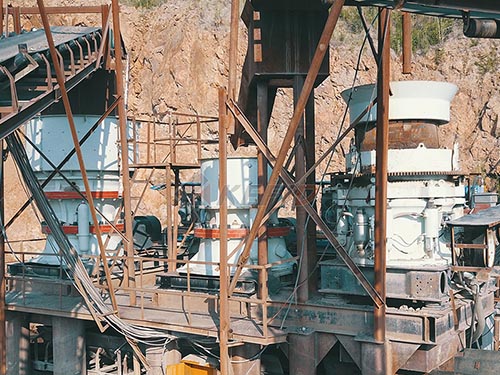

1. PAINPOINT DRIVEN OPENING
Are escalating operational costs and unpredictable availability eroding your primary crushing circuit's profitability? For plant managers and engineering contractors, the primary crushing stage is a critical bottleneck where inefficiencies cascade through the entire processing line. Common challenges include:
Unscheduled Downtime: Premature wear of critical components like mantles and concaves leads to frequent, disruptive stoppages for replacement, costing hundreds of production hours annually.
High PerTon Operating Costs: Excessive energy consumption per crushed tonne and the high cost of consumable parts directly impact your bottomline operating expenditure.
Inconsistent Product Gradation: Fluctuations in feed material can cause significant variation in product size, overloading downstream screens and crushers, reducing overall plant throughput.
LaborIntensive Maintenance: Traditional designs require extensive manual intervention for setting adjustments and wear part inspection, exposing personnel to risk and extending maintenance windows.
Is your operation equipped to handle increasing ore hardness and throughput demands while controlling costs? The specification of your primary gyratory crusher is the foundational decision that determines longterm circuit stability and economic performance.
2. PRODUCT OVERVIEW: GYRATORY CRUSHER
A gyratory crusher is a stationary compressive crushing machine central to hightonnage mining and aggregate operations. It reduces runofmine ore or large quarry rock by compressing it between a fixed concave surface and a gyrating mantle mounted on an oscillating spindle.
Operational Workflow:
1. Feed Intake: Largesized material is directed into the top of the crusher’s crushing chamber via a feed hopper.
2. Compressive Crushing: The central shaft assembly (main shaft, mantle) gyrates within the stationary concave liner. Rock is nipped and crushed as it moves downward through the progressively narrower chamber.
3. Discharge Setting Control: The final product size is determined by the closedside setting (CSS), adjusted by raising or lowering the main shaft assembly hydraulically.
4. Product Discharge: Crushed material exits through the bottom of the crusher (the discharge opening) onto a conveyor for transport to secondary processing.
Application Scope & Limitations:
Scope: Ideal for primary crushing of hard, abrasive ores (iron, copper, gold) and large aggregate feed in highcapacity operations (>1,000 tph). Excels in slabby material handling.
Limitations: Higher capital cost compared to equivalent jaw crushers. Requires a substantial, stable foundation. Not suitable for lowtonnage operations or highly plastic/sticky materials without modification.
3. CORE FEATURES
Patented Concave Design | Technical Basis: Segmented, alloyoptimized liner profiles | Operational Benefit: Extended service life up to 30% longer than conventional designs; more uniform wear distribution | ROI Impact: Reduces liner inventory costs and downtime frequency for changes
Integrated Smart Control System | Technical Basis: Realtime sensors monitoring power draw, pressure, CSS, and wear | Operational Benefit: Provides predictive analytics for maintenance scheduling; prevents overload damage; optimizes throughput automatically | ROI Impact: Minimizes catastrophic failure risk; improves yield consistency; reduces unplanned downtime by up to 25%
HeavyDuty Quill Shaft Drive | Technical Basis: Direct geardriven transmission with hightorque capability | Operational Benefit: Delivers consistent power transfer with higher mechanical efficiency than Vbelt drives; handles tramp metal events with less risk of stall | ROI Impact: Lower energy consumption per tonne; reduced drive system maintenance costs
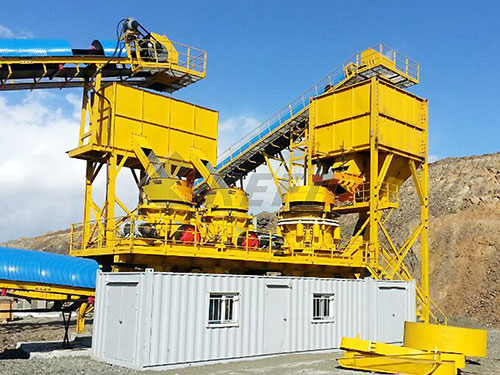
Automated Setting Adjustment System (ASRi) | Technical Basis: Hydraulic ram system controlled via PLC with continuous position feedback | Operational Benefit: Allows operators to adjust CSS remotely under load in minutes for precise product size control | ROI Impact: Maximizes yield of inspec product; eliminates hours of manual adjustment work
Spiderless Design Option | Technical Basis: Eliminates the traditional spider bridge at the top of the crusher | Operational Benefit: Provides safe, unobstructed access to all service points from above; significantly simplifies mantle changeout procedures | ROI Impact: Cuts scheduled maintenance time by up to 50%, directly increasing annual available operating hours
4. COMPETITIVE ADVANTAGES
| Performance Metric | Industry Standard Benchmark | Our Gyratory Crusher Solution | Documented Advantage |
| : | : | : | : |
| Availability (Annual Operating Hours) | ~92% (67% downtime) | >95% (<5% downtime)| +35% Improvement |
| Energy Efficiency (kWh/tonne) Varies by material| Baseline = 100%| Measured at 8590% of baseline| 1015% Reduction |
| Liner ChangeOut Time (Hours)| 24 48 hours| 12 24 hours| Up to 50% Faster |
| Total Cost per Tonne (5year TCO)| Baseline = 100%| Typically achieves 7585% of baseline cost| 1525% Lower TCO |
5. TECHNICAL SPECIFICATIONS
Capacity & Rating: Modeldependent capacities from 2,000 to over 10,000 tonnes per hour (tph). Designed for feed sizes up to 1500mm.
Power Requirements: Main motor ratings from 300 kW up to 800+ kW. Voltage as per client specification (e.g., 6.6 kV). Complete electrical control package included.
Material Specifications: Main frame fabricated from highstrength steel plate. Critical wearing parts (mantles, concaves) available in premium manganese steel alloys or composite metal matrix materials for specific abrasion/impact conditions.
Physical Dimensions & Weight: Significant footprint requiring engineered concrete foundation. Approximate weights range from ~150 tonnes for smaller models to over 500 tonnes for largest units.
Environmental Operating Range: Designed for ambient temperatures from 40°C to +50°C with appropriate lubrication systems. Dust sealing systems standard.
6. APPLICATION SCENARIOS
LargeScale Copper Mine Expansion
Challenge: A tierone copper operation needed to increase primary circuit throughput by 20% without expanding its footprint or overhauling downstream conveyors. Existing equipment was at capacity limits with frequent liner wear issues.
Solution: Implementation of a highcapacity gyratory crusher featuring our advanced concave design and smart control system was specified.
Results: Throughput increased by 22%. Liner life improved by an average of 28%, reducing annual planned stoppages from four to three. The smart system optimized power use during variable ore hardness periods.
HighAbrasion Aggregate Quarry
Challenge: A granite quarry faced unsustainable consumable costs and excessive vibration transmitted to foundations due to highly abrasive feed material causing uneven wear patterns.
Solution: A robustly built gyratory crusher with a specialized metal matrix concave package was installed alongside an enhanced base frame damping system.
Results: Total cost per tonne for consumables decreased by approximately18%. Foundation stress was measurably reduced through improved load distribution.
7. COMMERCIAL CONSIDERATIONS
Our gyratory crushers are offered across several tiers:
Standard Duty Range: For consistent feed materials in large aggregate applications.
Heavy Duty / Mining Range: Engineered for maximum availability in continuous hardrock mining service with premium component specifications.
Optional features include:
Advanced dust suppression systems
Automated lubrication units
Comprehensive condition monitoring packages
Spiderless design configuration
We provide structured service agreements from basic preventive maintenance support upto fullsite performance contracts guaranteeing uptime metrics.
Flexible financing options are available including capital purchase models as well as longterm leasetoown agreements designed around project cash flow requirements.
FAQ
1\. How does this gyratory crusher integrate with our existing secondary crushing circuit?
The unit’s automated setting control system can be networked with your plant SCADA/DCS system allowing realtime adjustment based on downstream feedback ensuring optimal chokefed operation without overloading subsequent stages.
2\. What is required during installation regarding foundation preparation?
Detailed civil engineering drawings specifying reinforced concrete foundation mass dimensions reinforcement requirements anchor bolt placement are provided well aheadof delivery Our field engineers supervise installation ensuring compliance
3\. Can you quantify typical operational training requirements?
Field data shows that comprehensive operator training program covering daily checks basic troubleshooting lasts approximately three days Maintenance team trainingfor major wear part replacement requires fivetoseven days depending on crew experience level
4\. What are standard payment terms lead times?
Standard commercial terms involve progress payments tiedto key manufacturing milestones Lead times varyby model complexity typically rangingfrom eight monthsfor standard configurationsto fourteen monthsfor fully customized units subjectto current foundry capacity
5\. How does warranty coverage work?
We offera standard warranty covering defectsin materials workmanshipfor twelve monthsfrom commissioning Extended warranty coverageis availablefor major structural componentsand canbe bundledwithservice agreements