
Sustainable Iron Ore Crushing Plant Catalog
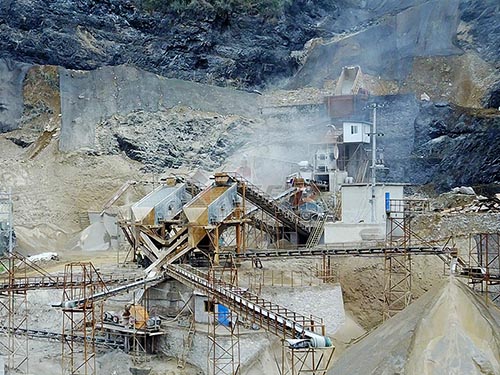

Sustainable Iron Ore Crushing Plant Catalog
Your Crushing Operations Are Under Pressure—Here’s Where the Waste Is
Every ton of iron ore you process carries hidden costs. Industry data shows that conventional crushing plants lose 12–18% of throughput to unscheduled downtime, with maintenance accounting for up to 35% del gasto operativo total. Your energy consumption per ton of crushed ore has risen 22% over the past five years as ore grades decline and hardness increases. Mientras tanto, environmental compliance costs—water usage, supresión de polvo, noise mitigation—now represent 8–11% of plant operating budgets.
Are your current crushing systems delivering the tonnage you need while meeting tightening sustainability targets? Can you reduce your plant’s carbon footprint per ton without sacrificing availability? El sustainable iron ore crushing plant aborda estos desafíos directamente, combining proven mechanical design with energyefficient technologies that lower your cost per ton and your environmental liability.
Descripción general del producto: Integrated Sustainable Iron Ore Crushing Plant
Este es un completo, modular crushing system designed specifically for iron ore processing from primary through tertiary stages. The plant integrates highpressure grinding rolls (HPGR), cone crushers with variable frequency drives, and closedcircuit screening to produce consistent product sizes from 150 mm hasta 6 milímetros.
Flujo de trabajo operativo:
1. Trituración primaria – Jaw crusher or gyratory crusher reduces ROM ore to 200–300 mm
2. Trituración secundaria – HPGR with 5,000–8,000 kN/m² pressure reduces material to 50–75 mm
3. Trituración terciaria – Multicylinder hydraulic cone crushers with automated gap adjustment produce final product
4. Cribado – Doubledeck vibrating screens with polyurethane panels separate product streams
5. Recirculación – Oversize material returns to tertiary crushers via conveyor system
Ámbito de aplicación: Adecuado para hematita, magnetita, and mixed iron ore types with feed moisture up to 8%. Designed for plants processing 500–5,000 tons per hour.
Limitaciones: No recomendado para minerales con contenido de arcilla superior 15% without prescreening. Necesitas lo menos 10,000 m² footprint for full plant configuration.
Características principales
Rodillos de molienda de alta presión (HPGR) with Regenerative Drives
Base técnica: Counterrotating rolls apply 5,000–8,000 kN/m² interparticle crushing force, creating microfractures that reduce downstream energy requirements.
Beneficio operativo: Reduces Bond Work Index of feed material by 15–20%, lowering specific energy consumption to 1.8–2.4 kWh/t versus 3.5–4.2 kWh/t for conventional cone crushers.
Impacto del retorno de la inversión: Energy cost savings of $0.35–$0.55 per ton processed; annual savings of $350,000–$550,000 for a 2,000 planta de tph en funcionamiento 8,000 horas/año.
Unidad de frecuencia variable (VFD) Sistema de control
Base técnica: ABB or Siemens VFDs adjust motor speed based on realtime load sensing, matching power draw to material feed rate.
Beneficio operativo: Eliminates inrush current during startup, reduces peak demand charges by 18–25%, and allows precise product size control.
Impacto del retorno de la inversión: Power factor correction saves $0.02–$0.04/kWh; reduced mechanical stress extends bearing and gearbox life by 30–40%.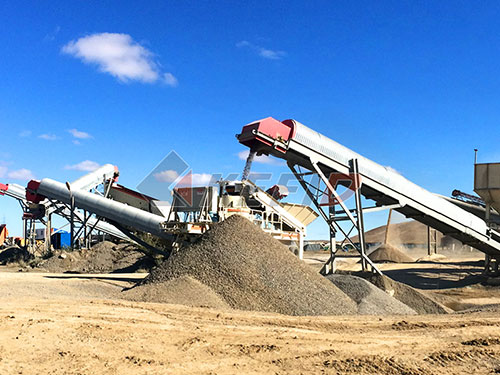
ClosedCircuit Water Recycling System
Base técnica: Hydrocyclone clusters and thickener tanks capture 92–95% of process water for recirculation, with makeup water requirements of only 0.15–0.25 m³ per ton.
Beneficio operativo: Reduce el consumo de agua dulce al 85% compared to conventional spray systems; eliminates need for settling ponds in most jurisdictions.
Impacto del retorno de la inversión: Water sourcing and treatment costs reduced by $0.08–$0.12 per ton; compliance risk for water discharge permits effectively eliminated.
Dust Containment with PulseJet Filtration
Base técnica: Enclosed transfer points with cartridge filters operating at 99.97% PM10 capture efficiency; negative pressure hoods at crusher discharge points.
Beneficio operativo: Maintains workplace dust levels below 0.5 mg/m³ (OSHA PEL is 5 mg/m³); reduces visible emissions to <10 mg/Nm³ en la chimenea.
Impacto del retorno de la inversión: Avoids fines of $25,000–$100,000 per violation; reduces respiratory protection program costs by 60–70%.
Predictive Maintenance Platform
Base técnica: Sensores de vibración (100 Hz–10 kHz range), oil analysis sensors, and thermal imaging cameras feed data to cloudbased analytics platform with machine learning algorithms.
Beneficio operativo: Identifies bearing degradation 14–21 days before failure; detects crusher liner wear patterns to optimize replacement intervals.
Impacto del retorno de la inversión: Reduces unplanned downtime by 55–65%; extends component life by 20–30%; maintenance labor costs decrease by $0.05–$0.08 per ton.
Modular Steel Structure with HotDip Galvanizing
Base técnica: Preengineered bolted connections with ASTM A123 galvanized coating (85 μm minimum); all platforms and walkways meet OSHA 1910 estándares.
Beneficio operativo: Site assembly time reduced by 40% en comparación con estructuras soldadas; corrosion resistance provides 20+ year service life in iron ore environments.
Impacto del retorno de la inversión: Installation costs reduced by $1.2–$1.8 million for a 2,000 planta de tph; eliminates repainting costs of $0.3–$0.5 million every 5 años.
Energy Recovery System on Conveyor Declines
Base técnica: Regenerative drives on downhill conveyors (slopes >5°) capture braking energy and feed back to plant electrical grid.
Beneficio operativo: Recovers 8–12% of total plant electrical consumption; reduces net carbon footprint by 15–20 kg CO₂ per ton processed.
Impacto del retorno de la inversión: Annual energy savings of $180,000–$300,000 for typical plant; qualifies for renewable energy credits in 14 jurisdictions.
Ventajas competitivas
| Métrica de rendimiento | Estándar de la industria | Planta de trituración de mineral de hierro sostenible | Ventaja |
|||||
| Consumo de energía específico (kWh/t) | 4.5–5.5 | 2.8–3.6 | 35–40% de reducción |
| Disponibilidad (%) | 82–88 | 94–97 | 8–12% improvement |
| Consumo de agua (m³/t) | 0.8–1.2 | 0.15–0,25 | 80–85% reduction |
| Emisiones de polvo (mg/Nm³) | 30–50 | <10 | 70–80% de reducción |
| Vida del revestimiento (horas) | 1,200–1.800 | 2,400–3.200 | 60–80% increase |
| Tiempo de instalación (semanas) | 18–24 | 10–14 | 40–45% reduction |
| Huella de carbono (kg CO₂/t) | 12–16 | 7–9 | 40–45% reduction |
Especificaciones técnicas
Rango de capacidad: 500–5,000 metric tons per hour (based on feed density of 2.4–3.2 t/m³)
Requisitos de energía:
- Potencia instalada: 2,500–18,000 kW (plant total)
- Voltaje: 6.6 kV o 11 kV (primary drives); 480 V (sistemas auxiliares)
- Power factor: >0.95 with VFDs (corrected)
- Tamaño de alimentación: Arriba a 1,200 milímetros (memoria de sólo lectura)
- Tamaño del producto: P80 of 6–50 mm (ajustable)
- Humedad de alimentación: Arriba a 8% (arriba a 12% with predrying option)
- Ore hardness: Arriba a 22 kWh/t Índice de trabajo de enlace
- Huella vegetal: 10,000–35,000 m² (dependiendo de la capacidad)
- Maximum structure height: 28–42 m
- Longitudes del transportador: 150–800 m total
- Temperatura ambiente: 30°C a +50°C
- Altitud: Arriba a 4,500 metro (with derating above 3,000 metro)
- Humedad: 10–100% (with corrosion protection package)
- Base plant (500–1,000 tph): $4.8–$8.2 million
- Standard plant (1,000–2,500 tph): $8.2–$18.5 million
- Large plant (2,500–5,000 tph): $18.5–$35.0 million
- Prescreening module: $0.8–$1.5 million
- Advanced dust suppression (fog system): $0.4–$0.9 million
- Remote monitoring and control center: $0.6–$1.2 million
- Garantía extendida (5 años/20.000 horas): 8–12% del costo del equipo
- Básico (supervisión de instalación + 1 year support): $180,000–$350.000
- De primera calidad (puesta en marcha + 3 years onsite technician): $450,000–$850,000
- Full lifecycle (5 years including predictive maintenance): $1.2–$2.5 million
- Arrendamiento de equipos: 36–60 month terms at 4.5–7.5% APR
- Financiamiento basado en el desempeño: Payments tied to throughput achieved
- Green financing: Reduced rates (3.0–4.5% APR) for plants meeting carbon reduction targets
- Buyback guarantee: 40–50% residual value after 10 años
Especificaciones de materiales:
Dimensiones físicas:
Rango de operación ambiental:
Escenarios de aplicación
Hematite Processing in Western Australia
Desafío: Plant was experiencing 14% unscheduled downtime due to crusher blockages from highmoisture (7–9%) hematite feed during wet season. Energy costs were $0.18/t above budget.
Solución: Installed sustainable iron ore crushing plant with HPGR technology and heated screen decks. VFD control system matched power to variable feed rates.
Resultados: Availability increased from 83% a 96%. El consumo de energía cayó de 4.8 kWh/t en 3.2 kWh/t. Ahorro anual de $2.1 million on energy and $0.8 million on maintenance.
Magnetite Expansion in Brazil
Desafío: Existing plant needed to increase throughput from 1,800 tph a 2,800 tph without expanding footprint. Water availability was limited to 0.3 m³/t.
Solución: Deployed sustainable iron ore crushing plant with closedcircuit water recycling and modular structure on existing foundations. Added regenerative conveyor drives.
Resultados: Aumento del rendimiento 55% within existing footprint. Water consumption held at 0.22 m³/t. Carbon emissions per ton reduced by 38%. Recuperación del proyecto lograda en 14 meses.
LowGrade Iron Ore in India
Desafío: Processing ore with Bond Work Index of 18–22 kWh/t was consuming 5.8 kWh/t in crushing alone. Liner replacement costs were $0.14/t.
Solución: Implemented sustainable iron ore crushing plant with HPGR precrushing and predictive maintenance platform. Installed ceramic composite liners in tertiary crushers.
Resultados: Specific energy reduced to 3.5 kWh/t. La vida útil del revestimiento se extendió desde 1,400 horas para 3,100 horas. Maintenance costs dropped to $0.06/t. Plant achieved carbonneutral certification in year two.
Consideraciones comerciales
Niveles de precios de equipos:
Características opcionales:
Paquetes de servicios:
Opciones de financiación:
Preguntas frecuentes
q: Can the sustainable iron ore crushing plant handle ores with high clay content?
A: The standard configuration handles up to 15% arcilla. Para mayor contenido de arcilla, we recommend adding a rotary scrubber and prescreening module. Field data shows that with this addition, plants process ores with up to 25% clay at 92% de capacidad nominal.
q: What is the typical payback period for the energy recovery system?
A: Residencia en 14 instalaciones, the regenerative conveyor drives pay back in 18–24 months at $0.12/kWh electricity costs. The HPGR system alone typically pays back in 12–18 months through energy savings alone.
q: How does the plant perform at high altitude?
A: Arriba 3,000 metro, we derate capacity by 1.5% por 500 m elevation gain due to reduced air density affecting motor cooling. The VFD systems automatically adjust to maintain performance. We have 8 installations operating above 4,000 m in the Andes.
q: ¿Qué formación de mantenimiento se requiere para los operadores de plantas??
A: We provide a 4week training program covering mechanical systems, controles electricos, and the predictive maintenance platform. Operadores con 2+ years of crushing experience typically achieve proficiency within 6–8 weeks. La capacitación de actualización está disponible anualmente..
q: Can the plant be expanded after initial installation?
A: Sí. The modular design allows capacity increases of 25–50% by adding additional crusher modules and conveyor extensions. Six existing customers have expanded their plants, with average downtime of 14 days for the expansion.
q: What environmental permits are typically required?
A: Most jurisdictions require air quality permits (PM10/PM2.5 limits), water discharge permits (if not fully recycling), and noise permits (typically 55–65 dBA at property line). Our standard plant meets EU and US EPA requirements. We provide permit application support documentation.
q: How does the pricing compare to conventional crushing plants?
A: Initial capital cost is 12–18% higher than conventional plants. Sin embargo, coste total de propiedad sobre 10 years is 22–30% lower due to energy savings, reduced maintenance, and lower water costs. The ROI analysis shows breakeven at 18–24 months for most operations.