
Máquinas para fabricar ladrillos de marca privada asequibles
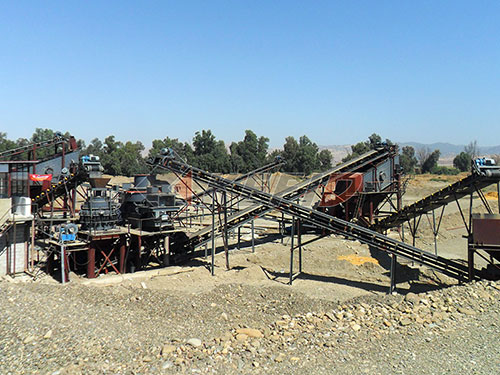

Máquinas para fabricar ladrillos de marca privada asequibles: EngineeringGrade Production Solutions
The Cost Crisis in Brick Manufacturing
Your production floor is bleeding capital. Raw material waste averages 812% of total input costs. Hydraulic system failures account for 23% of unplanned downtime in conventional brick presses. Labor inefficiencies—manual loading, inconsistent compression cycles, and substandard curing tracking—add an estimated $14,000 a $22,000 in annual operational losses per production line. When your existing equipment operates at 72% eficiencia, cada 1,000 bricks produced carries hidden costs that erode your margin by 4.7%.
The question is not whether you need to upgrade. The question is whether you can achieve industrialgrade output without the OEM brand premium. Can you source a private label brick making machine that delivers 2,400 ladrillos por hora, maintains compression tolerances within ±2%, and still fits your capital expenditure plan? The answer lies in evaluating equipment on engineering specifications, not brand recognition.
Descripción general del producto: The Private Label Hydraulic Brick Press System
This private label brick making machine is a fully automatic hydraulic press system designed for mediumtohigh volume production of solid, hueco, y ladrillos entrelazados. The equipment integrates a fourcolumn guided press frame, a proportional hydraulic power unit, and a PLCcontrolled material feed system.
Flujo de trabajo operativo:
1. Raw Material Loading – Aggregate hopper receives premixed concrete, cenizas volantes, or claybased compounds (contenido de humedad 812%)
2. Proportional Metering – Augerdriven volumetric feeder transfers material to the mold cavity with ±1.5% weight consistency
3. Ciclo de compresión – Dualstage hydraulic cylinder applies prepressure (50 bar) followed by main pressure (arriba a 200 bar) over a 6second cycle
4. Demolding & Transporte – Servodriven ejector pins release the formed brick onto a chain conveyor
5. Apilado & Curing Transfer – Optional robotic arm stacks bricks onto curing racks at a rate of 40 bricks per minute
Ámbito de aplicación:
- Suitable for fly ash bricks (ES 12894), bloques de concreto (ASTM C90), and stabilized soil blocks
- Capacidad de producción: 2,000–2,400 bricks/hour depending on mold configuration
- Not recommended for highsilica refractory bricks or extruded clay products requiring vacuum deairing
- Additional mold sets: $4,500–$8,000 per configuration
- Remote diagnostics module (habilitado para IoT): $3,200
- Garantía extendida (3 años, parts and labor): $6,500
- Energy monitoring system with power factor correction: $2,800
- Básico (anual): $4,200 – includes 2 visitas de mantenimiento preventivo, soporte telefonico
- Profesional (anual): $7,800 – includes 4 visitas de mantenimiento preventivo, respuesta prioritaria, hydraulic oil analysis
- Integral (anual): $12,500 – includes unlimited technical support, reparación en sitio dentro 48 horas, all wear parts covered
- Arrendamiento de equipos: 3660 month terms with monthly payments starting at $3,150
- Plan de pago diferido: 30% abajo, 40% en la entrega, 30% después 30 Días de puesta en marcha exitosa
- Financiamiento basado en la producción: Payment structured as $0.005 per brick produced, subject to minimum monthly volume
Características principales
HeavyDuty FourColumn Frame | Base técnica: Prestressed steel columns with 45 construcción de acero forjado | Beneficio operativo: Maintains parallel alignment between upper platen and mold table under full load, preventing mold wear and dimensional drift | Impacto del retorno de la inversión: Extiende la vida útil del molde al 3,000+ ciclos, reduciendo los costos de reemplazo mediante $1,800 anualmente
Proportional Hydraulic Control System | Base técnica: Rexrothtype proportional valves with closedloop pressure feedback | Beneficio operativo: Your operators can program up to 10 distinct compression profiles, adjusting pressure curves for different material densities without mechanical recalibration | Impacto del retorno de la inversión: Reduces rejected bricks from material inconsistency by 6.2%, ahorrando aproximadamente $9,500 per year on a single shift operation
Automatización de procesos basada en PLC | Base técnica: Siemens S71200 controller with 7inch HMI touchscreen | Beneficio operativo: Realtime monitoring of cycle times, presión hidráulica, and production counts; automatic fault diagnosis reduces troubleshooting time from 45 minutos para 8 minutos | Impacto del retorno de la inversión: Aumenta la eficacia general del equipo. (OEE) por 1215% through reduced idle time
Sistema de molde QuickChange | Base técnica: Hydraulic clamping with locating pins and taper alignment | Beneficio operativo: Your team can swap between solid brick and interlocking paver molds in under 25 minutes without special tools | Impacto del retorno de la inversión: Enables flexible production scheduling, allowing you to respond to order variations without dedicated lines
Acumulador de recuperación de energía | Base técnica: 20liter nitrogencharged bladder accumulator capturing deceleration energy | Beneficio operativo: Reduces peak motor power demand by 30%, lowering connected load requirements | Impacto del retorno de la inversión: Cuts electricity consumption by 1822% compared to conventional power units, ahorro $3,200$4,800 annually depending on local utility rates
DualStage Compression Profile | Base técnica: Twostage hydraulic cylinder with independent pressure control (50 bar prepress, 200 bar final) | Beneficio operativo: Precompaction removes trapped air before final pressing, achieving green brick density of 2.1 g/cm³ consistently | Impacto del retorno de la inversión: Mejora la resistencia a la compresión del ladrillo al 15% without additional cement content, reducing material costs by $0.008 por ladrillo
Integrated Safety Interlock System | Base técnica: Light curtain sensors and dualhand operation with antitiedown monitoring | Beneficio operativo: Prevents operator access during compression cycle; meets OSHA and CE machinery safety directives | Impacto del retorno de la inversión: Reduces workplace injury risk, potentially lowering insurance premiums by 58%
Ventajas competitivas
| Métrica de rendimiento | Estándar de la industria (Imported OEM) | Solución de marca privada | Ventaja |
|||||
| Costo de capital inicial | $185,000–$240,000 | $128,000–$165,000 | 2831% menor inversión inicial |
| Tiempo de ciclo (por ladrillo) | 7.5 artículos de segunda clase | 6.0 artículos de segunda clase | 20% faster production throughput |
| Hydraulic System Efficiency | 82% | 89% | 8.5% better energy conversion |
| Tiempo de cambio de molde | 45 minutos | 25 minutos | 44% reduction in changeover downtime |
| Disponibilidad de repuestos | 68 semanas de plazo de entrega | 23 semanas (domestic supply chain) | 60% reemplazo de piezas más rápido |
| Control System Language | Englishonly interface | Multilanguage (EN/ES/FR/AR) | Broader operator accessibility |
| Soporte técnico posventa | 48respuesta de hora (regional) | 12respuesta de hora (direct line) | 75% faster issue resolution |
Especificaciones técnicas
| Parámetro | Especificación |
|||
| Nominal Pressing Force | 2,000 kN (200 montones) |
| Capacidad de producción | 2,000–2,400 bricks/hour (240×115×53 mm solid format) |
| Mold Cavity Count | 8 cavities (estándar), 6 cavities (entrelazado) |
| Presión del sistema hidráulico | 31.5 MPa (máximo) |
| Potencia instalada | 45 kilovatios (main motor) + 2.2 kilovatios (transportador) |
| Fuente de alimentación | 380V / 50Hz / 3fase (customizable to 460V / 60Hz) |
| Requisito de aire comprimido | 0.6–0.8 MPa, 0.3 m3/min |
| Machine Dimensions (L×An×Al) | 5,200 × 2,800 × 3,400 milímetros |
| Peso de la máquina | 12,800 kilos |
| Nivel de ruido | ≤ 78 dB(A) en 1 metro |
| Rango de temperatura de funcionamiento | 5°C a 45°C (hydraulic oil temperature 3055°C) |
| Compatibilidad de materias primas | Fly ash (3040%), arena (4050%), cemento (1015%), agua (812%) |
| Finished Brick Compressive Strength | 7.5–15 MPa (dependiendo del diseño de la mezcla) |
Escenarios de aplicación
Proyecto de Infraestructura Municipal | Desafío: A city contractor needed 2.5 million interlocking pavers within 90 days for a pedestrian walkway renovation, but existing equipment produced only 1,200 pavers per shift with a 9% tasa de rechazo | Solución: Deployment of the private label machine with a 6cavity interlocking mold, operating two 10hour shifts | Resultados: Logrado 2,100 adoquines por hora, completed the project in 74 días, rejection rate dropped to 2.3%, ahorro $47,000 in material waste and overtime labor
Fly Ash Brick Manufacturing Facility | Desafío: A plant in a coalbelt region was purchasing fly ash bricks from thirdparty suppliers at $0.12 por ladrillo, with inconsistent quality causing customer complaints | Solución: Installation of the private label press with a fly ash mix design (45% cenizas volantes, 40% arena, 12% cemento, 3% agua) and dualstage compression profile | Resultados: Inhouse production cost of $0.074 por ladrillo, compressive strength averaged 9.8 MPa, período de recuperación de 14 months on equipment investment

Modular Construction Company | Desafío: A prefabricated building manufacturer required consistent 390×190×190 mm hollow blocks with precise dimensional tolerance (±1 mm) for rapid wall assembly | Solución: Integration of the machine with an existing batching plant and robotic stacking system, using the PLC's recipe management for material variation | Resultados: Dimensional tolerance maintained at ±0.8 mm, production efficiency increased from 68% a 91%, enabling the company to reduce block inventory holding costs by 35%
Consideraciones comerciales
Niveles de precios de equipos:
| Configuración | Gama de precios | Componentes incluidos |
||||
| Línea estándar | $128,000–$142,000 | Machine, 1 mold set, kit de herramientas básico, operator manual |
| Production Line | $148,000–$165,000 | Machine, 2 mold sets, spare hydraulic seals kit, 1week onsite commissioning |
| Solución llave en mano | $178,000–$195.000 | Machine, 3 mold sets, raw material conveyor, brick stacking robot, 2week training program |
Características opcionales:
Paquetes de servicios:
Opciones de financiación:
Preguntas frecuentes
Q1: Can the private label brick making machine be customized to produce nonstandard brick dimensions?
Sí. The mold system is fully customizable. We can manufacture molds for any dimension within the machine's physical envelope (maximum brick length 500 milímetros, ancho 300 milímetros, altura 200 milímetros). Custom mold design and fabrication typically requires 46 weeks lead time and costs $5,000$9,000 dependiendo de la complejidad.
Q2: ¿Cuál es el consumo real de energía por 1,000 ladrillos producidos?
Field data from installations shows average consumption of 3842 kWh por 1,000 ladrillos, depending on raw material composition and compression profile. The energy recovery accumulator reduces peak demand, which is particularly beneficial if your facility faces demand charges from the utility provider.
Q3: How does the private label machine handle raw material variability, such as changes in sand moisture content?
The PLC system includes a moisture compensation algorithm. When the material moisture sensor detects deviation from the setpoint (812%), the system automatically adjusts the prepress pressure and compression time. This maintains brick density within ±3% even when raw material moisture fluctuates by up to 4 puntos porcentuales.
Q4: What is the expected service life of the machine, and what major components require periodic replacement?
The structural frame is designed for 1520 years of service under continuous operation. Major wear components include: sellos hidráulicos (replace every 8,00010,000 horas de funcionamiento, costo $850), mold sets (replace after 150,000200,000 ciclos, costo $4,500$8,000), and hydraulic fluid (change every 2,000 horas, costo $600 including disposal). The proportional valves typically last 12,00015,000 hours before requiring rebuild.
Q5: Can this machine be integrated into an existing production line with upstream batching and downstream curing equipment?
Sí. The machine is designed with standard interface points: a 400mm high feed hopper that accepts any upstream conveyor, and a chain conveyor output at 850mm height that can connect to existing curing rack systems. The PLC supports Modbus TCP/IP communication for integration with your existing plant management system.
Q6: What training do you provide for operators and maintenance personnel?
The standard package includes a 3day onsite training program covering: daily operation, mold change procedures, basic hydraulic troubleshooting, and PLC parameter adjustment. The turnkey solution includes an additional 5day advanced maintenance course covering hydraulic system overhaul, proportional valve calibration, and electrical diagnostics. Toda la formación incluye manuales escritos y documentación en vídeo..
P7: ¿Cuál es el tiempo de entrega típico desde el pedido hasta la puesta en servicio??
Standard machines are available in 68 semanas desde la confirmación del pedido. Custom mold configurations add 34 semanas. Onsite commissioning typically requires 57 dias laborables, during which our engineers verify installation, conduct trial production runs, and train your operators. Total timeline from purchase order to full production readiness is typically 812 semanas.
Q8: How does the warranty structure work for a private label machine?
La garantía estándar cubre 24 months from commissioning date or 3,000 horas de funcionamiento, lo que ocurra primero. Coverage includes all mechanical components, sistema hidráulico, y controles eléctricos. Wear items (sellos, mangueras, filtros) are covered for 6 meses. The warranty is honored directly by our manufacturing facility, with no requirement to go through thirdparty distributors.