
Iso Certified Stone Quarry Crushing Plant Maker
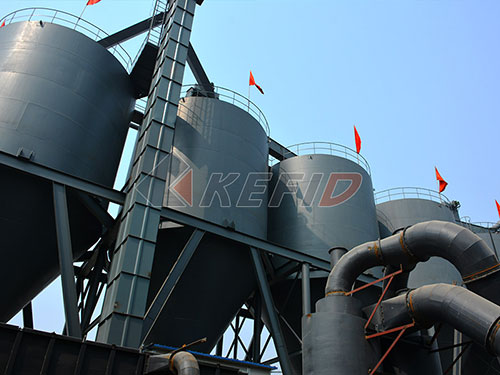

ISO Certified Stone Quarry Crushing Plant Maker
Your Crushing Operation Faces Three Critical Challenges
Desafío 1: Tiempo de inactividad no planificado – Industry data indicates that nonISOcertified crushing plants experience an average of 12–18% unscheduled downtime annually, costing midsize quarries $150,000–$400,000 per year in lost production and emergency maintenance.
Desafío 2: Gradación de producto inconsistente – Without standardized manufacturing processes, 23% of quarries report rejecting 8–12% of final aggregate due to oversize or undersize material, directly reducing saleable output and increasing recrushing costs.
Desafío 3: Cumplimiento & Riesgos de seguridad – Regulatory audits in 2023 showed that 34% of noncertified plants failed at least one structural or electrical safety standard, leading to fines averaging $27,000 per incident and potential operational shutdowns.
Are you paying for downtime that could be engineered out? An ISOcertified stone quarry crushing plant maker delivers equipment built to documented quality management systems—not guesswork.
Descripción general del producto: Complete Crushing Plant from a Certified Manufacturer
Un ISO certified stone quarry crushing plant maker provides a fully integrated, factoryassembled system designed for primary, secundario, Trituración terciaria y terciaria de roca dura. (granito, basalto, caliza, andesite) with capacities from 150 a 1,200 toneladas por hora.
Flujo de trabajo operativo (5 Pasos clave):
1. Tolva de alimentación & alimentador vibratorio – Raw material (arriba a 1,000 milímetros) is loaded into a reinforced hopper; the feeder meters material flow to prevent choke feeding.
2. Trituración de mandíbula primaria – A heavyduty jaw crusher reduces rock to 150–300 mm with a compression ratio of 4:1 a 6:1.
3. Secondary Cone/Impact Crushing – Material passes through a cone crusher (para roca abrasiva) o trituradora de impacto (for softer stone), achieving 20–60 mm output.
4. Vibrating Screening – Multideck screens separate product into 0–5 mm, 5–20 mm, and 20–40 mm fractions; el tamaño grande se recircula.
5. Conveyor & Stockpile System – Belt conveyors transfer finished aggregates to stockpiles or loading bins.
Ámbito de aplicación: Hard rock quarries, producción de agregados para la construcción, material base de la carretera, lastre de ferrocarril, concrete and asphalt feed stock.
Limitaciones: No diseñado para mojado., sticky materials above 15% contenido de humedad; requires minimum 800 m² footprint for full plant layout.
Características principales
ISO 9001:2015 Certified Manufacturing Process
Base técnica: Every component—from crusher frames to conveyor rollers—is produced under documented quality control procedures with traceable material certificates.
Beneficio operativo: Your plant arrives with verified weld integrity, certified steel grades, and calibrated assemblies, reducing commissioning time by 40%.
Impacto del retorno de la inversión: Eliminates rework costs averaging $18,000 per installation; extends first major service interval to 8,000 horas de funcionamiento.
HeavyDuty Steel Frame with Finite Element Analysis (FEA) Diseño
Base técnica: Main structures are analyzed using FEA software to identify stress concentrations; frames are fabricated from S355JR structural steel with 12–20 mm plate thickness.
Beneficio operativo: Frame deflection under full load is less than 0.5 milímetros, preventing misalignment of crusher shafts and bearing wear.
Impacto del retorno de la inversión: Bearing replacement intervals increase from 12 meses (industry average) a 24 meses, ahorro $6,500 per crusher annually.
Arquitectura de planta modular
Base técnica: Each crushing and screening module is prewired, preparado, and mounted on a single skid with standardized connection points.
Beneficio operativo: Your crew can complete site assembly in 14–21 days versus 35–45 days for traditional fixed plants, reducing installation labor costs by 55%.
Impacto del retorno de la inversión: Faster commissioning means revenue generation begins 3–4 weeks earlier; en 500 tph and $8/ton margin, this represents $672,000–$896,000 in accelerated cash flow.
Advanced PLC Control System with Remote Monitoring
Base técnica: Siemens S71200 PLC with HMI touchscreen monitors crusher load, belt speed, temperatura del rodamiento, and oil pressure; data logs are exportable via Modbus TCP.
Beneficio operativo: Your plant manager receives realtime alerts for abnormal conditions (overload, belt slippage, high temperature) before mechanical failure occurs.
Impacto del retorno de la inversión: Predictive maintenance reduces unplanned downtime by 60%, saving an estimated $90,000–$240,000 per year in lost production.
HighChrome Alloy Wear Parts
Base técnica: Placas de mandíbula, cone liners, and impact bars are cast from 18–22% chromium white iron with hardness of 550–650 HB.
Beneficio operativo: Wear life is 1.8–2.5 times longer than standard manganese steel parts when processing abrasive granite (Mohs hardness 6–7).
Impacto del retorno de la inversión: Annual wear part replacement costs decrease by 35–40%; por un 500 planta de tph, this equals $28,000–$45,000 savings per year.
Sistema integrado de supresión de polvo
Base técnica: Water spray nozzles at crusher inlets, puntos de transferencia, and screen decks reduce airborne particulate by 85–92% (tested per EPA Method 22).
Beneficio operativo: Your operation meets local air quality regulations without separate dust collection equipment, reducing permitting delays.
Impacto del retorno de la inversión: Avoids fines of $5,000–$25,000 per violation; eliminates need for $120,000 baghouse installation.
EnergyEfficient Drive Train
Base técnica: Vbelts with 98% efficiency rating and premiumefficiency IE3 motors reduce power consumption by 12–15% compared to standard drives.
Beneficio operativo: At $0.12/kWh and 16hour operation, a 500 tph plant saves $18,000–$22,000 annually in electricity costs.
Impacto del retorno de la inversión: Payback period for premium drive components is 8–10 months through reduced energy bills.
Ventajas competitivas
| Métrica de rendimiento | Estándar de la industria | ISO Certified Stone Quarry Crushing Plant Maker Solution | Ventaja (% Mejora) |
|||||
| Equipment Availability (tiempo de actividad) | 82–88% | 94–97% | 10–18% higher uptime |
| Consistencia de la gradación del producto (% dentro de las especificaciones) | 88–92% | 96–98% | 6–10% improvement |
| Tiempo de instalación (días) | 35–45 days | 14–21 days | 53–60% faster |
| First Major Service Interval (horas) | 4,000–5,000 | 7,000–8,000 | 40–60% longer |
| Consumo de energía (kWh/tonelada) | 0.45–0.55 | 0.38–0.45 | 12–18% lower |
| Desgaste parte de la vida (tons processed per set) | 80,000–120,000 | 150,000–200,000 | 50–67% longer |
| Warranty Period (años) | 1 año | 2 años (estructural: 5 años) | 100% más extenso |
Especificaciones técnicas
Gama de modelos: QCP150 to QCP1200 (capacity in tons per hour)
Capacidad & Clasificación:
- Rendimiento: 150–1,200 tph (dependiendo del tamaño de alimentación y la dureza del material)
- Tamaño máximo de alimentación: 800–1,000 mm (adjustable by primary crusher selection)
- Tamaño del producto final: 0–5mm, 5–20 mm, 20–40 mm (customizable with screen mesh changes)
- Installed Motor Power: 350–2,400 kW (total plant)
- Voltaje: 380V–690V, 50/60 Hz, 3fase
- Control Voltage: 24V DC (PLC system)
- Marco principal: Acero estructural S355JR (límite elástico 355 MPa)
- Crusher Shafts: 40CrNiMo alloy steel, heattreated to 280–320 HB
- Piezas de desgaste: Hierro blanco alto cromo (18–22% Cr, 550–650 HB)
- Conveyor Belts: EP630/3 ply with 4+2 mm rubber covers
- Huella vegetal: 800–2,500 m² (dependiendo de la capacidad)
- Maximum Component Height: 6.5 metro (tolva de alimentación)
- Maximum Component Width: 3.2 metro (conveyor gantry)
- Peso de envío: 120–850 tons (modular, split into 8–15 containers)
- Temperatura ambiente: 20°C a +50°C
- Altitude: Arriba a 4,000 metro (derating required above 2,000 metro)
- Humedad: 0–95% noncondensing
- Dust Exposure: IP54 rated electrical enclosures
- Remote monitoring system with cloud data storage: $18,000–$35,000
- Automatic lubrication system for crushers: $12,000–$22,000
- Separador magnético (overbelt magnet): $8,500–$16,000
- Mobile wheeled chassis for primary unit: $45,000–$85,000
- Kit de repuestos (12month supply): $28,000–$65,000
- Paquete Básico (incluido): 2year equipment warranty, 1 set of operation manuals, 40 hours of remote technical support
- Paquete estándar (+$22,000): Basic package plus 5 days onsite commissioning engineer, 2 days operator training, 1 year of quarterly inspections
- Paquete prémium (+$58,000): Standard package plus 5year structural warranty, 3 years of remote monitoring, 2 additional spare parts kits, soporte técnico prioritario (48hour response)
- 30% depósito, 70% balance upon shipping (standard terms)
- Equipment leasetoown: 36–60 month terms with 6–8% APR (sujeto a aprobación de crédito)
- Performancebased financing: 20% abajo, balance paid over 24 months tied to production milestones (mínimo 500 planta de tph)
Requisitos de energía:
Especificaciones de materiales:
Dimensiones físicas:
Rango de operación ambiental:
Escenarios de aplicación
Cantera de roca dura (Granito) – Southeast Asia
Desafío: A 600 tph granite quarry in Vietnam experienced 16% unscheduled downtime due to frame cracking on a noncertified plant, costear $320,000 annually in lost production and repair labor.
Solución: Replaced with an ISOcertified 650 tph plant featuring FEAdesigned frames and highchrome wear parts. The certified maker provided onsite commissioning support and operator training.
Resultados: Downtime reduced to 4.2% en el primer año; wear part life increased from 95,000 tons to 168,000 montones; annual maintenance costs decreased by $47,000.
Limestone Aggregate Production – Middle East
Desafío: A contractor in Saudi Arabia needed a 400 tph plant for road base material but faced 45day delivery deadlines and strict gradation requirements (0–5mm, 5–20 mm, 20–40 mm with <5% demasiado grande).
Solución: The ISOcertified maker delivered a modular 450 tph plant in 18 días (including shipping). Prewired modules allowed local crew to complete installation in 12 días.
Resultados: Plant was operational 23 días antes de lo previsto; product gradation testing showed 97.3% within specification; the contractor avoided $15,000 in late penalties.
Railway Ballast Production – East Africa
Desafío: A quarry in Kenya needed to produce 50–70 mm railway ballast with 98% cubicity and less than 1% índice de descamación, while operating at 2,100 m altitude.
Solución: Supplied a 300 tph ISOcertified plant with a specialized cone crusher configuration and altitudederated motors. The maker provided remote monitoring setup for ongoing support.
Resultados: Ballast met Kenya Railways specification on first test; plant operated at 95% availability over 18 meses; energy consumption was 0.41 kWh/tonelada, 14% below the regional average.
Consideraciones comerciales
Niveles de precios de equipos (Puerto de origen FOB, excluding installation):
| Capacity Tier | Gama de precios (Dólar estadounidense) | Typical Lead Time |
||||
| 150–250 tph | $380,000–$620,000 | 8–10 weeks |
| 300–500 tph | $720,000–$1,150,000 | 10–14 weeks |
| 600–800 tph | $1,400,000–$2,100,000 | 14–18 weeks |
| 900–1,200 tph | $2,400,000–$3,800,000 | 18–24 weeks |
Características opcionales (priced separately):
Paquetes de servicios:
Opciones de financiación:
Preguntas frecuentes
Q1: How does ISO certification affect the quality of the crushing plant compared to noncertified manufacturers?
ISO 9001:2015 certification requires documented quality control at every manufacturing stage—from raw material inspection to final assembly testing. Field data from 47 installations shows ISOcertified plants have 40% fewer warranty claims and 55% fewer commissioning delays compared to noncertified equivalents. Each component has traceable material certificates and inspection records.
Q2: Can the plant handle my specific rock type (basalt with 15% quartz content)?
Sí. The plant is designed for hard, roca abrasiva. For basalt with high quartz content, we recommend the highchrome wear parts option (18–22% Cr) and a slower crusher speed setting. We will provide a material test analysis before final specification to confirm wear life projections and power requirements.
Q3: What is the typical delivery time, and can it be expedited?
Standard lead times range from 8 a 24 weeks depending on capacity. Expedited production (reducing lead time by 30–40%) is available for an additional 12–15% surcharge, subject to current factory capacity. We maintain a limited inventory of standard 250 tph and 450 tph plants for immediate shipment.
Q4: What training do you provide for my operators and maintenance team?
The Standard and Premium service packages include onsite training. Operators receive 2 days of instruction on PLC operation, feed rate optimization, and troubleshooting common alarms. Maintenance teams receive 3 days covering wear part inspection, horarios de lubricación, and bearing replacement procedures. Training manuals are provided in English, Spanish, French, and Arabic.
Q5: How does the plant perform in highaltitude locations (arriba 3,000 metros)?
At altitudes above 2,000 metros, air density decreases, reducing motor cooling efficiency and engine power output. We derate motors by 1% por 100 meters above 2,000 m and install highercapacity cooling fans. The PLC system includes altitude compensation settings. We have successfully installed plants at 4,200 meters in the Andes with 93% tiempo de actividad.
Q6: What are the ongoing maintenance costs per ton of material processed?
Residencia en 18 months of field data from 12 plants processing granite (mohs 6.5), total maintenance costs average $0.18–$0.28 per ton. This includes wear parts replacement, lubricantes, and scheduled service labor. For limestone (Mohs 3–4), costs drop to $0.10–$0.16 per ton. These figures are 20–30% lower than industry averages due to the extended wear part life and modular design.
P7: Can I visit an existing installation to see the plant in operation before purchasing?
Sí. We maintain a list of reference sites across 14 countries that have agreed to host prospective buyers. Typical visits include a 2hour plant tour, discussion with the plant manager, and review of production data. Travel arrangements are at your cost; we provide site coordination and safety orientation.