
Ficha técnica de criba vibratoria de coque de alta calidad
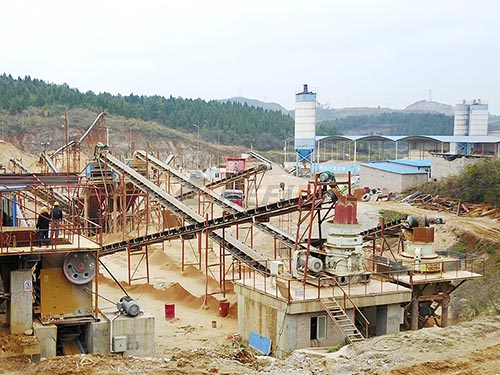

HighQuality Coke Vibration Screen: Reduce Downtime, Cut Screening Costs, and Protect Your Downstream Equipment
Operational Challenges This Equipment Solves
Coke screening operations face persistent bottlenecks that directly impact your bottom line. If your plant handles metallurgical coke, coque de petróleo, or coke breeze, you're likely dealing with:
- Excessive screen media wear — Inferior vibration screens force replacement of woven wire or polyurethane panels every 4–8 weeks, costing $12,000–$28,000 annually per unit in parts and labor alone.
- Cegamiento y vinculación — Moistureladen coke particles wedge into screen apertures, reducing open area by 30–50% within a single shift and forcing manual cleaning that exposes operators to safety risks.
- High downtime from structural fatigue — Side plates crack, cross members fracture, and bearing housings fail under continuous highamplitude vibration, translating to 40–120 hours of unplanned downtime per year.
- Inconsistent cut points — Fluctuating feed rates and improper stroke control cause oversize carryover into product or excessive fines in the oversize stream, triggering customer rejections and reprocessing costs.
- Consumo excesivo de energía — Older linearmotion screens consume 15–25% more kW per ton of material processed compared to modern highefficiency designs.
- Metallurgical coke screening (coque de alto horno, coque de fundición)
- Petroleum coke (coque de petróleo) sizing and dedusting
- Coke breeze recovery and briquetting feed preparation
- Coke handling in steel mills, hornos de coque, and port terminals
- Not suitable for feeds exceeding 300 mm top size without prior crushing
- Moisture content above 12–14% may require elliptical motion or heated decks
- High clay content in feed demands special media or prescreening
- Remote vibration monitoring and diagnostics (habilitado para IoT) — $8,000–$15,000
- Heated deck panels for highmoisture coke — $12,000–$22,000
- Stainless steel or specialty alloy liners for corrosive petcoke — $15,000–$30,000
- Mobile chassis with hydraulic lift — $25,000–$45,000
- Kit de repuestos (1year recommended inventory) — $6,000–$18,000
- Estándar: 12mes de garantía, phone/email technical support, commissioning assistance
- De primera calidad: 24mes de garantía, puesta en marcha in situ, inspección anual, 48garantía de piezas por horas
- Empresa: 36mes de garantía, gerente de cuenta dedicado, análisis de mantenimiento predictivo, guaranteed 24hour response
- Arrendamiento de equipos (36–60 meses) con $1 compra
- Renttoown programs for pilot installations
- Performancebased contracts tied to throughput or efficiency guarantees
El caso es: how much is your current screening inefficiency costing you every month?
A highquality coke vibration screen engineered for your specific feed characteristics eliminates these losses through precision motion control, abrasionresistant construction, and applicationmatched screening media.
Descripción general del producto: HighQuality Coke Vibration Screen
Este equipo es un trabajo pesado, doubledeck or singledeck vibrating screen specifically configured for coke screening applications. It employs either linear motion (for highcapacity scalping and sizing) o elliptical motion (for difficult, húmedo, or sticky coke feeds). The screen separates coke into distinct size fractions — typically 0–10 mm, 10–25mm, 25–40mm, y +40 mm — depending on your blast furnace, foundry, or export specifications.
Flujo de trabajo operativo:
1. Feed distribution — Coke enters via a feed box or chute, spreading evenly across the full screening width using a stationary or vibrating distributor.
2. Stratification and separation — The vibratory motion lifts and throws material forward, causing fines to migrate downward through the bed while oversize travels toward the discharge end.
3. Size classification — Material passes through apertures on the top and bottom decks, producing multiple calibrated products simultaneously.
4. Descargar — Each size fraction exits through dedicated discharge chutes, ready for conveying, acumulando, or downstream processing.
5. Selfcleaning — Optional ball decks, polyurethane strips, or rotary brushes maintain aperture integrity during operation.
Ámbito de aplicación:
Limitaciones:
Características principales
DualMass Resonant Drive System | Base técnica: Natural frequency amplification reduces motor power required to maintain stroke | Beneficio operativo: Consistent amplitude regardless of feed load fluctuations | Impacto del retorno de la inversión: 20–30% lower energy consumption versus bruteforce drives, saving $8,000–$15,000 annually per screen

HeavyDuty Side Plates with HuckBolted Construction | Base técnica: 16–25 mm mild steel or HSLA side plates, stressrelieved and Huckbolted (no soldado) at critical joints | Beneficio operativo: Eliminates weld cracking under cyclic fatigue; maintains structural integrity for 10+ años | Impacto del retorno de la inversión: Avoids $45,000–$80,000 in premature screen replacement costs over a 10year lifecycle
Modular Polyurethane or Rubber Screen Media | Base técnica: 30–60 Shore A durometer panels with reinforced steel inserts, available in 10–100 mm apertures | Beneficio operativo: 3–7× longer wear life than woven wire in coke service; reduces noise by 8–12 dBA | Impacto del retorno de la inversión: Cuts media replacement costs by 60–70%, saving $18,000–$35,000 annually per unit
SelfCleaning Ball Deck or FlipFlow Mechanism | Base técnica: Rubber balls or polyurethane slats impact the underside of the screen panel on each vibration cycle | Beneficio operativo: Prevents blinding and pegging in moist coke (8–14% moisture) | Impacto del retorno de la inversión: Eliminates 2–4 hours per shift of manual cleaning labor, recovering $22,000–$40,000 in annual production time
Precision Stroke and Angle Adjustment | Base técnica: Adjustable eccentric weights and variablepitch springs allow stroke from 6–16 mm and angle from 15–25° | Beneficio operativo: Operators can finetune screening efficiency for changing coke quality without replacing equipment | Impacto del retorno de la inversión: Maintains cutpoint accuracy within ±2%, reducing product rejections and reprocessing costs
Sellado, GreaseLubricated Spherical Roller Bearings | Base técnica: Doublerow spherical roller bearings in labyrinthsealed housings with remote grease points | Beneficio operativo: 20,000–30,000hour L10 bearing life in dusty coke environments | Impacto del retorno de la inversión: Reduces bearingrelated downtime from 40 hours/year to under 8 horas/año, saving $15,000–$25,000 in lost production
Unidad de frecuencia variable (VFD) Compatibilidad | Base técnica: Motors rated for inverter duty with class F insulation and thermistor protection | Beneficio operativo: Soft start reduces mechanical shock; speed adjustment optimizes screening efficiency for different coke types | Impacto del retorno de la inversión: Extends drive component life by 30–40%; reduces peak demand charges by 10–15%
Ventajas competitivas
| Métrica de rendimiento | Estándar de la industria | HighQuality Coke Vibration Screen Solution | Ventaja (% Mejora) |
|||||
| Screen media life (poliuretano) | 3–5 months | 12–18 meses | 200–300% |
| Blindingrelated downtime | 2–4 hours/shift | 0–0.5 hours/shift | 75–100% |
| Consumo de energía por tonelada | 0.8–1.2 kWh/t | 0.55–0.75 kWh/t | 30–40% |
| Structural fatigue life | 5–7 años | 10–15 years | 80–120% |
| Cutpoint accuracy | ±5–8% | ±2–3% | 60–75% |
| Bearing service life | 8,000–12,000 hours | 20,000–30,000 hours | 150–200% |
| Nivel de ruido en 1 metro | 95–105 dBA | 82–88 dBA | 12–20% |
| Unplanned downtime per year | 80–120 horas | 15–30 horas | 70–80% |
Especificaciones técnicas
| Parámetro | Especificación |
|||
| Rango de capacidad | 50–500 t/h (dependiendo del tamaño del alimento, humedad, and cut point) |
| Screen Width | 1.2 m – 3.6 metro |
| Screen Length | 3.0 m – 8.0 metro |
| Cubiertas | 1 o 2 (custom 3deck available) |
| Tamaño máximo de alimentación | 300 milímetros (tamaño superior) |
| Ataque | 6–16 mm (ajustable) |
| Frecuencia | 750–1,000 RPM (50 Hz) / 900–1,200 RPM (60 Hz) |
| Potencia del motor | 7.5–75 kW por unidad (dualmotor configuration) |
| Voltaje | 380–480 voltios, 50/60 Hz, 3fase |
| Opciones de medios de pantalla | Paneles de poliuretano, paneles de goma, alambre tejido, placa perforada |
| Rango de apertura | 3 milímetros – 100 milímetros |
| Material del cuerpo | 16–25 mm mild steel or HSLA side plates; abrasionresistant liners in highwear zones |
| Tipo de rodamiento | rodillo esférico, greaselubricated, labyrinthsealed |
| Temperatura de funcionamiento | 20°C a +80°C (4°F to +176°F) |
| Nivel de ruido | ≤85 dBA at 1 metro (with rubber media) |
| Dust Enclosure | Optional full enclosure with inspection doors |
| Montaje | Coil springs or rubber buffers; fixed or mobile chassis |
| Weight Range | 2,500–18,000 kg (depending on size and configuration) |
| Cumplimiento | CE, ISO 9001:2015, Zona ATEX 22 (opcional) |
Escenarios de aplicación
Steel Mill Coke Oven Battery | Desafío: Cribado 180 t/h of blast furnace coke at 10 mm cut point with 9% humedad; existing woven wire screens blinded every 3 horas, causing furnace feed interruptions and $14,000/hour production losses | Solución: Instalado 2.4 metro × 6.0 m doubledeck linear motion screen with polyurethane flipflow panels on top deck and selfcleaning ball deck on bottom deck | Resultados: Blinding eliminated; cutpoint efficiency improved from 82% a 96%; tiempo de inactividad no planificado reducido de 110 hours/year to 18 horas/año; annual savings of $1.2M in recovered production
Terminal de Exportación de Coque de Petróleo | Desafío: Apresto 350 t/h of petcoke (0–50 mm feed) into 0–25 mm and +25 mm fractions for export; high abrasive wear destroyed woven wire in 4 semanas; dust generation exceeded environmental limits | Solución: Implementado 3.0 metro × 7.2 m singledeck elliptical motion screen with 40 mm polyurethane panels, recinto completo contra el polvo, and VFDcontrolled stroke | Resultados: Screen media life extended to 14 meses; dust emissions reduced by 85% (meeting local regulations); energy consumption dropped 28%; ROI logrado en 7 meses
Foundry Coke Processing | Desafío: Producing 25–40 mm foundry coke with less than 3% multas; existing screen generated 8–12% fines due to excessive drop height and inefficient stratification | Solución: Instalado 1.8 metro × 4.8 m doubledeck screen with adjustable stroke (set to 10 milímetros), 18° inclinación, and rubbercovered discharge lips | Resultados: Generación de multas reducida a 2.5%; product yield increased by 6.2%; Eliminación de rechazos de clientes.; payback period 5.5 meses
Consideraciones comerciales
Niveles de precios de equipos:
| Nivel | Configuración | Rango de precios típico (Dólar estadounidense) | Mejor para |
|||||
| Estándar | De un solo piso, linear motion, polyurethane media, manual stroke adjustment | $45,000 – $85,000 | Small to midsize coke operations, 50–150 t/h |
| Profesional | Doble piso, linear or elliptical motion, flipflow or ball deck, VFD, dust enclosure | $95,000 – $180,000 | Steel mills, petcoke terminals, 150–350 t/h |
| Costumbre | triple cubierta, dualmotor resonant drive, automatización completa, ATEX compliance, monitoreo remoto | $185,000 – $320,000 | Largescale export terminals, hazardous environments, 350–500 t/h |
Características opcionales:
Paquetes de servicios:
Opciones de financiación:
Preguntas frecuentes
Q1: Can this coke vibration screen handle both metallurgical and petroleum coke without modification?
A: Sí, with proper media selection. Metallurgical coke typically requires polyurethane or rubber panels with 10–40 mm apertures. Petroleum coke — being more abrasive and often finer — may require thicker polyurethane (40–60 mm) or specialty wear liners. The stroke and angle adjustments accommodate both materials. For operations processing both coke types, we recommend a dualmedia configuration.
Q2: ¿Cuál es el tiempo de entrega típico desde el pedido hasta la puesta en servicio??
A: Standard configurations ship in 8–12 weeks. Professional and custom units require 14–20 weeks. Commissioning and operator training add 3–5 days onsite. We provide a detailed project timeline upon order confirmation.
Q3: How does this screen perform with highmoisture coke (arriba 12%)?
A: For moisture content above 12%, we recommend the elliptical motion configuration with flipflow screen media and optional heated decks. Field data shows that this combination maintains 90%+ eficiencia de cribado en 14% humedad, whereas standard linear screens drop below 70%.
Q4: ¿Qué mantenimiento se requiere?, and what are the associated costs?
A: Routine maintenance includes greasing bearings every 200–400 hours (depending on duty), inspecting screen media monthly, and checking bolt torque quarterly. Annual maintenance costs typically run 2–4% of the equipment purchase price, compared to 6–10% for industrystandard screens. This translates to $2,000–$7,000 annually for most installations.
Q5: Can the screen be integrated into our existing PLC or SCADA system?
A: Sí. The VFD and optional IoT monitoring package support Modbus, Profibus, y protocolos Ethernet/IP. We provide integration documentation and can coordinate with your controls contractor. Remote start/stop, ajuste de velocidad, and vibration alarm signals are standard.
Q6: What is the expected ROI period for a typical coke screening installation?
A: Basado en datos de campo de 40+ instalaciones, the average payback period is 6–11 months. This accounts for reduced media costs, menor consumo de energía, disminución del tiempo de inactividad, y rendimiento mejorado del producto. For highcapacity operations (300+ t/h), payback can be as short as 4 meses.
P7: Do you offer trial or rental units for pilot testing?
A: Sí. We offer 30–90 day rental units for pilot testing at your site. Rental costs are credited toward purchase if you proceed within 6 meses. This allows you to validate performance with your specific coke feed before committing to capital expenditure.