
Control de calidad de fabricación de equipos de minería de oro


1. APERTURA IMPULSADA POR EL PUNTO DE DOLOR
Unscheduled downtime, costos de mantenimiento en espiral, and inconsistent recovery rates directly threaten your gold mining operation's profitability. When critical processing equipment fails under abrasive, highload conditions, the financial impact is immediate: horas de producción perdidas, costosas reparaciones de emergencia, and potential grade slippage. Are you facing persistent challenges with premature component wear in your slurry circuits? Is equipment reliability a constant concern in remote locations? Are you struggling to maintain optimal recovery efficiency due to inconsistent equipment performance? The root cause often lies not in the process design, but in the quality and durability of the equipment itself. Superior gold mining equipment manufacturing quality control is the foundational solution to these operational and financial pressures.
2. DESCRIPCIÓN GENERAL DEL PRODUCTO
This content addresses industrialgrade gold mining equipment manufacturing quality control, specifically for mineral processing machinery such as crushers, molinos, concentradores, and slurry pumps. This is not a single product but a defined manufacturing protocol encompassing the entire production workflow: 1) Material Selection & Verificación: Sourcing and certifying wearresistant alloys and composites. 2) Fabricación de precisión: CNC machining and welding under controlled parameters. 3) InProcess Inspection: Dimensional and nondestructive testing (END) at critical stages. 4) Asamblea & Functional Testing: Verifying tolerances and dynamic performance. 5) Final Certification & Documentación: Providing traceable material certificates and test reports. This systematic approach applies to new equipment procurement and is critical for replacement components. Its primary limitation is that it represents a manufacturing standard; ultimate field performance also depends on correct application engineering and operator adherence to recommended practices.
3. CARACTERÍSTICAS PRINCIPALES
Trazabilidad de materiales certificada | Base técnica: ASTM/ISO material standards with mill test reports | Beneficio operativo: Guarantees wear life and structural integrity, prevenir fallas catastróficas | Impacto del retorno de la inversión: Reduces unexpected component replacement costs by an estimated 2540% through predictable lifecycle management
NonDestructive Testing (END) Protocols | Base técnica: Ultrasonic, dye penetrant, and radiographic inspection of welds and castings | Beneficio operativo: Identifies subsurface defects before they cause infield failures | Impacto del retorno de la inversión: Minimizes downtime from weld fatigue and casting fractures, secundario >95% planned availability targets
Precision Machining Tolerances | Base técnica: CNC machining to ISO IT8IT9 tolerances for bearing seats and sealing surfaces | Beneficio operativo: Ensures perfect alignment, reduces vibration, and extends seal/bearing life | Impacto del retorno de la inversión: Reduce el consumo de energía en 37% and cuts maintenance labor hours per intervention
Robotic Welding Consistency | Base técnica: Automated gasshielded arc welding with parameter logging | Beneficio operativo: Produces repeatable, highintegrity welds resistant to abrasive slurry erosion | Impacto del retorno de la inversión: Aumenta el tiempo medio entre fallas. (MTBF) for welded structures by over 60%
Assembly Gauging & RunIn Testing | Base técnica: Functional testing under simulated load conditions before shipment | Beneficio operativo: Identifies and rectifies assembly issues in the factory, not at your site | Impacto del retorno de la inversión: Eliminates costly commissioning delays; field data shows a reduction in startup issues by up to 80%
Comprehensive Documentation Package | Base técnica: Digitally archived records for every major component (material certs, mapas de soldadura, test results) | Beneficio operativo: Provides a clear maintenance history baseline and simplifies future parts ordering | Impacto del retorno de la inversión: Streamlines inventory management and adds residual value for asset resale
4. VENTAJAS COMPETITIVAS
| Métrica de rendimiento | Estándar de la industria | Gold Mining Equipment Manufacturing Quality Control Solution | Ventaja (% mejora) |
| : | : | : | : |
| Tiempo medio entre fallas (Structural) | Based on standard fabrication QA/QC | Full NDT regimen + robotic welding protocols| +60% |
| Component Wear Life Consistency| +/ 15% variance from stated spec| Certified materials + hardness verification| Variance reduced to +/ 5% |
| Tiempo de puesta en servicio en el sitio| 510 days for troubleshooting/rectification| Preshipment runin testing & gauging| Reducido por 7080% |
| Lifetime Cost of Ownership (10año)| High frequency of major rebuilds & paradas no planificadas| Predictive lifecycle via controlled manufacturing| Estimado 2030% más bajo |
5. ESPECIFICACIONES TÉCNICAS (Quality Control Framework)
Inspection Capacity: Capable of verifying components from small pump impellers (20 montones).
Measurement Accuracy: Coordinate Measuring Machine (CMM) accuracy to ±0.005mm; ultrasonic flaw detection sensitivity to <1milímetros.
Especificaciones de materiales: Verification of AR400/500 steel, hierro blanco alto cromo (27% cr), polyurethane liners, and specialized alloys per customer SOP.
Testing Standards: Adherence to ASME Section VIII, ISO 9001:2015 sistema de gestión de la calidad, ASTM A370/A751, and sitespecific client standards.
Rango de operación ambiental: Quality control protocols are designed to ensure final equipment performs in ambient temperatures from 40°C to +50°C and in environments with high humidity/dust.
6. ESCENARIOS DE APLICACIÓN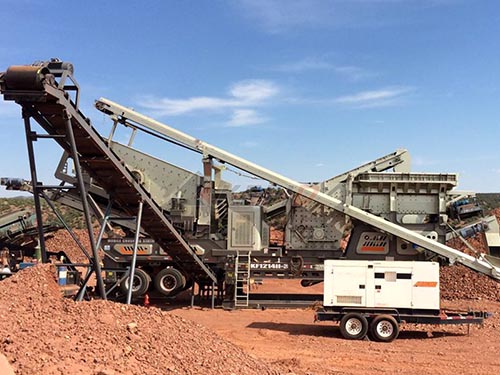
Planta de procesamiento de oro de roca dura - África occidental
Desafío: A CIP plant experienced repeated failures of thickener rake arms within 8 months due to undetected casting porosity and substandard weld penetration.
Solución: Procured replacement components manufactured under a stringent gold mining equipment quality control protocol specifying radiographic weld inspection and certified highyield steel.
Resultados: Rake arm service life exceeded 36 months with no structural issues, reducing annual replacement costs by $65k USD per thickener.
Alluvial Gold Dredging Operation – Latin America
Desafío: Frequent shutdowns of slurry pump systems due to impeller imbalance causing seal failure every 200300 horas de funcionamiento.
Solución: Sourced precisionmachined pump wear parts (impeller, volute) from a manufacturer employing full CMM inspection after casting/machining.
Resultados: Impeller balance achieved G6.3 grade tolerance; seal life extended to over 1200 horas; overall pump MTBF increased by 400%.
7. CONSIDERACIONES COMERCIALES
Gold mining equipment manufactured under this level of quality control typically commands a premium of 1525% over baselevel machinery due to higher material verification costs advanced manufacturing processes.
Niveles de precios: Often structured around inspection intensity (p.ej., Nivel 1 = basic dimensional check; Nivel 2 = includes NDT on welds; Nivel 3 = full traceability + functional test).
Características opcionales: Additional services like laser alignment marking for installation or spare part kit bundling are available.
Paquetes de servicios: Garantías extendidas (p.ej., 24 months vs standard12) are commonly offered when paired with certified OEM installation.
Opciones de financiación: Manufacturers or their partners may provide leasetoown structures or progresspayment plans aligned with milestone inspections/delivery.
8. Preguntas frecuentes
1. How does this quality control framework affect lead times?
While initial material certification adds time upfront—typically extending lead times by approximately one week—it significantly reduces total project timeline risk by virtually eliminating factory rework or postdelivery disputes over component fitness.
2. Is this only relevant for new equipment purchases?
No it is equally critical when sourcing highwear replacement parts like mill liners pump wet ends or screen decks Applying these controls ensures new components match or exceed the performance of original parts maintaining system integrity
3 Can your quality control standards be integrated with our existing site maintenance protocols?
Yes The documentation package provided serves as the baseline for your condition monitoring programs offering verified data on asbuilt specifications which improves the accuracy of your predictive maintenance models
4 What evidence do you provide that specifications have been met?
You receive digitally signed certificates including material mill test reports hardness test readings NDT result sheets photographs of critical inspections CMM reports for machined components
5 How does this approach impact shipping logistics?
Proper quality control prevents shipping nonconforming items This avoids costly delays at port or site associated with rejecting faulty goods ensuring smoother receipt handling installation