
costo de la trituradora de concreto

The Economics of Concrete Crushing: Unpacking the True Costs of Recycling
Concrete is the backbone of modern infrastructure – ubiquitous in buildings, caminos, puentes, and countless other structures worldwide. Sin embargo, when these structures reach their end-of-life or require renovation, managing the resulting concrete debris becomes a significant challenge and expense. Landfilling vast quantities of heavy concrete is environmentally unsustainable and increasingly costly due to rising disposal fees and shrinking landfill space.
Enter concrete crushing: a process that transforms demolition waste into valuable recycled aggregate materials like Recycled Concrete Aggregate (RCA) or Crushed Concrete Base (CCB). While widely recognized as an environmentally superior solution compared to disposal in landfills – reducing resource extraction and embodied carbon – understanding its true cost is crucial for project planning, feasibility assessments, and maximizing return on investment.
The cost of concrete crushing is far from a single line item; it's a complex interplay of numerous direct and indirect factors influenced by project specifics and operational choices.
Cost Drivers in Concrete Crushing:
1. Equipment Acquisition & Utilización:
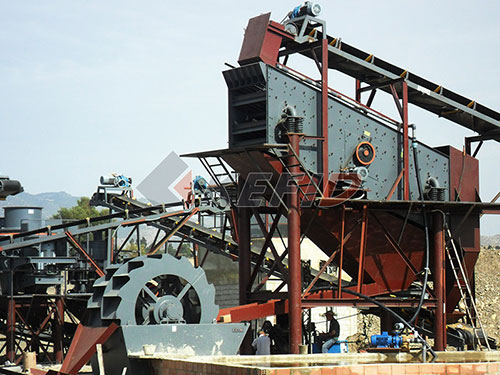
Tipo de trituradora & Tamaño: Costs vary significantly based on whether you use mobile crushers (sobre orugas o con ruedas) or stationary plants set up at a central location.
Trituradoras móviles: Offer flexibility for on-site processing at multiple projects but typically have higher hourly operating costs ($150-$400+ per hour depending on size/type - jaw vs impactor) and lower throughput capacity than large stationary plants.
Plantas estacionarias: Require significant capital investment ($500k - $5M+) but offer much higher production volumes (>500 toneladas/hora) leading to lower per-ton processing costs once operational efficiency is achieved.
Support Equipment: Crushing requires auxiliary machinery:
Excavators/Loaders ($100-$250+/hr): For feeding raw material into the crusher hopper.
Material Handling Equipment: Transportadores ($50-$150/hr), stackers/screeners ($75-$200/hr).
Hydraulic Breakers/Hammers ($100-$300+/hr): Often needed for initial breaking of large slabs or foundations before feeding into the crusher.
Ownership vs Rental: Purchasing equipment requires major capital outlay plus ongoing maintenance/insurance/taxes/depreciation costs (~$15-$50+/ton depending heavily on utilization). Renting offers flexibility without capital commitment but incurs direct hourly/daily rental fees (~$20-$