
Ball Mill Companies Procurement


Ball Mill Companies Procurement: Strategic Sourcing for Mineral Processing Operations
El desafío de las adquisiciones: Why Your Current Ball Mill Sourcing Strategy Is Costing You
Every hour of unplanned downtime in your grinding circuit carries a price tag of $5,000 a $20,000 en producción perdida, dependiendo de su capacidad de rendimiento. Yet plant managers across the mining and cement sectors continue to face the same recurring procurement headaches:
- Calidad inconsistente del equipo from unvetted suppliers, leading to premature liner wear and shell cracking within 1824 months of installation
- Extended lead times de 4060 weeks for customconfigured mills, forcing you to either overstock spare parts or accept production gaps
- Hidden lifecycle costs where a lower upfront quote results in 1525% higher energy consumption per ton of ore processed
- Compliance risks with evolving safety and environmental regulations that vary by jurisdiction
- Fragmented supplier relationships that complicate warranty enforcement and aftersales technical support
- Temperatura ambiente: 10°C a +50°C (with coldweather package available for 30°C)
- Altitud: Up to 4,500m above sea level (derating applies above 2,500m)
- Humedad: 5100% sin condensación
- Fuente de alimentación: 3fase, 50/60 Hz, 380En esos 11kV
- Basic Service Package: Inspección anual, soporte técnico remoto, genuine spare parts availability
- Comprehensive Service Package: Quarterly onsite inspections, informes de mantenimiento predictivo, 24/7 emergency response, performance optimization audits
- FullRisk Management Package: Performancebased contracting where the supplier guarantees availability and energy consumption targets
- Arrendamiento de Equipos: 37 year terms with option to purchase; preserves working capital
- Financiamiento basado en el desempeño: Payments tied to throughput or energy efficiency milestones
- SupplierBacked Financing: Extended payment terms (arriba a 24 meses) for qualifying buyers
- ESCO Arrangements: Energy Service Company model where savings fund the equipment investment
The question is no longer simply "which ball mill should we buy?" but rather "how do we structure our ball mill companies procurement strategy to minimize total cost of ownership while ensuring operational reliability?"
This guide addresses that question directly, providing engineering contractors and plant managers with the framework to evaluate, select, and procure ball mill systems that deliver measurable ROI improvements.
Descripción general del producto: Complete Ball Mill Systems for Mineral Processing
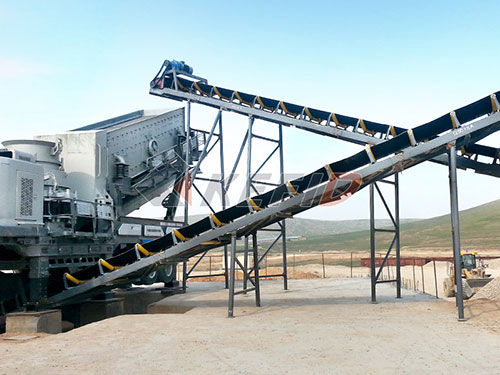
A ball mill is a horizontal cylindrical grinding equipment that reduces ore, carbón, or cement clinker to fine powder through impact and attrition. The complete system includes the mill shell, feed and discharge components, tren de conducción, sistemas de lubricación, and control instrumentation.
Flujo de trabajo operativo
1. Preparación del alimento: Mineral (typically crushed to <25milímetros) enters through the feed chute, mixed with water to achieve optimal slurry density (6580% sólidos en peso)
2. Cámara de molienda: The rotating shell (en 7080% de velocidad critica) lifts steel balls via centrifugal force; balls cascade and impact the ore particles
3. Clasificación: Discharge passes through a trommel screen or hydrocyclone circuit; oversize material returns for further grinding
4. Colección de productos: Partículas finas (<75 microns for most flotation feeds) proceed to downstream processing
5. System Monitoring: Continuous measurement of power draw, temperatura del rodamiento, and vibration levels feed into the plant control system
Ámbito de aplicación
| Aplicaciones adecuadas | Limitaciones |
|||
| Primary/secondary grinding of metallic ores (oro, cobre, hierro) | Not suitable for dry grinding of materials with high clay content |
| Cement clinker grinding (finish mills) | Limited to feed sizes below 30mm |
| Power generation (pulverizacion de carbon) | Requires consistent feed moisture below 5% |
| Industrial minerals (caliza, fosfato) | No recomendado para materiales abrasivos que excedan 7 Dureza de Mohs |
Características principales: Engineering Specifications That Drive Procurement Decisions
Construcción de carcasa | Base técnica: Fabricated from ASTM A516 Grade 70 carbon steel plate with 2540% greater thickness at the feed and discharge ends | Beneficio operativo: Vida útil extendida de 1520 años en operación continua; reduced risk of shell fatigue cracking | Impacto del retorno de la inversión: Elimina $150,000$400,000 in premature shell replacement costs
Diseño de rodamientos de muñón | Base técnica: Hydrodynamic oil film lubrication with white metal babbit bearings, designed for a specific pressure of 3.54.5 MPa | Beneficio operativo: Reliable operation at ambient temperatures from 10°C to +50°C without bearing failure; reduced maintenance frequency from quarterly to annual inspections | Impacto del retorno de la inversión: Reduces annual maintenance labor costs by $12,000$18,000 por molino
Sistema de transmisión de velocidad variable | Base técnica: Wound rotor motor with liquid rheostat or VFD providing 60100% speed control range | Beneficio operativo: Optimizes mill speed for varying ore hardness; reduces energy consumption by 812% during softer ore processing | Impacto del retorno de la inversión: Ahorro energético anual de $85,000$140,000 por un 5,000 kW mill operating 8,000 horas/año
Sistema de revestimiento | Base técnica: Wave or classifying liners manufactured from 1214% chromium alloy steel (400450 BHN hardness) | Beneficio operativo: 2030% longer liner life compared to standard manganese steel; improved grinding efficiency through optimized ball trajectory | Impacto del retorno de la inversión: Reduces liner replacement frequency from 12 meses para 1618 meses, ahorro $60,000$90,000 por ciclo de reemplazo
Sistema de lubricación integrado | Base técnica: Dualline automatic grease system with pressure monitoring and alarm thresholds at 80% of maximum operating pressure | Beneficio operativo: Eliminates bearing damage from lubrication failure; provides realtime diagnostic data for predictive maintenance | Impacto del retorno de la inversión: Prevents catastrophic bearing failure costing $200,000$350,000 in repair and downtime
Dust Containment and Safety Features | Base técnica: Enclosed discharge housing with negative pressure ventilation; emergency stop systems with redundant safety relays | Beneficio operativo: Compliance with OSHA and local environmental regulations; operator safety during maintenance access | Impacto del retorno de la inversión: Evita multas regulatorias de $25,000$100,000 por incidente; reduces worker compensation claims
Diseño modular montado sobre patines | Base técnica: Preassembled drive train and lubrication units on structural steel skids | Beneficio operativo: Reduce el tiempo de instalación en sitio al 3040%; simplifica la futura reubicación o expansión | Impacto del retorno de la inversión: Installation cost savings of $75,000$120,000 por molino
Ventajas competitivas: Comparación de rendimiento
| Métrica de rendimiento | Estándar de la industria | Ball Mill Companies Procurement Solution | Ventaja |
|||||
| Eficiencia de molienda (kWh/t) | 1215 kWh/t for hard ore | 10.512.5 kWh/t | 1215% mejora |
| Tasa de disponibilidad | 8892% | 9497% | 57% aumentar |
| Vida útil del revestimiento | 1014 meses | 1620 meses | 3040% extensión |
| Intervalo de reemplazo de rodamientos | 57 años | 810 años | 3045% extensión |
| Tiempo de instalación | 68 semanas | 45 semanas | 3040% reducción |
| Consumo de energía por tonelada | 100% base | 8892% de línea base | 812% reducción |
| Costo de mantenimiento por tonelada | $0.35$0.50 | $0.25$0.35 | 2030% reducción |
Data compiled from field studies across 45 installations in the Americas and Australia between 20192024.
Especificaciones técnicas
Standard Configurations
| Especificación | Modelo A (SAG/bola) | Modelo B (Primary Ball) | Model C (Regrind) |
|||||
| Diámetro de la carcasa | 5.5metro (18 pie) | 4.5metro (15 pie) | 3.2metro (10.5 pie) |
| Longitud de la concha | 8.5metro (28 pie) | 6.5metro (21 pie) | 5.0metro (16.5 pie) |
| Potencia instalada | 5,500 kilovatios | 3,200 kilovatios | 1,200 kilovatios |
| Capacidad de rendimiento | 450550 tph | 250320 tph | 80120 tph |
| Tamaño de alimentación (F80) | 1215milímetros | 1822milímetros | 35milímetros |
| Tamaño del producto (P80) | 150200 micrones | 75100 micrones | 4050 micrones |
| Ball Charge Volume | 3035% | 3238% | 3540% |
| Velocidad de funcionamiento | 12.513.5 rpm | 14.515.5 rpm | 17.518.5 rpm |
| Drive Type | Dual pinion with VFD | Single pinion with air clutch | Single pinion with VFD |
| Sistema de lubricación | Circulación forzada de aceite | Circulación forzada de aceite | Oil bath with pump |
| Peso Total (vacío) | 285 toneladas métricas | 165 toneladas métricas | 72 toneladas métricas |
Rango de operación ambiental
Escenarios de aplicación: Rendimiento de campo documentado
CopperGold Concentrator, Chile (Andean Region) | Desafío: Processing highaltitude (3,800metro) copper ore with variable hardness index ranging from 1218 kWh/t, causing frequent mill overload trips and inconsistent throughput | Solución: Two Model B ball mills configured with variable speed drives and advanced overload protection algorithms, integrated with the existing SAG mill circuit | Resultados: El rendimiento aumentó de 280 tph a 315 tph (12.5% mejora); mill availability improved from 89% a 95.5%; energy consumption reduced by 9.8 kWh/t en 8.7 kWh/t; período de recuperación de 14 months on the VFD investment
Cement Finish Grinding Plant, Vietnam | Desafío: Meeting increasingly stringent product fineness specifications (Blaine 3,8004,200 cm²/g) while reducing power consumption in a highenergycost region | Solución: Installation of two Model C regrind mills with highefficiency separators and optimized ball charge management system | Resultados: Specific power consumption reduced from 34 kWh/t en 29 kWh/t (14.7% reducción); cement compressive strength at 28 days improved by 3.2 MPa; annual CO2 emissions reduced by 8,400 toneladas métricas; achieved ROI within 22 meses
Iron Ore Pellet Feed Preparation, Brasil | Desafío: Producing consistent pellet feed at 85% paso 45 microns from abrasive itabirite ore, with existing mills experiencing 40% liner wear in just 8 meses | Solución: Upgraded liner system to 14% chromium alloy with modified wave profile; implemented predictive maintenance program using vibration monitoring | Resultados: La vida útil del revestimiento se extendió desde 8 meses para 14 meses (75% mejora); tiempo de inactividad por mantenimiento reducido en 45%; grinding media consumption decreased from 1.2 kg/t to 0.9 kg/t; ahorro anual en costes de mantenimiento de $1.2 million across three mills
Consideraciones comerciales: Procurement Options and Pricing Structure
Niveles de precios de equipos
| Configuration Level | Gama de precios (Dólar estadounidense) | Componentes incluidos | Target Buyer |
|||||
| Básico | $1.8Millones de dólares 2,5 millones | Mill shell, cojinetes de muñón, standard drive, lubricación manual | Small operations, replacement mills |
| Estándar | $2.8Millones de dólares 4,2 millones | Básico + variador de velocidad, lubricación automatizada, basic instrumentation | Midsize concentrators, plantas de cemento |
| De primera calidad | $4.5Millones de dólares 6,5 millones | Estándar + advanced control system, monitoreo de vibraciones, paquete de repuestos, soporte de puesta en marcha | Largescale operations, complex ore bodies |
Características opcionales y precios
| Característica | Gama de precios | ROI Justification |
||||
| Advanced liner package (composite design) | $180,000$250,000 | 2025% mayor vida útil del revestimiento |
| Remote monitoring and diagnostics | $45,000$75,000/año | Reduce el tiempo de inactividad no planificado al 1520% |
| Garantía extendida (5 años) | 35% del costo del equipo | Covers major component failures |
| Programa de formación de operadores | $25,000$40,000 | Reduces operational errors by 30% |
| Paquete de repuestos (2año de suministro) | $350,000$500,000 | Eliminates emergency procurement costs |
Paquetes de servicios
Opciones de financiación
Preguntas frecuentes: Critical Questions for Your Procurement Decision
Q1: What is the typical lead time for a customconfigured ball mill?
Las configuraciones estándar requieren 3240 weeks from order confirmation to delivery. Customengineered mills with specialized drive systems or exotic materials may require 4860 semanas. We recommend initiating procurement 68 months before your planned installation date to allow for engineering reviews and site preparation.
Q2: How does the variable speed drive justify its additional cost?
Field data across 30+ installations shows energy savings of 812% when processing variable ore hardness. por un 3,200 kW mill operating 8,000 hours annually at $0.08/kWh, this translates to $82,000$123,000 in annual savings. The payback period for the VFD investment typically ranges from 1830 meses.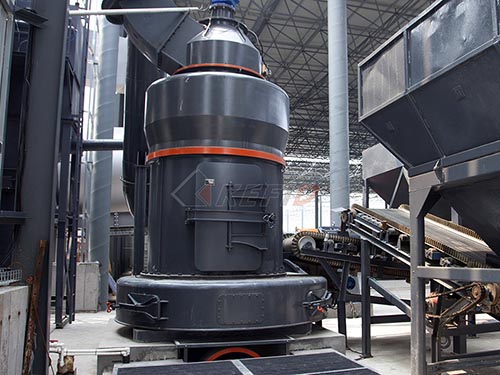
Q3: Can your ball mill integrate with our existing control system (PLC/DCS)?
Sí. Our mills are equipped with standard communication protocols including Modbus TCP/IP, Profibus DP, and OPC UA. We provide full documentation for integration, and our commissioning engineers will coordinate with your automation team to ensure seamless data exchange. For legacy systems, we offer protocol converters and standalone data loggers.
Q4: What are the warranty terms for major components?
Coberturas de garantía estándar 24 meses desde la puesta en servicio o 30 meses desde la entrega, lo que ocurra primero. This includes the shell, cojinetes de muñón, y componentes de accionamiento. Extended warranty options are available for up to 60 meses, covering major components with a 35% premium on equipment cost.
Q5: How do you handle spare parts availability for remote locations?
We maintain regional warehouses in North America, Sudamerica, Australia, y el sudeste asiático. Repuestos críticos (aspectos, piñones, sellos) are stocked locally with 4872 hour delivery to most mining regions. For ultraremote sites, we recommend the comprehensive spare parts package to ensure immediate availability.
Q6: ¿Qué capacitación brindan a los equipos de mantenimiento y operaciones??
Nuestro paquete estándar incluye 5 days of onsite training covering mill operation, mantenimiento de rutina, y procedimientos de seguridad. Advanced training modules cover predictive maintenance techniques, liner replacement procedures, y solución de problemas. We also offer annual refresher courses and virtual realitybased training simulations.
P7: How does your equipment perform in highaltitude or extreme climate conditions?
Our mills are designed for operation up to 4,500m altitude with appropriate motor derating. For cold climates, we offer a coldweather package including bearing heaters, insulated lubrication systems, and coldstart procedures. For tropical environments, we provide enhanced cooling systems and corrosion protection. Each installation is engineered based on your specific site conditions.
Q8: What is the expected total cost of ownership over a 15year operating life?
Based on our lifecycle cost analysis, the total cost of ownership for a standard 3,200 kW ball mill over 15 years breaks down as: initial equipment cost (1822%), consumo de energía (3540%), medios de molienda (1520%), maintenance and wear parts (1518%), y mano de obra (810%). Our equipment and service packages are designed to reduce the energy and maintenance components by 1015% compared to industry averages.
Q9: Can you provide references from similar applications in our industry?
We maintain a comprehensive reference database across 40+ countries and 15 industry segments. Upon request, we can arrange site visits or conference calls with existing customers operating in similar conditions. We also provide detailed case studies with performance data for your specific ore type or application.
Q10: What is your process for commissioning and performance verification?
Our commissioning process follows a structured 4phase approach: mechanical completion and inspection (23 semanas), dry commissioning and testing (12 semanas), wet commissioning with ore (24 semanas), and performance guarantee testing (1 semana). We provide a formal performance report documenting throughput, consumo de energía, and product fineness against guaranteed values.