
Eco-Friendly Stone Crusher Plant Importer
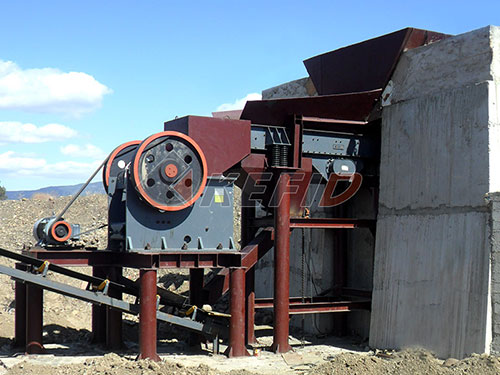

EcoFriendly Stone Crusher Plant Importer: Meeting Modern Environmental Compliance Without Sacrificing Throughput
The Compliance Crunch: Rising Costs, Tightening Regulations, and Operational Pressure
Stone crushing operations face a convergence of challenges that directly impact your bottom line. Environmental compliance costs have risen 3040% over the past five years across major markets, driven by stricter particulate matter (PM10 and PM2.5) emission limits, water discharge regulations, and noise ordinances. Noncompliance penalties routinely reach $25,000–$100,000 per violation per day in regulated jurisdictions. Beyond fines, permit delays of 12–18 months stall project timelines and tie up capital.
Your existing plant likely contends with three operational pain points: excessive water consumption (up to 5,000 liters per hour for dust suppression in midsized operations), energy costs that consume 15–25% of total operational expenditure, and material wastage from inefficient screening circuits. Meanwhile, local communities and regulatory bodies increasingly demand visible environmental stewardship—not just compliance paperwork.
Are you prepared for the next wave of emissions standards targeting crusher plants? Can your current setup achieve the 30% reduction in fine particulate emissions that upcoming regulations in many jurisdictions will mandate? More importantly, can you achieve these targets without sacrificing the 150–300 tons per hour throughput your contracts require?
Product Overview: Integrated EcoFriendly Stone Crushing System
The ecofriendly stone crusher plant is a complete, modular crushing and screening system engineered for reduced environmental footprint across the entire operational lifecycle. This integrated configuration typically combines a primary jaw crusher, secondary cone crusher or impact crusher, vibrating screens, and conveyor systems—all enclosed within dustsuppression and noisereduction infrastructure.
Operational Workflow
1. Primary Crushing: Runofmine material (up to 600–800 mm feed size) enters the jaw crusher, reducing material to 100–200 mm while enclosed dust extraction captures fugitive emissions at the source.
2. Secondary Crushing: Material passes through the cone or impact crusher for further reduction to 20–60 mm, with waterspray systems and mist cannons activated based on realtime particulate monitoring.
3. Screening and Classification: Vibrating screens separate material into graded fractions (0–5 mm, 5–20 mm, 20–40 mm), with oversize material recirculated to the secondary crusher.
4. Dust Collection and Filtration: Baghouse filters and wet scrubbers capture 95–99% of particulate matter before air is released to the atmosphere.
5. Water Recycling: Settling tanks and filter presses treat process water, enabling 85–90% water recirculation within the system.
Application Scope and Limitations
This system suits mediumtolarge stationary operations processing hard rock (granite, basalt, limestone) for construction aggregates, road base material, and railway ballast. It is not designed for mobile temporary operations or extremely abrasive materials exceeding 350 MPa compressive strength without specialized wear components.
Core Features
Enclosed Crushing Chamber Design | Technical Basis: Negative pressure ventilation and acoustic enclosure panels | Operational Benefit: Contains dust at generation point and reduces noise from 105 dB(A) to below 75 dB(A) at boundary | ROI Impact: Eliminates $15,000–$40,000 annually in community noise complaints and potential regulatory fines
HighEfficiency Baghouse Filtration System | Technical Basis: Pulsejet cartridge filtration achieving 99.9% collection efficiency at PM2.5 levels | Operational Benefit: Meets EPA and EU emission standards without water consumption | ROI Impact: Reduces water usage by 400,000–600,000 liters annually compared to wet suppression alone
ClosedLoop Water Recycling Circuit | Technical Basis: Lamella clarifier and filter press technology achieving 85–90% water recovery | Operational Benefit: Cuts freshwater intake from 5,000 L/hour to 500–750 L/hour | ROI Impact: Saves $60,000–$120,000 annually in water procurement and discharge compliance costs
Variable Frequency Drive (VFD) Motors | Technical Basis: Adjustable motor speed matching load demand, reducing energy consumption by 15–25% | Operational Benefit: Lower power draw during partial load operations and reduced mechanical stress | ROI Impact: Reduces energy costs by $35,000–$70,000 per year for a 300 TPH plant
RealTime Particulate Monitoring System | Technical Basis: Continuous opacity and PM10 sensors with automated suppression activation | Operational Benefit: Immediate response to emission spikes without operator intervention | ROI Impact: Prevents compliance violations that carry $10,000–$25,000 per incident penalties

Modular Plant Architecture | Technical Basis: Preengineered, containerized modules with standardized connection points | Operational Benefit: 40% faster installation compared to conventional sitebuilt plants | ROI Impact: Reduces project timeline by 8–12 weeks, accelerating revenue generation
WearResistant Liner Materials | Technical Basis: Chromiummolybdenum alloy steel with 450–550 BHN hardness | Operational Benefit: Extends crusher liner life by 30–40% in abrasive applications | ROI Impact: Reduces annual maintenance costs by $20,000–$45,000 and minimizes downtime
Competitive Advantages
| Performance Metric | Industry Standard | EcoFriendly Solution | Advantage |
|||||
| Dust Emission (PM10) | 50–80 mg/Nm³ | 10–20 mg/Nm³ | 60–75% reduction |
| Water Consumption | 4,000–6,000 L/hour | 500–750 L/hour | 85–88% reduction |
| Noise Level at 50m | 85–95 dB(A) | 70–75 dB(A) | 20–25% reduction |
| Energy Consumption per Ton | 0.8–1.2 kWh/ton | 0.6–0.9 kWh/ton | 25–30% reduction |
| Material Recovery Rate | 85–90% | 95–98% | 8–10% improvement |
| Installation Timeline | 6–8 months | 3–5 months | 40% faster |
| Annual Maintenance Cost | 5–7% of equipment value | 3–4% of equipment value | 30–40% reduction |
Technical Specifications

| Parameter | Specification |
|||
| Production Capacity | 150–350 tons per hour (depending on feed material) |
| Feed Material Size | Up to 600–800 mm |
| Final Product Range | 0–5 mm, 5–20 mm, 20–40 mm (adjustable) |
| Installed Power | 350–650 kW (depending on configuration) |
| Power Requirement | 380V/50Hz or 480V/60Hz, threephase |
| Water Consumption | 500–750 L/hour (with recycling system) |
| Compressed Air Requirement | 6–8 bar, 2–4 m³/min |
| Dust Collection Efficiency | 99.9% at PM2.5 (baghouse system) |
| Operating Temperature Range | 10°C to 45°C (standard configuration) |
| Total Plant Footprint | 2,500–4,000 m² (including stockpiles) |
| Noise Level at Plant Boundary | ≤75 dB(A) during normal operation |
| Structure Material | S355JR structural steel with anticorrosion coating |
Application Scenarios
Commercial Aggregate Production for Urban Infrastructure | Challenge: A metropolitan contractor faced permit rejection due to dust emissions exceeding local limits by 40%, delaying a highway aggregate supply contract worth $2.8 million annually | Solution: Implementation of a 250 TPH ecofriendly plant with full enclosure and baghouse filtration | Results: Achieved emission levels 65% below permitted limits, secured permit approval in 6 weeks, and maintained 98% ontime delivery performance across the 18month contract
Limestone Quarry Expansion in WaterStressed Region | Challenge: A quarry operator in a droughtaffected area consumed 4,500 liters of water per hour for dust control, straining local water resources and creating community conflict | Solution: Installation of closedloop water recycling system with lamella clarifier and dry dust collection | Results: Reduced freshwater consumption by 87% to 585 L/hour, eliminated community complaints, and achieved 99% water recovery rate, saving $95,000 annually in water costs
Recycled Concrete Aggregate Processing Facility | Challenge: A demolition waste processor needed to meet stringent environmental standards while processing variable feed material containing rebar and contaminants | Solution: Ecofriendly plant with magnetic separation, enclosed crushers, and realtime particulate monitoring | Results: Processed 180,000 tons of recycled aggregate in year one with zero environmental violations, achieved 96% material recovery rate, and secured municipal recycling contracts worth $1.2 million
Commercial Considerations
Equipment Pricing Tiers
| Configuration | Capacity | Price Range (USD) |
||||
| Basic Eco Package | 150 TPH | $850,000 – $1,200,000 |
| Standard Eco Package | 250 TPH | $1,400,000 – $1,900,000 |
| Premium Eco Package | 350 TPH | $2,100,000 – $2,800,000 |
Optional Features
- Advanced PLC control system with remote monitoring: $45,000–$65,000
- Solarassisted power system (15–20% energy offset): $120,000–$180,000
- Extended warranty package (5year comprehensive): 8–12% of equipment cost
- Operator training program (2 weeks onsite): $18,000–$25,000
- Standard: 12month warranty, 2 preventive maintenance visits, phone support
- Enhanced: 24month warranty, 4 preventive maintenance visits, 24hour response guarantee, annual performance audit
- Comprehensive: 36month warranty, 6 preventive maintenance visits, dedicated support engineer, performance optimization program
- Equipment leasing: 36–60 month terms with 10–20% residual value
- Deferred payment plans: 20% down payment, balance over 12–24 months
- Performancebased financing: Payments tied to throughput milestones
- Government green technology incentives may apply in certain jurisdictions—consult your local environmental agency
Service Packages
Financing Options
FAQ
Q: Can the ecofriendly stone crusher plant be retrofitted to my existing operation?
A: Yes. The modular design allows integration with existing primary crushers and conveyors. A site assessment determines the optimal retrofit configuration. Typical retrofits achieve 60–75% of the environmental improvements of a full new installation at 40–50% of the cost.
Q: What is the typical payback period for the environmental systems?
A: Based on field data from installations across 15 countries, the combined savings from reduced water consumption, lower energy use, and eliminated compliance penalties typically achieve payback in 18–30 months. Operations in jurisdictions with aggressive emission enforcement see faster returns.
Q: How does the plant perform with highmoisture or sticky feed materials?
A: The system includes heated screen decks and anticlogging mechanisms for materials up to 8–10% moisture content. For higher moisture applications, additional drying or prescreening equipment may be recommended. Your material characteristics should be assessed during the specification phase.
Q: What training is required for plant operators?
A: The control system is designed for intuitive operation. Standard training covers 3–5 days for operators and 2 days for maintenance personnel. The optional comprehensive training package extends this to 2 weeks and includes environmental compliance documentation procedures.
Q: What is the expected service life of the plant components?
A: Structural components are designed for 20+ years of service. Crusher wear parts typically last 6–12 months depending on feed abrasiveness. Baghouse filters require replacement every 2–3 years. The plant is designed for componentlevel replacement rather than full system replacement.
Q: How does the plant perform in extreme climate conditions?
A: Standard configurations operate effectively from 10°C to 45°C. For colder climates, optional heating systems for water lines and lubrication circuits are available. For tropical highhumidity environments, enhanced corrosion protection and ventilation packages are offered.
Q: What environmental certifications does the plant help achieve?
A: The system is designed to facilitate compliance with EU Industrial Emissions Directive, US EPA NSPS Subpart OOO, and World Bank EHS Guidelines. Depending on your jurisdiction, the plant may help you qualify for ISO 14001 certification and green building material certifications for your products.