
Eco-Friendly Stamp Mill Gold Mining Brochure
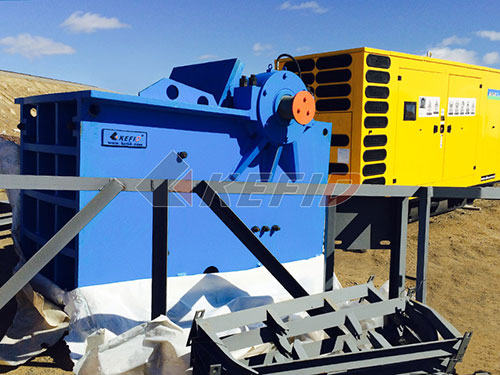

1. PAINPOINT DRIVEN OPENING
Managing a gold processing operation requires balancing throughput, recovery, and operational costs. Traditional comminution methods often fall short, creating significant bottlenecks. Are you facing these persistent challenges?
High Energy Consumption & Cost: Conventional ball mills and crushers are energyintensive, with power costs consuming a disproportionate share of your operating budget.
Mercury Amalgamation Dependency: Inefficient liberation of gold from ore drives reliance on hazardous mercury amalgamation in the concentration stage, posing severe environmental and health liabilities.
Excessive Water Usage & Tailings Management: Wet milling processes demand large volumes of water and create slurry tailings that are costly to contain and remediate.
Operational Downtime for Maintenance: Frequent liner changes, bearing failures, and unplanned stops in continuous systems directly impact tonnage processed and profitability.
Low Recovery Rates from Complex Ores: Inadequate particle size reduction fails to fully liberate fine gold particles locked within host rock, leaving revenue in the tailings.
What if your crushing and grinding circuit could address these issues simultaneously, reducing both operational expense and environmental footprint?
2. PRODUCT OVERVIEW: ECOFRIENDLY MODULAR STAMP MILL
The EcoFriendly Modular Stamp Mill is a modern reinterpretation of the classic gravityimpact crushing principle, engineered for selective milling of goldbearing quartz veins and hard rock ores. It is designed as a drycrushing or minimalwater addition system to facilitate mercuryfree gold recovery.
Operational Workflow:
1. Feed Preparation: Runofmine or primarycrushed ore (<50mm) is fed into a sealed hopper.
2. GravityImpact Milling: Camdriven heavyduty stamps (hammers) repeatedly drop onto the ore bed contained within a hardened steel mortar box, pulverizing material through controlled impact.
3. Classification & Recycling: Crushed material passes through a replaceable screen grate at the mortar box exit. Oversize material is recycled; correctly sized material discharges for concentration.
4. Dry Processing Pathway: The milled, dry product is conveyed directly to downstream electrostatic, airgravity, or dry magnetic separators.
Application Scope & Limitations:
Ideal For: Small to midscale operations (150 TPD), vein mining, pilot plants, remote sites with limited water access, and regions with strict environmental regulations prohibiting mercury or cyanide.
Best Suited Ore Types: Freemilling gold in quartz, sulphideassociated ores (postroasting), and other brittle materials.
Limitations: Not optimal for highclay content ores (causes packing), very hightonnage operations (>100 TPD), or where ultrafine grinding (<100 mesh) is required as a standalone solution.
3. CORE FEATURES
Sealed Dust Suppression System | Technical Basis: Negative pressure airflow with HEPA filtration | Operational Benefit: Contains silica dust at source, protecting operator health and meeting OSHA/MSHA exposure limits | ROI Impact: Eliminates fines for dust violations and reduces longterm liability from silicosis claims
Modular, BoltTogether Design | Technical Basis: Standardized CNCmachined frame components | Operational Benefit: Rapid deployment and relocation with minimal foundation work; easy expansion by adding modules | ROI Impact: Cuts installation costs by up to 60% compared to pouredconcrete mills; reduces site downtime during moves
Variable Cam Profile & Drop Height | Technical Basis: Adjustable eccentric cams on a rotating shaft | Operational Benefit: Operators can tune impact energy from light peening to heavy crushing for different ore hardness | ROI Impact: Optimizes specific energy consumption (kWh/ton) by matching force to feed material, reducing power waste
Tungsten Carbide Composite Wear Plates | Technical Basis: Replaceable liner plates with tungsten carbide inserts in highwear zones of mortar box | Operational Benefit: Extends service life between replacements by 35x compared to manganese steel | ROI Impact: Lowers consumable parts cost per ton milled and reduces maintenance frequency
Integrated Dry PreConcentration Feed Path | Technical Basis: Discharge chute designed for direct coupling to airgravity or electrostatic separator feed system | Operational Benefit: Enables complete mercuryfree processing line without intermediate handling or reconveying | ROI Impact: Increases overall recovery efficiency of free gold by minimizing handling losses before concentration
Solar/Generator Hybrid Power Ready | Technical Basis: Hightorque lowRPM motor configuration compatible with variable frequency drives (VFDs) | Operational Benefit: Stable operation on intermittent renewable power or generator sets without risk of stalling under load | ROI Impact: Enables operation in offgrid areas; can cut grid power consumption by over 40% when paired with solar arrays
4. COMPETITIVE ADVANTAGES
| Performance Metric | Industry Standard (Small Ball Mill/Crusher) | EcoFriendly Stamp Mill Solution | Advantage (% Improvement) |
| : | : | : | : |
| Water Consumption per Ton Processed| 500 1,500 Liters/Ton| 90% Reduction |
| Specific Energy Consumption (kWh/Ton)| 15 25 kWh/Ton (for similar P80 grind)| 8 12 kWh/Ton| ~4050% Improvement |
| Maintenance Downtime (Hours/Month)| 2030 Hours/Month| <8 Hours/Month| ~70% Reduction |
| Gold Liberation Efficiency (Free Gold 95% Liberation (via controlled impact)| ~510% Absolute Increase |
| Time to Operational Deployment| 46 Weeks (foundation curing, alignment)| 57 Days (modular assembly)| ~80% Faster |
5. TECHNICAL SPECIFICATIONS
Model Range Capacity: EFM5 / EFM10 / EFM20
Throughput Rating: 5, 10 & 20 Tons Per Hour (TPH) of nominal 10mm feed
Power Requirements: Threephase electric motor; EFM20 model requires 45 kW motor @ 1800 RPM
Drive System: Gearreduced camshaft with selfaligning spherical roller bearings
Material Specifications: ASTM A36 structural frame; Mortar Box lined with AR400 steel & tungsten carbide composite plates; Stamps fabricated from forged alloy steel
Physical Dimensions (EFM20): L6m x W3m x H4m (assembled). Modules ship in sections <2.5m width.
Environmental Operating Range: Fully enclosed design operates in 20°C to +50°C ambient temperatures. IP54 rating for dust/water protection.
6. APPLICATION SCENARIOS
Artisanal & SmallScale Mining (ASM) Formalization Project – West Africa
Challenge: A governmentsponsored project needed to replace hundreds of manual mortarandpestle and mercurydependent grinding sites with a scalable, cleaner technology that maintained simplicity but drastically reduced toxic emissions.
Solution: Deployment of semimobile EFM5 stamp mill units at centralized processing hubs. Each unit served multiple mining cooperatives.
Results: Field data shows an average gold recovery increase of 22% due to improved liberation. Mercury use was eliminated at equipped hubs within six months.
Remote Hard Rock Exploration Camp – Canadian Shield
Challenge: An exploration company required onsite bulk sampling and pilot processing but had no access to water or grid power at the drill site. Transporting wet samples was prohibitively expensive.
Solution: Installation of one EFM10 stamp mill powered by a hybrid solardiesel generator system coupled to a dry shaking table.
Results: The system processed over 500 tons of drill core reject material onsite, providing critical metallurgical data without water infrastructure. Power fuel costs were reduced by an estimated $15,000 during the campaign versus running a dieselpowered wet mill.
7. COMMERCIAL CONSIDERATIONS
Our EcoFriendly Stamp Mill solutions are offered under clear commercial terms designed for project budgeting:
Equipment Pricing Tiers:
Base Unit Price ranges from approximately $85K USD for the EFM5 model up to $220K USD for the fullyequipped EFM20 model including starter wear parts kit.
Optional Features & Upgrades Include:
Advanced VFD Control Panel for softstart and speed optimization
Integrated Metal Detector on feed conveyor
Spare Parts Kits (6month /12month packages)
Onsite Assembly & Commissioning Supervision
We offer structured financing options through partner institutions familiar with mining equipment capital expenditure.
A comprehensive service package includes operator training videos/manuals plus optional annual inspection contracts covering lubrication analysis and wear measurement services.
FAQ
What primary crusher feed size is required?
The EcoFriendly Stamp Mill is designed as secondary crusher/grinder unit requiring feed precrushed below two inches (<50mm). We recommend pairing it with our jaw crusher series or equivalent primary reduction equipment.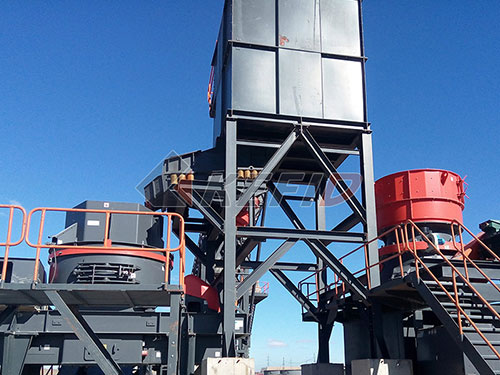
How does this stamp mill improve gold recovery rates?
By utilizing controlled impact force rather than abrasion alone it creates more clean fractures along mineral grain boundaries improving liberation especially critical free gold particles This leads directly higher recovery rates downstream gravity concentration stages Field data shows consistent improvement between five ten percent absolute recovery compared traditional methods same ore type
Can this equipment be integrated into an existing wet processing plant?
Yes The modular stamp mill can replace older secondary crushing units Its discharge can be routed into existing ball mill circuit However maximum benefit realized when configured as part dedicated dry preconcentration circuit bypassing wet milling entirely certain ore types Our engineers provide integration review service
What are typical ongoing maintenance requirements?
Primary tasks involve periodic inspection replacement wear plates mortar box lubricating camshaft bearings Routine maintenance requires standard tools can performed trained plant mechanic Consumable cost typically ranges between two four dollars per ton processed depending local electricity labor rates specific ore abrasiveness
Are there financing options available?
We work several international trade finance institutions offer leasetopurchase loan structures typical terms three five years These tailored mining equipment acquisitions help preserve working capital Contact our commercial team discuss specific program eligibility documentation requirements