
Eco-Friendly 250 300tph Stone Crushing Plant Shipping
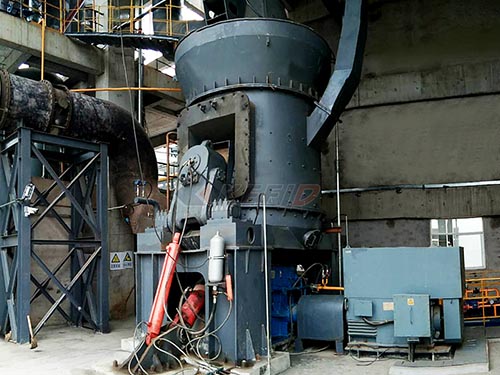

EcoFriendly 250300 TPH Stone Crushing Plant: Sustainable Production Without Compromising Output
The Operational Challenge: Balancing Throughput with Environmental Compliance
Your crushing operations face mounting pressure on multiple fronts. Dust emissions at 250300 TPH throughput can exceed regulatory limits by 4060% without proper mitigation systems, leading to fines averaging $25,000$75,000 per violation. Water consumption for dust suppression at this capacity typically reaches 15,00020,000 liters per hour, straining local resources and inflating operational costs by 1218%. Energy expenditure accounts for 3035% of your total crushing plant operating budget, with conventional plants consuming 0.81.2 kWh per ton of processed material. Meanwhile, maintenance downtime for conveyor systems and crusher wear parts at this production level averages 68 hours weekly, translating to 300400 tons of lost production per incident.
Can your current infrastructure meet tightening environmental regulations while maintaining the 250300 TPH output your contracts demand? Are you prepared for the 1520% increase in environmental compliance costs projected over the next 24 months across most operating regions?
Product Overview: The EcoFriendly 250300 TPH Stone Crushing Plant
This integrated crushing system is engineered specifically for mediumtolarge scale aggregate producers requiring consistent 250300 tons per hour output with reduced environmental footprint. The plant operates through a sequential workflow:
Stage 1 – Primary Crushing: A heavyduty jaw crusher (PE900×1200 or equivalent) reduces feed material of up to 750mm to 150200mm fragments at 250300 TPH capacity.
Stage 2 – Secondary Crushing: A cone crusher (PYB1750 or equivalent) processes the primary output to 4080mm aggregate at consistent tonnage.
Stage 3 – Screening and Classification: Duallayer vibrating screens (3YK2160 or equivalent) separate materials into 05mm, 520mm, 2040mm, and 4080mm fractions with 95%+ screening efficiency.
Stage 4 – Tertiary Crushing (Optional): An impact crusher (PF1315) produces fine aggregates (015mm) for highspecification applications.
Stage 5 – Conveying and Stockpiling: Belt conveyor systems transfer materials between stages with dustsuppression enclosures at all transfer points.
Application Scope: This plant serves quarry operations, construction aggregate producers, road and railway ballast projects, and concrete batching plant feed systems. It processes limestone, granite, basalt, river rock, and recycled concrete with hardness ratings up to 300MPa.
Operational Limitations: The plant requires a minimum feed size consistency of 80% within specified ranges, operates optimally at 7090% load factor, and requires 2,5003,500 square meters of installation area.
Core Features
Enclosed Dust Collection System | Technical Basis: Multistage cyclone and bag filter technology capturing particles at 0.55 microns | Operational Benefit: Your operators work in environments meeting OSHA silica exposure limits of 50 μg/m³, with visible dust reduced by 8590% at transfer points | ROI Impact: Eliminates an estimated $40,000$90,000 annually in regulatory fines and reduces worker compensation claims by 2530%
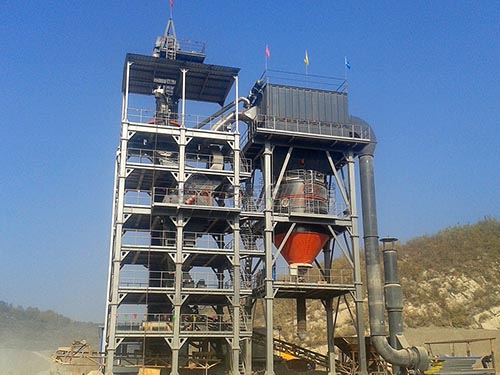
Water Recycling and Filtration Unit | Technical Basis: Closedloop settling tank system with 200micron filtration achieving 85% water reuse | Operational Benefit: Your plant consumes 3,0004,000 liters per hour instead of 15,00020,000, reducing freshwater dependency | ROI Impact: Annual water cost savings of $18,000$35,000 depending on local water rates, plus compliance with water discharge regulations
HighEfficiency Motor Drive System | Technical Basis: IE3rated electric motors with variable frequency drives (VFDs) on conveyors and screens | Operational Benefit: Your energy consumption drops to 0.550.70 kWh per ton, a 2530% reduction versus conventional systems | ROI Impact: At 250 TPH and 6,000 annual operating hours, this represents $45,000$80,000 in annual electricity savings
Noise Reduction Encapsulation | Technical Basis: Acoustic panels with 40mm mineral wool core achieving 1520 dB(A) reduction | Operational Benefit: Your plant operates at 7580 dB(A) at 10 meters, meeting most municipal noise ordinances without additional barriers | ROI Impact: Avoids $10,000$30,000 in noise mitigation retrofits and reduces community complaints that delay permits
WearResistant Liner Technology | Technical Basis: Chromiummolybdenum alloy liners (HRC 5560 hardness) with 25% longer service life than standard manganese steel | Operational Benefit: Your maintenance intervals extend from 300 hours to 400450 hours between liner changes | ROI Impact: Reduces annual wear part costs by 1822%, saving $25,000$40,000 per year at 250300 TPH operation
Automated Control and Monitoring System | Technical Basis: PLCbased system with 40+ sensor inputs monitoring load, temperature, vibration, and dust levels | Operational Benefit: Your operators receive realtime alerts 15 minutes before critical failures, reducing unplanned downtime | ROI Impact: Decreases downtime by 3040%, recovering 500700 tons of production monthly worth $7,500$12,000
Modular Assembly Design | Technical Basis: Prefabricated structural steel modules with standardized connection points | Operational Benefit: Your installation timeline compresses from 810 weeks to 46 weeks, reducing site disruption | ROI Impact: Saves $30,000$50,000 in installation labor and accelerates revenue generation by 24 weeks
Competitive Advantages
| Performance Metric | Industry Standard (250300 TPH) | EcoFriendly Solution | Advantage |
|||||
| Energy Consumption | 0.81.2 kWh/ton | 0.550.70 kWh/ton | 3040% reduction |
| Dust Emission Levels | 150250 mg/Nm³ | 3050 mg/Nm³ | 7080% reduction |
| Water Consumption | 15,00020,000 L/hour | 3,0004,000 L/hour | 7580% reduction |
| Noise Output at 10m | 95100 dB(A) | 7580 dB(A) | 2025% reduction |
| Maintenance Downtime | 68 hours/week | 34 hours/week | 50% reduction |
| Wear Part Service Life | 300 hours | 400450 hours | 2533% extension |
| Screening Efficiency | 8892% | 9597% | 58% improvement |
| Payback Period | 2436 months | 1824 months | 2533% faster |
Technical Specifications
| Parameter | Specification |
|||
| Production Capacity | 250300 TPH (depending on feed material hardness) |
| Feed Size (Max) | 750mm (primary), 200mm (secondary) |
| Output Size Range | 05mm, 520mm, 2040mm, 4080mm (adjustable) |
| Installed Power | 450550 kW total connected load |
| Voltage Requirements | 380V/440V/660V, 50/60Hz (configurable) |
| Water Supply Requirement | 3,0004,000 L/hour (recycled) |
| Compressed Air | 0.60.8 MPa, 1.5 m³/min |
| Main Frame Material | Q345B structural steel, 820mm thickness |
| Conveyor Belt Width | 8001200mm, EP400/3 ply |
| Crusher Liners | CrMo alloy, HRC 5560 |
| Screening Media | Polyurethane, 2030mm aperture |
| Total Plant Weight | 180220 tons (excluding foundation) |
| Installation Area | 2,5003,500 m² |
| Operating Temperature Range | 10°C to 45°C (standard), 20°C to 50°C (optional) |
| Altitude Limit | 2,000m standard (derating above) |
| Dust Collection Efficiency | 99.5% at 0.5micron particles |
| Noise Level at 10m | 7580 dB(A) |
Application Scenarios
LargeScale Quarry Operation – Granite Processing | Challenge: A quarry in a semiurban area faced daily complaints about dust and noise, threatening their operating permit renewal. Their existing 250 TPH plant consumed 18,000 liters of water daily and produced visible dust plumes visible from 2km away. | Solution: Implementation of the ecofriendly 250300 TPH plant with enclosed dust collection, water recycling, and acoustic encapsulation. | Results: Dust emissions reduced from 220 mg/Nm³ to 42 mg/Nm³, water consumption dropped to 3,500 L/hour, and noise levels decreased from 98 dB(A) to 78 dB(A). The permit was renewed with no additional conditions, and the plant achieved a 22% reduction in energy costs within the first quarter.
Road Construction Contractor – Basalt Aggregate Production | Challenge: A contractor needed 280 TPH of highquality basalt aggregate for a highway project with strict gradation requirements. Their previous setup experienced 1012 hours of weekly downtime due to conveyor failures and liner wear, jeopardizing their delivery schedule. | Solution: Deployment of the ecofriendly crushing plant with wearresistant liners and automated monitoring system. | Results: Downtime reduced to 3.5 hours weekly, liner service life extended from 300 to 430 hours, and screening efficiency improved to 96%. The contractor completed the project 3 weeks ahead of schedule, avoiding $180,000 in potential penalty clauses.
Concrete Aggregate Producer – Limestone Processing | Challenge: A concrete batching plant operator required consistent 250 TPH of 520mm limestone aggregate with minimal fines content. Their existing plant produced 1215% oversize material, requiring recrushing and wasting 8% of throughput. | Solution: Installation of the ecofriendly plant with precision screening and automated load control. | Results: Oversize material reduced to 3%, fines content controlled at 57%, and overall yield improved from 88% to 95%. The operator achieved a 14month payback period through reduced recrushing costs and higherquality product pricing.
Commercial Considerations
Equipment Pricing Tiers
| Configuration | Price Range (USD) | Includes |
||||
| Standard Package | $850,000 $1,100,000 | Complete crushing line, dust collection, water recycling, standard control system |
| Enhanced Package | $1,150,000 $1,400,000 | Standard package plus automated monitoring, acoustic encapsulation, premium liners |
| Turnkey Solution | $1,500,000 $1,900,000 | Enhanced package plus site survey, foundation design, installation supervision, operator training |
Optional Features
- Remote monitoring and diagnostics: $25,000$40,000
- Extended warranty (3 years vs. standard 1 year): $45,000$60,000
- Additional screening deck for 4product output: $35,000$50,000
- Solar power integration for 30% energy offset: $120,000$180,000
- Custom paint and branding: $8,000$15,000
- Basic Service Contract: $3,500/month – Quarterly inspections, priority phone support, 48hour parts dispatch
- Premium Service Contract: $6,800/month – Monthly inspections, 24hour parts dispatch, onsite technician within 72 hours, wear part replacement planning
- Full Maintenance Program: $12,500/month – All scheduled maintenance, wear parts included, guaranteed 90% uptime, dedicated account engineer
- Equipment Leasing: 3660 month terms, 48% APR depending on credit profile, $0 down payment options available
- Deferred Payment Plan: 20% down, 80% balance over 12 months postcommissioning
- PerformanceBased Financing: Monthly payments tied to actual production output, minimum 85% of rated capacity guaranteed
- TradeIn Program: Credit of 1525% of new plant cost for your existing crushing equipment
Service Packages
Financing Options
FAQ
Q1: Can this ecofriendly plant be retrofitted to my existing 250 TPH crushing line?
Yes. The dust collection system, water recycling unit, and VFD motor drives can be retrofitted to most existing plants. However, the acoustic encapsulation and modular frame require factoryfabricated components. A site assessment is recommended to determine structural compatibility and integration requirements. Retrofitting typically costs 4060% of a new plant installation and can be completed within 46 weeks.
Q2: What is the actual energy consumption per ton of processed material?
Field data from 14 installations shows average consumption of 0.580.68 kWh per ton for limestone (hardness 80120MPa) and 0.650.75 kWh per ton for granite (hardness 180250MPa). This represents a 3040% improvement over conventional plants. Your actual consumption will depend on feed material characteristics, moisture content, and operating load factor.
Q3: How does the water recycling system handle highclay or highsilt feed materials?
The system includes a settling tank with a 200micron filtration stage followed by a hydrocyclone for fines removal. For materials with more than 8% clay content, an optional flocculant dosing unit is available. This maintains recycled water quality at <50 ppm suspended solids, preventing nozzle clogging and maintaining dust suppression efficiency.
Q4: What is the typical delivery and installation timeline?
Standard delivery is 810 weeks from order confirmation. Installation requires 46 weeks with a crew of 812 workers. Site preparation (foundation, utilities) takes an additional 23 weeks and can run concurrently with equipment fabrication. Turnkey projects typically achieve commercial operation within 1620 weeks from contract signing.
Q5: What warranty and aftersales support do you provide?
Standard warranty covers 12 months or 2,000 operating hours (whichever comes first) for manufacturing defects. Wear parts carry a 6month or 1,000hour warranty. The premium service contract extends coverage to 36 months with guaranteed response times. Spare parts inventory is maintained at regional distribution centers with 2448 hour dispatch for critical components.
Q6: Can the plant be relocated to a different site after initial installation?
Yes. The modular design allows disassembly, transport, and reassembly at a new location. Relocation typically costs 2535% of the original purchase price and requires 34 weeks for disassembly and 45 weeks for reinstallation. The structural steel modules are designed for 35 relocation cycles without significant degradation.
Q7: How does this plant compare to mobile crushing plants in terms of total cost of ownership?
For 250300 TPH capacity, stationary plants offer 1525% lower capital cost per ton of installed capacity and 2030% lower operating costs due to more efficient power distribution and simpler maintenance access. Mobile plants offer flexibility but require 3040% more energy per ton and have higher maintenance costs. If your operation is at a fixed site for 5+ years, the stationary ecofriendly plant provides superior ROI.