
Custom Stone Quarry Crushing Plant Sourcing
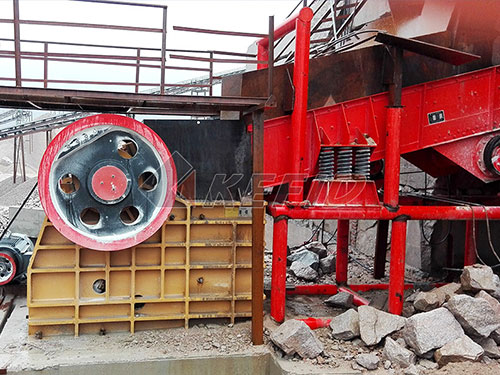

H1: Optimize Your Aggregate Production with a Custom Stone Quarry Crushing Plant
Subheader: Engineered to address highvolume operational bottlenecks, reduce costperton, and deliver consistent, inspec aggregate for demanding commercial projects.
1. The HighCost Challenges of Quarry Crushing Operations
Managing a stone quarry's primary crushing phase presents persistent, profiteroding challenges. Inefficiencies here cascade downstream, impacting entire aggregate production. Are you facing these issues?
Unscheduled Downtime & High Maintenance Costs: Frequent liner changes, unexpected component failures, and conveyor jams halt production. Industry averages indicate that unplanned downtime in primary crushing can cost between $5,000 and $15,000 per hour in lost output and labor.
Inconsistent Feed & Bridging: Variable feed size from the blast pile causes surges and starvation cycles, leading to suboptimal crusher utilization, poor product gradation, and increased wear.
Rising Energy Consumption Per Ton: Older, nonintegrated crushing circuits often operate at fixed speeds regardless of load, wasting significant power. Energy can represent over 40% of a plant's operational expenditure.
Product Quality & Specification Compliance: Inability to consistently meet precise gradation requirements (for asphalt chips, concrete aggregate, road base) leads to product rejection or discounting, directly affecting revenue.
Scalability & Inflexibility: Fixed plants struggle to adapt to changing deposit characteristics or new product specifications without major capital reinvestment.
The central question is: how can you transform this highcost node into a reliable, efficient driver of profitability? The answer lies in a purposeengineered Custom Stone Quarry Crushing Plant.
2. Product Overview: Integrated Primary Crushing Station
A Custom Stone Quarry Crushing Plant is not a single machine but a coordinated system designed for the initial size reduction of blasted rock (typically from >700mm down to 0150mm). It integrates feeding, crushing, and initial material handling into a cohesive unit.
Operational Workflow:
1. Controlled Feed: A heavyduty apron feeder or vibrating grizzly feeder (VGF) regulates the flow of shot rock from the surge pile, scalping out fine material to bypass the crusher.
2. Primary Size Reduction: A robust primary crusher (jaw or gyratory) receives the regulated feed, applying compressive force to break rock to a manageable size.
3. Primary Sorting & ByPass: A prescreening module separates crushed material into specified product streams (e.g., base material) and oversize for further crushing.
4. Material Transport: Conveyors transport sized product to secondary crushing stages or stockpiles.
Application Scope & Limitations:
Scope: Ideal for mediumtohigh volume quarries producing construction aggregates (limestone, granite, trap rock). Suited for both greenfield installations and legacy plant upgrades.
Limitations: Not designed for final product shaping (tertiary/quartiary stages) or processing highly abrasive ores without specific material specification adjustments. Site topography and geotechnical factors influence final layout design.
3. Core Features: Engineered for Performance & Payback
Modular Chassis Design | Technical Basis: Preengineered structural steel modules with standardized connection points | Operational Benefit: Reduces onsite installation time by up to 60%, minimizes civil works cost and complexity | ROI Impact: Faster commissioning accelerates revenue generation; modularity allows for future reconfiguration or relocation.
Intelligent LoadSensing Feeder Control | Technical Basis: Variable Frequency Drive (VFD) on feeder motors linked to crusher amp draw sensors | Operational Benefit: Automatically modulates feed rate to maintain optimal crusher cavity fill and prevent choking/starving | ROI Impact: Improves throughput by 815%, reduces liner wear costs by up to 20%, optimizes energy use.
Hydraulic Adjustment & Clearing Systems | Technical Basis: Integrated hydraulic rams for crusher setting adjustment and tramp iron release | Operational Benefit: Allows operators to change product size or clear blockages in minutes from a central control station without manual intervention | ROI Impact: Minimizes downtime for routine adjustments; enhances safety by reducing personnel entry into hazardous areas.
HeavyDuty AbrasionResistant Construction | Technical Basis: AR400/500 steel liners at all wear points; impactresistant conveyor idlers; sealedforlife bearings on critical components | Operational Benefit: Extends service intervals for wear parts; maintains structural integrity under continuous highimpact loading | ROI Impact: Lowers lifetime cost of ownership through reduced part replacement frequency and labor hours.
Integrated Dust Suppression & Noise Abatement | Technical Basis: Strategically placed spray nozzles with solenoid control; acoustic enclosures around motors and drives | Operational Benefit: Actively controls respirable dust at transfer points; maintains compliance with environmental (OSHA/MSHA) regulations | ROI Impact: Avoids regulatory fines and work stoppages; improves community relations and site working conditions.
Centralized PLCBased Control System | Technical Basis: Industrial programmable logic controller with humanmachine interface (HMI) touchscreen | Operational Benefit: Provides realtime monitoring of power draw, production rates, and fault diagnostics; enables semiautomatic operation sequences | ROI Impact: Enables datadriven decision making; reduces operator error; simplifies troubleshooting.

4. Competitive Advantages
| Performance Metric | Industry Standard Practice | Custom Stone Quarry Crushing Plant Solution | Advantage (% Improvement) |
| : | : | : | : |
| Availability / Uptime | ~8590%, frequent minor stoppages| >94%, designed for reliabilityfocused maintenance| +510% more productive hours |
| Cost Per Ton (Operating)| High variability due to manual feed control| Stable low cost via automated optimization| Field data shows 1218% reduction |
| Installation / Commissioning Time| 610 weeks for stickbuilt foundations| 24 weeks with modular bolttogether design| Up to 60% faster deployment |
| Energy Efficiency (kWh/ton)| Fixedspeed drives running at full load| VFDcontrolled motors matching load demand| Documented savings of 1525% |
| Adaptability to Feed Variation| Manual adjustment leads to gradation shifts| Automated systems compensate in realtime| Product consistency improved by ~30% |
5. Technical Specifications
Capacity Range: Configurable from 400 TPH to 1,800+ TPH throughput capacity.
Primary Crusher Options: Jaw Crusher (900mm x 1200mm up to 1500mm x 2000mm) or Primary Gyratory Crusher (42” up to 60” feed opening).
Power Requirements: Total installed power typically between 350 kW 800 kW depending on configuration. Requires dedicated highvoltage supply connection.
Material Specifications: Designed for compressive strength rock up to 350 MPa. Wear package options available for highly abrasive materials.
Physical Dimensions (Typical): Length (~25m 40m), Width (~8m 10m), Height (~7m 12m). Exact footprint is customconfigured.
Environmental Operating Range: Standard design operates from 20°C to +45°C ambient temperature. Optional packages available for extreme climates (arctic or tropical).
6. Application Scenarios
Granite Quarry Expansion Project
Challenge: A southeastern US granite quarry needed to increase primary capacity by 50% but had limited space for plant expansion within their existing property line.
Solution: Implementation of a compact Custom Stone Quarry Crushing Plant with a highcapacity gyratory crusher on a single modular chassis replaced three older jaw crushers spread across the site.
Results: Achieved target throughput increase within the same physical footprint while reducing energy consumption by an estimated $45k annually due to modern drive systems.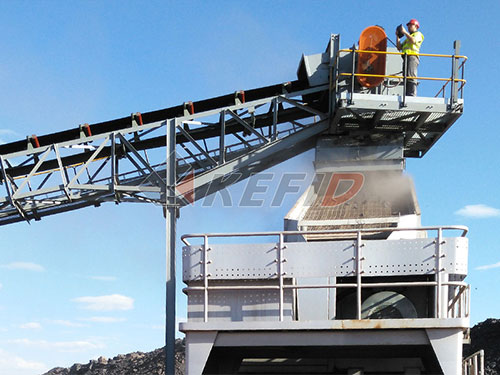
Limestone Aggregate Producer Facing Quality Penalties
Challenge: The producer faced recurring penalties from state DOT contracts due to inconsistent gradation of their 57 stone product from the primary circuit.
Solution: Integration of an intelligent loadsensing feeder system with an integrated prescreen on their new custom primary plant allowed precise removal of fines before secondary crushing.
Results: Product consistency improved dramatically; qualityrelated penalties were eliminated within one quarter postinstallation.
7. Commercial Considerations
A Custom Stone Quarry Crushing Plant is a capital investment designed for longterm payback through operational savings.
Pricing Tiers & Configuration Drivers
Base Configuration: Includes primary crusher module with basic feeder/screen/conveyor system ($1M $2M range).
MidRange Optimization: Adds intelligent control systems advanced dust suppression ($2M $3M range).
Premium Turnkey Solution: Fully integrated system including advanced automation remote monitoring capabilities ($3M+).
Optional Features
Onboard diesel generator sets
Advanced predictive maintenance sensors
Extended wear packages
Climatecontrol operator cabins
Service Packages
Commissioning Supervision
Onsite Operator Training Programs
Preventive Maintenance Contracts
Guaranteed Parts Availability Programs
Financing Options are available including equipment leasing capital expenditure loans tailored project financing typically structured over terms that align with expected productivity gains
Frequently Asked Questions
1. How do I determine if my site needs a custom solution versus standard equipment?
A detailed analysis of your annual production targets feed material characteristics required end products is necessary Standard plants suit common applications while custom designs address specific challenges like space constraints extreme abrasion complex gradation requirements
2 What is the typical lead time from order placement commissioning?
For standard configurations lead time ranges from months For highly customized solutions engineering procurement manufacturing can require months followed by weeks installation
3 How does this plant integrate with my existing secondary tertiary circuits?
Our engineering team will design interface points conveyors electrical controls ensure compatibility Your existing downstream equipment can often be retained upgraded as needed
4 What are the ongoing maintenance requirements?
Preventive maintenance schedules are provided based on operating hours Key items include regular lubrication wear liner inspection mechanical drive checks Predictive technologies can further optimize these intervals
5 Can you provide performance guarantees?
Yes performance guarantees covering minimum throughput maximum power consumption key product gradation specifications are standard in our contracts based on agreedupon test protocols
6 Are spare parts readily available?
We maintain regional parts distribution centers Critical spare parts kits are recommended at purchase Longterm supply agreements ensure availability throughout the equipment lifecycle
7 What operator skill level is required?
The centralized PLC control system simplifies operation Comprehensive training is provided during commissioning enabling your existing team manage the plant effectively