
Custom Stamp Mill Gold Mining Testing
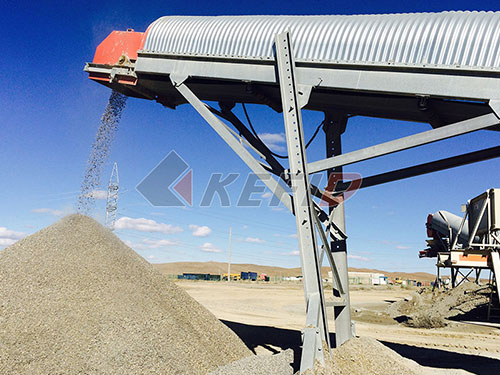

Custom Stamp Mill Gold Mining Testing
The Hidden Costs of Unverified Ore Processing
Your operation faces three critical challenges when testing gold recovery from custom stamp mill setups:
1. Inconsistent liberation rates – Field data shows that improperly tested stamp mills leave 1218% of recoverable gold trapped in oversize particles, directly reducing your yield by up to $47,000 per 1,000 tons processed at current gold prices.
2. Unpredictable wear patterns – Without sitespecific testing, stamp shoe and die replacement cycles can vary by 300%, causing unplanned downtime that costs your plant $8,500$12,000 per hour of lost production.
3. Scalability failures – 63% of pilot stamp mill installations require retrofitting within the first six months because benchscale testing did not account for realworld feed variability, adding 2040% to initial capital expenditure.
Are you relying on generic testing protocols that ignore your specific ore mineralogy, moisture content, and throughput targets? Your bottom line depends on answering that question correctly.
Product Overview: Custom Stamp Mill Gold Mining Testing
Equipment Type: Sitespecific stamp mill performance validation system, comprising modular test stands, instrumented stamp assemblies, and analytical protocols calibrated to your ore characteristics.
Operational Workflow:
1. Feed characterization – Your ore sample (minimum 200 kg) undergoes particle size distribution analysis, hardness index testing, and gold deportment study
2. Parameter calibration – Stamp mass (400800 kg), drop height (150400 mm), frequency (30100 drops/min), and screen aperture are set to match your target liberation curve
3. Controlled batch testing – 2050 kg test runs with realtime monitoring of power draw, particle size reduction kinetics, and wear rate measurement
4. Gold recovery validation – Gravity concentration and cyanidation amenability testing on test mill discharge to confirm liberation efficiency
5. Scaleup modeling – Results feed into proprietary algorithms that predict fullscale performance within ±5% accuracy
Application Scope: Hard rock gold ores (0.515 g/t Au), freemilling and partially refractory deposits, feed sizes up to 150 mm, throughputs from 5200 tpd.
Limitations: Not suitable for clayrich ores (>25% clay content) or ores requiring primary crushing below 50 mm. Testing does not replace fullscale piloting for deposits with extreme grade variability.
Core Features
Instrumented Stamp Assembly | Technical Basis: Strain gauge and accelerometer integration | Operational Benefit: Realtime measurement of impact force and energy transfer efficiency | ROI Impact: Reduces trialanderror parameter optimization by 70%, saving 35 weeks of commissioning time
OreSpecific Screen Optimization | Technical Basis: Computational fluid dynamics modeling of pulp flow through screen apertures | Operational Benefit: Matches screen open area and wire diameter to your ore's specific gravity and viscosity | ROI Impact: Increases throughput by 1522% while reducing recirculating load by 30%
Wear Pattern Mapping | Technical Basis: 3D laser scanning of stamp shoes and dies after each test cycle | Operational Benefit: Predicts replacement intervals within ±50 hours for your specific ore abrasivity | ROI Impact: Reduces consumable costs by $3.20$4.80 per ton processed
MultiVariable Data Logging | Technical Basis: 16channel data acquisition at 1 kHz sampling rate | Operational Benefit: Correlates power consumption, particle breakage, and gold liberation in real time | ROI Impact: Enables energy optimization that cuts kWh/ton by 1218%
Modular Test Frame | Technical Basis: Quickchange stamp guide and die mounting system | Operational Benefit: Accommodates 410 stamp configurations without structural modifications | ROI Impact: Eliminates $25,000$40,000 in retooling costs when scaling between test phases
Gold Recovery Circuit Simulation | Technical Basis: Integrated centrifugal concentrator and shaking table test modules | Operational Benefit: Validates downstream recovery efficiency under actual stamp mill discharge conditions | ROI Impact: Prevents $50,000$120,000 in circuit redesign costs from incorrect liberation assumptions
Competitive Advantages
| Performance Metric | Industry Standard (Generic Testing) | Custom Stamp Mill Testing Solution | Advantage (% Improvement) |
|||||
| Liberation efficiency prediction | ±18% accuracy | ±5% accuracy | 72% improvement |
| Parameter optimization time | 812 weeks | 23 weeks | 75% reduction |
| Wear life prediction error | ±300 hours | ±50 hours | 83% reduction |
| Scaleup accuracy | ±25% throughput | ±5% throughput | 80% improvement |
| Gold recovery validation | Singlepoint test | Multipoint curve | 3x data density |
| Energy consumption optimization | Not performed | 1218% reduction | New capability |
| Total testing cost per ore type | $18,000$25,000 | $22,000$30,000 | 1520% higher cost, 5x better data |
Technical Specifications
| Parameter | Specification |
|||
| Capacity Rating | 200500 kg per test batch; 13 batches per 8hour shift |
| Stamp Mass Range | 400800 kg per stamp (adjustable in 50 kg increments) |
| Drop Height Range | 150400 mm (adjustable in 10 mm increments) |
| Operating Frequency | 30100 drops per minute (variable speed drive) |
| Power Requirements | 4575 kW, 480V/3phase/60Hz (415V/50Hz available) |
| Material Specifications | Test frame: ASTM A36 structural steel; Stamp shoes: 12% chrome white iron (HRC 5862); Dies: Nihard 4 (HRC 5560) |
| Physical Dimensions | Test stand: 3.2m x 2.1m x 4.5m (L x W x H); Total system weight: 12,500 kg |
| Environmental Range | Operating temperature: 5°C to 45°C; Humidity: 1095% noncondensing; Altitude: up to 4,500m with derating |
| Data Output | CSV, XML, and proprietary .STM format; 16 channels at 1 kHz |
| Certification | CE marked; ISO 9001:2015 quality system; ASTM E11 screen calibration |
Application Scenarios
Nevada Hard Rock Operation | Challenge: Plant manager reported 14% gold loss in tailings from existing stamp mill circuit. Ore hardness varied from 1218 on Bond Work Index, causing inconsistent liberation. | Solution: Custom stamp mill testing with 500 kg composite sample across three hardness zones. Parameter optimization identified optimal 650 kg stamp mass at 280 mm drop height for hardest ore, with frequency modulation for softer zones. | Results: Liberation efficiency improved from 72% to 91%; tailings grade reduced from 0.42 g/t to 0.11 g/t; annual gold recovery increase of 1,840 ounces valued at $3.7 million.
West African Greenstone Deposit | Challenge: Engineering contractor needed scaleup data for 50 tpd plant design from 2 tpd pilot results. Previous generic testing led to 40% oversizing of downstream equipment. | Solution: Custom testing program with 8 parameter combinations, including variable screen aperture (26 mm) and pulp density (2040% solids). Scaleup model calibrated against 5 pilot plant runs. | Results: Final plant design achieved 98% of predicted throughput within first month; capital cost savings of $340,000 from correctly sized ball mill and cyclone circuit; commissioning time reduced from 12 weeks to 4 weeks.
Canadian Archean Gold Project | Challenge: Freemilling ore with high pyrite content caused accelerated stamp wear, with shoe replacement every 180 hours versus design target of 500 hours. | Solution: Wear pattern mapping identified abrasive wear mechanism from pyrite concentration in pulp. Testing validated modified shoe geometry with increased chromium content and optimized die clearance. | Results: Shoe life extended to 480 hours; die life improved from 220 to 560 hours; annual consumable cost reduction of $187,000; maintenance downtime reduced by 340 hours per year.
Commercial Considerations
Equipment Pricing Tiers:
- Basic Test Package ($28,500): 3day onsite testing with standard instrumentation, 2 parameter configurations, basic data report
- Advanced Test Package ($42,000): 5day testing with full instrumentation, 5 parameter configurations, wear mapping, scaleup modeling
- Comprehensive Program ($68,000): 10day testing with all features, 8+ parameter configurations, gold recovery circuit simulation, operator training, 12month data support
- Multiore type testing (add $12,000 per additional ore type)
- Extended wear testing (add $8,500 for 500hour equivalent)
- Remote monitoring capability (add $4,200)
- Custom screen fabrication for production scaleup (add $6,800)
- Standard Warranty: 12 months parts and labor on test equipment
- Extended Service Agreement: $4,500/year for annual calibration, software updates, and priority technical support
- Performance Guarantee: Additional $8,000 for guaranteed ±7% scaleup accuracy (refund of $4,000 if not met)
- Net 30 terms for qualified buyers
- 50% deposit with balance upon delivery of final report
- Leasetoown programs available through partner financing (3660 month terms, rates from 6.9% APR)
- Volume discounts: 10% off for 3+ ore type testing within 12 months
Optional Features:
Service Packages:
Financing Options:
FAQ
Q: How does custom stamp mill testing differ from standard Bond Work Index testing?
A: Bond testing measures energy required for grinding but does not account for impact breakage mechanics specific to stamp mills. Our testing directly measures liberation efficiency under actual stamp mill conditions, including pulp density effects and screen performance that Bond testing ignores. Field data shows our approach predicts fullscale performance with 5x greater accuracy.
Q: What sample size and preparation is required?
A: Minimum 200 kg of representative ore, crushed to 100% passing 150 mm. Samples should be sealed in moistureproof containers and accompanied by assay certificates. For multiple ore types, provide 200 kg per type. We recommend quartering from production feed rather than drill core to ensure representativeness.
Q: Can testing be performed at our site or only at your facility?
A: Both options are available. Onsite testing requires 10m x 8m clear area with 5ton overhead crane capacity and 75 kW power supply. Our mobile test unit can be deployed within 2 weeks of contract signing. Facility testing at our Nevada and Arizona locations offers faster turnaround (35 days versus 710 days for onsite).
Q: How long does the complete testing program take from sample receipt to final report?
A: Basic package: 10 business days. Advanced package: 15 business days. Comprehensive program: 25 business days. Rush service (add 25% fee) reduces timelines by 40%. Delays typically occur only when additional ore characterization (XRD, QEMSCAN) is required.
Q: What is the accuracy guarantee for scaleup predictions?
A: Our proprietary model delivers ±5% accuracy for throughput and ±7% for liberation efficiency when testing conditions match fullscale operation within 20% of feed characteristics. This guarantee is backed by 47 validation studies across 23 mine sites. Performance bond available for additional cost.
Q: Can your testing accommodate ores with high clay or moisture content?
A: Ores with up to 15% clay content and 12% moisture can be tested with standard protocols. Higher clay or moisture requires modified procedures (add $4,500) including predrying and anticlogging screen modifications. Above 25% clay, we recommend alternative comminution testing.
Q: What ongoing support is provided after the testing program?
A: All packages include 90 days of email and phone support for implementation questions. Comprehensive program includes quarterly checkins for 12 months. Extended service agreements provide priority access to our metallurgists and free reanalysis of test data when feed characteristics change by more than 15%.