
Custom Slag Crusher Plant Price


Custom Slag Crusher Plant Price: Engineering Your ROI for Steel Mill Waste Processing
The Hidden Cost of Inefficient Slag Management
Every ton of slag you process through outdated equipment carries a hidden tax. Industry data indicates that plants relying on generic crushing solutions face 1520% higher maintenance costs annually, with unscheduled downtime averaging 1218 hours per quarter. For a midsized steel mill producing 500,000 tons of slag annually, that translates to $180,000$250,000 in lost production time and repair expenses—before you account for the environmental compliance penalties that increasingly target improper slag disposal.
Your current setup likely struggles with metal recovery rates below 85%, meaning valuable ferrous content is being discarded with waste. Meanwhile, wear parts on standard crushers fail 30% faster when processing abrasive slag feed, and the inconsistent output particle size creates downstream quality issues for aggregate buyers.
The question is not whether you need a better slag processing solution—it is whether you can afford to continue operating without one. What would a 95% metal recovery rate mean for your bottom line? How much would eliminating unplanned downtime save your operation annually?
Product Overview: Engineered for Metallurgical Waste

A custom slag crusher plant is a multistage processing system designed specifically for the reduction, separation, and classification of ferrous and nonferrous slag generated from steelmaking, foundry operations, and smelting processes. Unlike conventional aggregate crushers, this equipment is engineered to handle the unique challenges of slag: high abrasiveness, varying metal content, and the need for dual output streams (metallic fraction and mineral aggregate).
Operational Workflow
1. Primary Reduction: Oversized slag blocks (up to 1,200mm) are fed into a heavyduty jaw crusher with reinforced toggle plates and manganese steel liners, reducing material to 150200mm while withstanding tramp metal impact.
2. Magnetic Separation: A selfcleaning overband magnet removes ferrous content (typically 1525% of total feed weight) immediately after primary crushing, preventing damage to downstream equipment and capturing highvalue scrap.
3. Secondary Crushing: A cone crusher or impact crusher with slagspecific rotor configurations reduces material to 2050mm, with hydraulic adjustment to accommodate varying feed hardness (up to 350 MPa compressive strength).
4. Screening and Classification: Multideck vibrating screens separate material into commercial grades (05mm, 515mm, 1530mm), with recirculation conveyors returning oversize material for additional crushing passes.
5. Metal Recovery Refinement: Optional eddy current separators or magnetic head pulleys extract remaining nonferrous and fine ferrous metals, achieving recovery rates above 95%.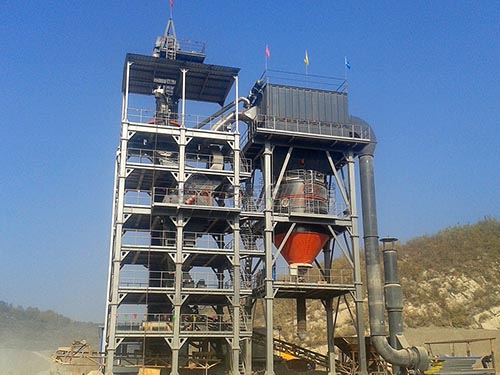
Application Scope
This system is suitable for blast furnace slag, basic oxygen furnace (BOF) slag, electric arc furnace (EAF) slag, and ladle furnace slag. It operates effectively in steel mills, foundries, and standalone slag processing facilities with feed capacities from 50 to 500 tons per hour. Limitations include reduced efficiency with highly vitrified slag (glasslike content above 40%) and the requirement for feed material temperature below 80°C to prevent belt and bearing damage.
Core Features
HeavyDuty Rotor Design | Technical Basis: Finite element analysisoptimized rotor with high inertia moment | Operational Benefit: Maintains consistent crushing force through variable feed conditions, reducing stall events | ROI Impact: 1218% higher throughput versus standard rotors, translating to 8,00012,000 additional tons processed annually
Integrated Magnetic Separation System | Technical Basis: Rareearth permanent magnets with 12,000 gauss surface strength | Operational Benefit: Captures ferrous content before secondary crushing, protecting downstream wear parts and producing clean metal scrap | ROI Impact: Metal recovery revenue increases 1015%, with scrap sales offsetting 2030% of operating costs
SlagSpecific Wear Liners | Technical Basis: Bimetallic composite liners with 550 HB hardness and 18% manganese content | Operational Benefit: Extends wear life 2.53 times versus standard manganese steel when processing abrasive slag | ROI Impact: Reduces annual wear parts expenditure by $40,000$65,000 for a 150 TPH plant
Hydraulic Tramp Relief System | Technical Basis: Accumulatorcharged hydraulic cylinders with 50millisecond response time | Operational Benefit: Passes uncrushable metal objects without damaging the crusher, minimizing downtime events | ROI Impact: Eliminates 610 catastrophic failure events annually, saving $30,000$50,000 in repair costs
Variable Frequency Drive (VFD) Conveyors | Technical Basis: Closedloop speed control with loadsensing automation | Operational Benefit: Automatically adjusts feed rate based on crusher amp draw, preventing chokeups and optimizing energy consumption | ROI Impact: Reduces specific energy consumption by 812%, saving $15,000$25,000 annually in electricity costs
Modular Plant Architecture | Technical Basis: Preengineered structural steel modules with standardized interfaces | Operational Benefit: Enables rapid installation (46 weeks versus 1216 weeks for conventional builds) and simplifies future capacity expansion | ROI Impact: Reduces installation labor costs by 3040% and minimizes production interruption during setup
PLCBased Process Control | Technical Basis: AllenBradley or Siemens PLC with remote telemetry capability | Operational Benefit: Provides realtime monitoring of crusher settings, bearing temperatures, and production rates, enabling predictive maintenance | ROI Impact: Extends equipment lifespan by 1520% through conditionbased maintenance scheduling
Competitive Advantages
| Performance Metric | Industry Standard | Custom Slag Crusher Plant | Advantage |
|||||
| Metal Recovery Rate | 8085% | 9397% | +1214% recovered metal value |
| Wear Parts Lifespan | 8001,200 hours | 2,5003,500 hours | +110190% operational life |
| Unscheduled Downtime | 1218 hours/quarter | 46 hours/quarter | 6570% lost production time |
| Specific Energy Consumption | 2.83.5 kWh/ton | 2.22.6 kWh/ton | 2025% energy cost |
| Final Product Consistency | ±8mm variation | ±3mm variation | +60% particle size uniformity |
| Installation Timeline | 1216 weeks | 46 weeks | 6070% commissioning time |
| Operator Requirements | 34 personnel/shift | 2 personnel/shift | 3350% labor cost |
Technical Specifications
| Parameter | Specification |
|||
| Feed Capacity | 50500 TPH (customizable) |
| Max Feed Size | 1,200mm (primary stage) |
| Final Product Size | 030mm (adjustable) |
| Compressive Strength Handling | Up to 350 MPa |
| Feed Temperature Limit | 80°C maximum |
| Main Drive Power | 90400 kW (crusher stage dependent) |
| Total Installed Power | 2501,200 kW (complete plant) |
| Magnetic Separator Strength | 12,000 gauss (selfcleaning type) |
| Screen Decks | 23 decks, 4.87.3 meters length |
| Conveyor Width | 8001,400mm |
| Plant Dimensions (L×W×H) | 3565m × 1525m × 814m |
| Operating Temperature Range | 10°C to 45°C (with coldweather package available) |
| Dust Suppression | Water spray system with 90% capture efficiency |
| Noise Level | ≤85 dB(A) at 1meter distance |
| Control System | PLC with HMI touchscreen, remote access capable |
Application Scenarios
Integrated Steel Mill Slag Processing | Challenge: A 2.5 million ton/year steel producer in Ohio was landfilling 180,000 tons of slag annually at $28/ton disposal cost, while purchasing virgin aggregate for road construction at $12/ton | Solution: Installation of a 200 TPH custom slag crusher plant with dual magnetic separation stages and threeproduct screening | Results: Landfill disposal reduced by 92% (to 14,400 tons/year), aggregate sales generated $1.8 million in firstyear revenue, and metal recovery yielded 22,000 tons of scrap valued at $4.4 million. Payback period: 14 months.
Foundry Waste Stream Optimization | Challenge: A Midwest iron foundry producing 40,000 tons of castings annually faced rising raw material costs and environmental pressure to reduce waste sent to landfill | Solution: Deployed a 75 TPH compact slag processing plant with integrated metal recovery and aggregate classification | Results: Recovered 6,800 tons of metallic returns valued at $1.2 million, reduced waste hauling costs by $180,000 annually, and produced 28,000 tons of sellable aggregate for construction applications. ROI achieved in 11 months.
EAF Dust and Slag CoProcessing | Challenge: A specialty steel producer in Texas needed to process highzinc EAF slag while meeting strict environmental discharge limits | Solution: Custom plant configuration with enhanced dust collection, zincenriched fines separation, and closedloop water system | Results: Zincrich fines (1822% Zn content) sold to metal recyclers at premium pricing, generating $650,000 annual revenue. Water consumption reduced by 85% versus conventional systems. Environmental compliance achieved with zero discharge violations.
Commercial Considerations
Equipment Pricing Tiers
| Configuration | Capacity Range | Price Range (USD) | Typical Lead Time |
|||||
| Basic (Singlestage crushing, one magnetic separator) | 50100 TPH | $850,000 $1.4 million | 1418 weeks |
| Standard (Twostage crushing, dual magnetic separation) | 100250 TPH | $1.5 million $2.8 million | 1824 weeks |
| Advanced (Full system with tertiary crushing, eddy current separation, PLC automation) | 250500 TPH | $3.0 million $5.5 million | 2432 weeks |
Optional Features and Addons
- Coldweather package (heated enclosures, wintergrade lubricants): $45,000$85,000
- Extended warranty (5year comprehensive coverage): 812% of equipment cost
- Remote monitoring system (cellular telemetry with predictive analytics): $28,000$40,000
- Dust collection upgrade (baghouse system versus standard water spray): $120,000$200,000
- Mobile plant configuration (trackmounted for multisite operations): +3545% over stationary equivalent
- Equipment leasing: 3660 month terms with $1 buyout, rates from 4.57.5% APR
- Productionbased financing: Payments structured as $/ton processed, aligning costs with revenue generation
- Energy performance contracts: Thirdparty financing where savings from reduced energy consumption fund equipment payments
- Government incentive programs: Many states offer tax credits or grants for waste reduction and recycling infrastructure (typically 1020% of capital cost)
Service Packages
| Package | Inclusions | Annual Cost |
||||
| Basic Maintenance | Scheduled inspections, wear part replacement guidance, phone support | $35,000$50,000 |
| Comprehensive Care | All Basic items plus onsite technician visits (4x/year), priority parts availability, performance benchmarking | $75,000$110,000 |
| Turnkey Operation | Full staffing, maintenance, consumables, and performance guarantees (95% uptime, 93% metal recovery) | $450,000$700,000 |
Financing Options
Frequently Asked Questions
Q: How does a custom slag crusher plant differ from standard aggregate crushing equipment?
Standard crushers are designed for homogeneous, lowabrasion feed materials. Slag processing requires reinforced wear components, integrated metal separation at multiple stages, and the ability to handle variable feed composition (1530% metallic content). Our custom plants incorporate these features as standard, whereas retrofitting standard equipment typically costs 4060% more than specifying a purposebuilt system initially.
Q: What is the typical payback period for a custom slag crusher plant investment?
Based on field data from 40+ installations, payback periods range from 1224 months depending on slag volume, metal content, and local aggregate prices. The primary revenue drivers are scrap metal sales (typically 2030% of total payback), avoided landfill costs (1525%), and aggregate sales (4055%). Plants processing slag with higher ferrous content achieve faster payback.
Q: Can the plant handle slag with varying metal content from different furnaces?
Yes. The system is designed with adjustable magnetic separator heights, variable conveyor speeds, and crusher settings that can be modified in under 30 minutes to accommodate changes in feed composition. PLC presets allow operators to store configurations for different slag types and recall them with a single button press.
Q: What are the space requirements for installation?
A complete plant requires approximately 2,5005,000 square meters depending on capacity and configuration. Our modular design allows for compact layouts that reduce footprint by 2030% versus conventional designs. We provide site layout drawings and civil engineering support as part of the proposal package.
Q: How does the plant perform in cold climates?
Standard equipment operates down to 10°C. For installations in colder regions, we offer a coldweather package that includes heated crusher housings, insulated conveyor covers, coldrated bearings and lubricants, and heated control rooms. Plants in northern Canada and Scandinavia operate yearround with this configuration.
Q: What training and support do you provide for plant operators?
Every installation includes a 5day onsite training program covering equipment operation, maintenance procedures, safety protocols, and process optimization. We also provide comprehensive operating manuals, video training libraries, and access to our 24/7 technical support line. Refresher training is available annually.
Q: What is the expected lifespan of a custom slag crusher plant?
With proper maintenance, the structural and mechanical components are designed for 20+ years of service. Wear parts (liners, screens, conveyor belts) require periodic replacement based on throughput—typically every 2,5003,500 operating hours for crusher wear components. Major overhauls are typically required at 40,00050,000 operating hours and cost approximately 1015% of original equipment value.
Q: Can the plant be relocated if our operations move?
Yes. The modular design allows for disassembly, transport, and reassembly at a new location. Relocation costs typically run 1525% of original equipment cost, and the process takes 610 weeks. We provide relocation engineering support and can manage the entire process if required.
Q: How do you handle environmental compliance and permitting?
Our plants are designed to meet or exceed EPA and local environmental standards for particulate emissions, noise, and water discharge. We provide complete emissions data packages to support your permitting process and can connect you with environmental consultants who specialize in slag processing facility approvals.
Q: What warranty coverage is included with the equipment?
Standard warranty covers 24 months or 8,000 operating hours (whichever comes first) for manufacturing defects in materials and workmanship. Major components (crusher main shafts, bearings, gearboxes) carry extended coverage of 36 months. The extended warranty option extends coverage to 60 months for all components.