
Custom Iron Ore Crushing Plant Fabricators
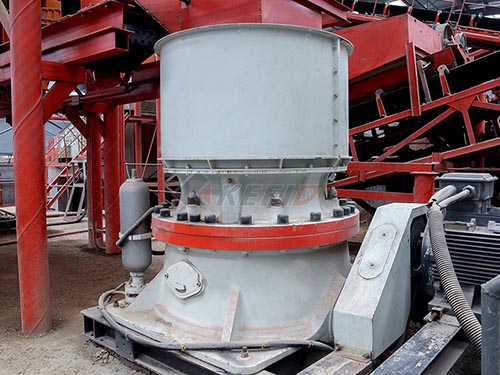

H1: HeavyDuty, Custom Iron Ore Crushing Plant Fabrication for Maximum Tonnage and Uptime
Subheader: Engineered to overcome the specific material challenges of iron ore, from abrasive hematite to sticky magnetite, delivering predictable throughput and lower cost per ton.
1. The Operational Challenges of Iron Ore Size Reduction
Processing iron ore presents a unique set of abrasive, highimpact challenges that standard crushing circuits are not designed to handle. Inefficient or unreliable primary crushing creates bottlenecks that ripple through your entire beneficiation plant, directly impacting profitability.
Abrasion & Liner Wear Costs: The extreme abrasiveness of iron ore (high AI) accelerates wear on mantles, concaves, and jaw plates. Premature liner changes mean excessive parts inventory costs and 1224 hours of lost production per changeout.
Unplanned Downtime from Tramp Iron & Hardness Variations: Unseen tramp metal or unexpected hard cap rock in feed material can cause catastrophic damage to crusher components, leading to unscheduled shutdowns lasting days and sixfigure repair bills.
Throughput Inconsistency & Fines Generation: Improperly configured crushers choke on sticky magnetite or produce an excessive amount of nonspec fines (10mm), reducing the efficiency of downstream grinding circuits and pelletizing processes. This represents a direct loss of saleable product.
High Energy Consumption per Ton: An inefficient crushing chamber design or improperly sized drive system draws excess power without delivering proportional tonnage, making energy one of your largest uncontrollable operational costs.
Inflexibility to Ore Body Variation: A fixed plant design cannot adapt to changing feed characteristics from different mine faces or over the lifeofmine, locking you into suboptimal performance.
Are you managing escalating maintenance costs? Is your plant’s throughput consistently below nameplate capacity due to crushing circuit limitations? It’s time to evaluate a purposebuilt solution.
2. Product Overview: CustomFabricated Iron Ore Crushing Plants
Our service involves the endtoend engineering, fabrication, and commissioning of semimobile and stationary primary crushing plants specifically for iron ore applications. We move beyond catalog equipment to deliver a integrated system optimized for your ore’s Work Index, abrasion index, and moisture content.
Operational Workflow:
1. Primary Dump/Fee: Designed for direct feed from 200400 ton haul trucks or apron feeders.
2. TwoStage HeavyDuty Crushing: Typically a robust gyratory or jaw crusher for primary reduction, followed by a cone crusher in closed circuit with a screen for secondary crushing.
3. Material Handling & ByPass: Integrated surge bins, conveyors with impact beds, and tramp iron separation (magnetic or mechanical) ensure continuous flow and protection.
4. Sizing & Stockpiling: Precise screening separates material into specified fractions (e.g., lump and fines) for downstream processing or direct shipment.
Application Scope: Ideal for greenfield mining projects, brownfield plant expansions, or replacement of aging, underperforming crushing stations. Best suited for processing capacities from 1,000 to over 10,000 tonnes per hour (tph).
Limitations: Not an offtheshelf solution; requires detailed frontend engineering based on client ore characterization data. Maximum mobility is limited to semimobile configurations requiring periodic relocation by heavy transport.
3. Core Features of Our Iron Ore Crushing Plants

HEAVYDUTY LINER TECHNOLOGY | Technical Basis: Austenitic Manganese Steel with patented carbide infusion | Operational Benefit: Increases wear life by up to 30% compared to standard Mn steel in highabrasion iron ore service | ROI Impact: Reduces liner inventory costs and increases crusher availability by over 200 hours annually.
ADAPTIVE CRUSHING CHAMBER | Technical Basis: Hydroset system or hydraulic adjustment allowing CSS changes under load | Operational Benefit: Enables realtime adjustment for varying feed hardness and optimal product size control | ROI Impact: Maintains target throughput and product gradation, maximizing downstream pellet plant or blast furnace feed quality.
INTEGRATED TRAMP IRON & SCALPING SYSTEM | Technical Basis: Primary magnetic separator coupled with a rugged grizzly or apron feeder | Operational Benefit: Removes damaging metallic contaminants and bypasses subfines prior to primary crusher | ROI Impact: Prevents costly damage to crusher head/shaft; improves overall circuit efficiency by 58%.
CENTRALIZED GREASE AUTOMATION | Technical Basis: Automated lubrication system with programmable intervals and monitoring | Operational Benefit: Ensures consistent bearing lubrication under high dust load conditions | ROI Impact: Eliminates manual lubrication errors, extending major bearing service life by an average of 15%.
MODULAR FABRICATION DESIGN | Technical Basis: Subassembly fabrication in controlled workshop conditions | Operational Benefit: Reduces field construction time by up to 40% and improves weld quality/alignment accuracy | ROI Impact: Lowers total installed cost (TIC) and accelerates project revenue generation.

ADVANCED DRIVE & POWER TRAIN | Technical Basis: Hightorque fluid couplings/VFD drives paired with durable gearboxes | Operational Benefit: Smooths crusher startup under load and protects against peak power surges | ROI Impact: Reduces mechanical stress failures; can lower peak power demand charges.
4. Competitive Advantages
| Performance Metric | Industry Standard Solution | Our Custom Iron Ore Crushing Plant Fabrication | Advantage (% Improvement) |
| : | : | : | : |
| Liner Life (Primary Crusher) | Standard Mn18 / Mn22 liners | Proprietary alloyenhanced liners with optimized profile | +2530% longer operational life |
| Plant Availability (Scheduled) | ~9294% (including liner changes) |>96% through rapidchange liner systems & redundancy design| +24% absolute availability |
| Energy Efficiency (kWh/tonne)| Fixed speed drive systems| VFD optimization & efficient chamber design| 812% specific energy consumption|
| Fines Generation (10mm)| Dependent on ore; often uncontrolled| Controlled via chamber optimization & chokefed operation| Reduction of 515% in nonspec fines|
| Installation/Commissioning Time| Fieldheavy stickbuild construction| Maximal modular preassembly| 3540% total field construction time|
5. Representative Technical Specifications
Capacity Range: Configurable from 1,200 tph to 8,500 tph nominal throughput.
Primary Crusher Options: Gyratory Crushers (54”75” feed opening) or Jaw Crushers (60”x80” up to 63”x120”).
Power Requirements: Total installed power typically ranges from 800 kW for smaller plants to over 3 MW for largescale installations. Designed for HV supply (6.6kV/11kV).
Material Specifications: Fabricated from hightensile steel (ASTM A572 Gr50); wear areas lined with AR400/500 steel; chutes lined with replaceable ceramic/aluminum oxide tiles.
Physical Dimensions (SemiMobile Example): Approx. length: 35m; width: 12m; height (excluding feed hopper): 15m.
Environmental Operating Range: Designed for ambient temperatures from 30°C to +50°C; dust suppression systems standard; enclosures available for extreme environments.
6. Application Scenarios
Greenfield Magnetite Project – Pilbara Region
Challenge: A new mine required a crushing circuit capable of handling highly abrasive magnetite with variable moisture content while producing a precise coarse product for HPGR feed. Minimizing fines was critical.
Solution: Implementation of a customfabricated semimobile plant featuring a large jaw crusher for primary duty and two secondary cone crushers in closed circuit with doubledeck banana screens.
Results: Achieved consistent throughput of 2,400 tph with product size reduction to 32mm at >98% reliability. Fines generation was maintained below target spec (<12%), optimizing downstream grinding efficiency.
Brownfield Hematite Plant Expansion – Eastern Canada
Challenge: An existing plant needed capacity increased by 40%. Space constraints were severe, and tying into existing infrastructure required precise engineering.
Solution: Design and fabrication of a compact tertiary crushing station using highspeed cone crushers designed specifically for abrasive hematite. Full modularization allowed installation during a planned twoweek shutdown.
Results: Plant capacity increased from ~4,200 tph to ~5,900 tph within the existing footprint. Postinstallation sampling confirmed improved product cubicity for better blast furnace burden permeability.
7. Commercial Considerations
Our custom iron ore crushing plants are capital projects quoted on a turnkey basis following frontend engineering studies.
Pricing Tiers:
Standard Design Adaptation: Modifying proven designs offers cost savings (~1520%) over fully bespoke engineering.
Full Custom Fabrication: Complete engineering from ore testing upwards—optimized for maximum longterm ROI on megaprojects.
Supply Scope Options: Clients may elect our supply range—from equipment supply only to full EPC (Engineering Procurement Construction).
Optional Features Include: Online particle size analysis (PSA) systems integrated into PLC control advanced predictive maintenance vibration monitoring remote operational diagnostics via secure VPN satellite communications packages
Service Packages Available PostCommissioning:
Platinum Support: Includes dedicated onsite technician parts consignment stock guaranteed emergency response times
Gold Support Scheduled inspections preventive maintenance kits remote monitoring Silver Support Annual inspection laboronly support
Financing Options We partner with major industrial finance institutions offering flexible structures including capital lease operating lease project finance solutions tailored typical terms ranging years
Frequently Asked Questions FAQ
Q What geotechnical data do you require provide accurate proposal?
A For effective design we require your Bond Work Index Abrasion Index Axb values bulk density moisture content typical lump/fines ratio representative samples testing our facility strongly recommended
Q How does your plant manage the stickiness associated some magnetite ores?
A Our designs incorporate several strategies including steep hopper walls vibratory discharge systems impact breaker decks prior crushing direct dumping onto grizzly bypass fines Each strategy tailored specific material characteristics
Q Are your fabricated plants compatible existing control systems SCADA?
A Yes our PLC control systems designed communicate using industrystandard protocols OPC UA Modbus TCP/IP We provide necessary interface documentation work your automation team ensure seamless integration
Q What is typical lead time from order placement commissioning?
A For major custom plants lead times typically range months depending complexity This includes detailed engineering procurement longlead items like castings fabrication assembly factory acceptance testing FAT
Q Do you offer performance guarantees?
A Yes we provide guaranteed performance metrics based agreed test protocol These typically include minimum throughput maximum power consumption product size distribution P availability percentage during guarantee period
Q Can you assist relocating semimobile plant new mining face?
A Yes we provide relocation services as part extended support package This includes engineering disassembly transport reassembly recommissioning ensuring minimal interruption production schedule
Q What are the key factors determining choice between gyratory jaw primary crusher?
A The decision hinges primarily required hourly capacity feed size top size hardness Gyratory crushers generally preferred very high capacity continuous hard rock feeding Jaw crushers offer advantages lower height acceptance wider range particle sizes initial cost Detailed analysis required