
Custom Impact Crushers Fabricators
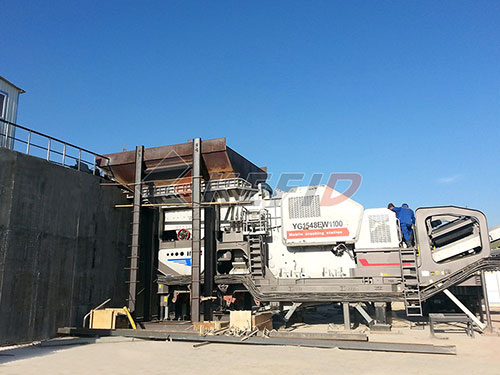

Custom Impact Crushers Fabricators: Engineered for HighVolume Reduction
Your Crushing Circuit Is Only as Strong as Its Impactor
When your aggregate or mining operation faces material feed rates exceeding 500 tons per hour, every unplanned shutdown costs you $8,000–$15,000 per hour in lost production. Standard offtheshelf impact crushers often fail to match your specific rotor configuration, apron gap settings, or wear liner geometry—leading to premature component failure, inconsistent product gradation, and 12–18% higher recirculation loads.
Are you struggling with:
- Feed materials that exceed 800 MPa compressive strength, causing excessive hammer wear within 40 operating hours?
- Product specifications requiring a tight P80 of 12–18 mm that standard machines cannot consistently deliver?
- Existing crusher footprints that cannot accommodate your plant layout without costly structural modifications?
- Downtime from nonstandard wear parts that require 6–8 week lead times from overseas suppliers?
- Primary and secondary crushing of limestone, dolomite, gravel, and recycled concrete (Ai < 0.15)
- Tertiary shaping for asphalt and concrete aggregate specifications
- Not recommended for materials exceeding 15% silica content or feed sizes above 1,200 mm without prescreening
- Higher wear costs per ton compared to cone crushers for abrasive materials (Ai > 0.20)
- Maximum feed size limited to 80% of rotor diameter
- Moisture content above 8% can cause bridging in the crushing chamber
- Throughput range: 150–1,200 tph (dependent on feed material and reduction ratio)
- Maximum feed size: 600–1,200 mm (based on rotor diameter)
- Reduction ratio: 8:1 to 20:1 (primary), 4:1 to 8:1 (secondary)
- Product size range: 0–50 mm (adjustable via apron settings)
- Motor power: 200–1,200 kW (TEFC, 4pole, 1,500 RPM synchronous)
- Voltage: 415V, 690V, 3.3kV, 6.6kV, or 11kV (customer specified)
- Drive type: Vbelt or direct drive with fluid coupling
- Full load amps: 350–1,800 A (at 690V)
- Rotor: EN 10025 S355J2 steel, stressrelieved, with hardfacing on wear zones
- Hammers: 27% Cr iron (ASTM A532 Class III Type A) or ceramic composite
- Apron liners: 12–14% Mn steel (ASTM A128 Grade B2) or 27% Cr iron
- Frame: 50 mm thick EN 10025 S355J2, welded and stressrelieved
- Shaft: 4140 alloy steel, heattreated to 280–320 BHN
- Rotor diameter: 1,000–1,800 mm
- Rotor width: 800–2,000 mm
- Overall length: 3,500–7,000 mm
- Overall width: 2,500–4,500 mm
- Overall height: 2,800–5,500 mm
- Operating weight: 25–85 metric tons (excluding motor and base frame)
- Ambient temperature: 20°C to +50°C
- Material moisture content: 0–8% (optimal), up to 12% (with prescreening)
- Altitude: Up to 4,000 m (derate motor power by 1% per 100 m above 1,000 m)
- Dust protection: IP55 motor enclosure, labyrinth seals on bearings
- Standard custom design (1,000–1,200 mm rotor, 200–400 kW): $180,000–$280,000
- Intermediate custom design (1,400–1,600 mm rotor, 400–800 kW): $320,000–$480,000
- Heavyduty custom design (1,600–1,800 mm rotor, 800–1,200 kW): $520,000–$750,000
- VFD control package: $18,000–$35,000
- Hydraulic apron adjustment with remote monitoring: $12,000–$22,000
- Ceramic composite hammer upgrade: $8,000–$15,000 per set
- Automated lubrication system: $6,000–$10,000
- Vibration monitoring system with 4 sensors: $4,500–$7,500
- Spare parts kit (hammers, liners, bearings): $25,000–$45,000
- Commissioning and operator training (3 days onsite): $8,500
- Annual maintenance inspection and wear analysis: $4,200 per visit
- Performance optimization audit (with material testing): $6,800
- Extended warranty (3 years parts and labor): 8% of equipment cost
- Net 30 terms with 2% discount for payment within 10 days
- 12month leasetoown at 4.5% APR (subject to credit approval)
- 36month equipment financing at 6.2% APR with 10% down payment
- Tradein allowance for existing crusher equipment (valued at inspection)
Custom impact crushers fabricators address these challenges by engineering rotor assemblies, breaker plates, and frame configurations to your specific material characteristics and production targets.
Product Overview: Custom Impact Crushers Fabricators
Custom impact crushers fabricators design and manufacture horizontal shaft impactors (HSI) and vertical shaft impactors (VSI) tailored to clientspecific crushing parameters. Unlike catalog units, these machines begin with your material test data and site constraints.
Operational Workflow:
1. Material analysis – Feed gradation, abrasion index (Ai), compressive strength, and moisture content determine rotor speed (25–55 m/s tip speed) and hammer configuration
2. Custom rotor engineering – Solid or split rotor designs with 2, 3, or 4 rows of hammers based on reduction ratio requirements (typically 8:1 to 20:1 for primary, 4:1 to 8:1 for secondary)
3. Apron and curtain geometry – Adjustable primary and secondary aprons with chrome alloy or manganese steel liners, set to achieve target product gradation
4. Frame and base integration – Fabricated steel frame with boltin wear liners, designed to match existing conveyor heights and motor baseplates
5. Commissioning and optimization – Field testing with your feed material to verify throughput, power draw, and product curve
Application Scope:
Limitations:
Core Features
Custom Rotor Configuration | Technical Basis: Variable hammer row spacing and rotor diameter (1,000–1,800 mm) matched to feed size distribution | Operational Benefit: Your operators achieve consistent product gradation without manual adjustments between shifts | ROI Impact: Reduces recirculation load by 15–22%, lowering conveyor and screen wear costs by $0.08–$0.12 per ton

HighChrome Alloy Wear Parts | Technical Basis: 27% chrome iron or ceramic composite hammers with hardness of 600–700 BHN | Operational Benefit: Extends hammer life by 300–400% compared to standard manganese steel in lowabrasion applications | ROI Impact: Decreases annual wear parts expenditure by $18,000–$35,000 for a 400 tph operation
Hydraulic Apron Adjustment System | Technical Basis: Remote hydraulic cylinders with position sensors providing 0–150 mm gap adjustment | Operational Benefit: Your maintenance team adjusts product size in under 3 minutes without entering the crushing chamber | ROI Impact: Eliminates 4–6 hours of weekly downtime for manual adjustments, recovering 200–300 tons of production per week
Fabricated Steel Frame with BoltIn Liners | Technical Basis: Stressrelieved, 50 mm thick steel plate construction with replaceable wear liners | Operational Benefit: Frame service life exceeds 15 years; liners can be replaced in 8 hours by two technicians | ROI Impact: Avoids $120,000–$180,000 frame replacement costs typical of cast frame designs after 8–10 years
Variable Speed Drive Compatibility | Technical Basis: Motor ratings from 200–1,200 kW with VFDready design for rotor speed optimization | Operational Benefit: Your plant operators adjust rotor speed from 400–900 RPM to match changing feed conditions | ROI Impact: Achieves 8–12% energy savings per ton compared to fixedspeed operation
Integrated Tramp Iron Relief System | Technical Basis: Springloaded or hydraulic relief mechanism that opens aprons to 200 mm for uncrushable material passage | Operational Benefit: Prevents catastrophic rotor damage from excavator teeth or rebar, reducing repair costs by 90% | ROI Impact: Each tramp iron event avoided saves $15,000–$25,000 in rotor rebuild costs
Modular Wear Liner Design | Technical Basis: Interlocking liner segments weighing under 50 kg each for manual handling | Operational Benefit: Your maintenance crew completes full liner changes in 12 hours versus 24+ hours for monolithic designs | ROI Impact: Reduces downtime labor costs by $3,500–$5,000 per liner change event
Competitive Advantages
| Performance Metric | Industry Standard (Catalog HSI) | Custom Impact Crushers Fabricators Solution | Advantage (% Improvement) |
|||||
| Product gradation consistency (P80 variation) | ±5 mm | ±1.5 mm | 70% tighter control |
| Hammer life (limestone, Ai 0.12) | 120 hours | 350–400 hours | 192–233% longer |
| Specific power consumption (kWh/ton) | 0.45–0.55 | 0.38–0.44 | 15–20% reduction |
| Recirculation load (% of feed) | 25–35% | 10–18% | 40–60% reduction |
| Rotor replacement interval | 3,000 hours | 6,000–8,000 hours | 100–167% longer |
| Apron adjustment time | 45–60 minutes | 2–3 minutes | 93–95% faster |
| Wear parts availability | 6–8 weeks | 2–3 weeks | 50–67% faster lead time |
| Frame warranty period | 2 years | 5 years | 150% longer coverage |
Technical Specifications
Capacity and Rating:
Power Requirements:
Material Specifications:
Physical Dimensions:
Environmental Operating Range:
Application Scenarios
Limestone Quarry – Primary Crushing Upgrade
Challenge: A 600 tph limestone quarry in Kentucky was experiencing 22% recirculation load with a standard 1,400 mm HSI, resulting in 14 unscheduled downtime events per year from hammer breakage on feed material with occasional chert nodules (Ai 0.18).
Solution: Custom impact crushers fabricators designed a 1,600 mm rotor with 4 rows of ceramic composite hammers, a reinforced primary apron with 100 mm thick Mn steel liners, and a hydraulic relief system set to 250 bar. The rotor tip speed was optimized to 42 m/s based on material compressive strength testing (120–180 MPa).
Results: Recirculation load reduced to 11%, hammer life extended from 140 hours to 420 hours, unscheduled downtime decreased to 2 events per year. Annual maintenance costs dropped by $47,000, and production increased by 8,500 tons per year from reduced downtime.
Concrete Recycling Facility – Product Quality Improvement
Challenge: A California C&D recycling plant needed to produce ¾inch minus aggregate with less than 3% crushed face for Caltrans spec, but their existing VSI was generating 18% fines (passing 200 mesh) and consuming 0.62 kWh/ton.
Solution: Custom impact crushers fabricators supplied a 1,200 mm HSI with a 2row rotor, 50 mm chrome alloy hammers, and a threecurtain configuration. The machine was set to 35 m/s tip speed with a 25 mm closedside setting. Feed was prescreened to remove 2inch minus material.
Results: Fines generation dropped to 7%, specific power consumption reduced to 0.41 kWh/ton, and product met Caltrans spec with 98% crushed faces. The plant achieved payback on the $340,000 crusher investment in 14 months through reduced disposal costs for fines and higher product pricing.
Gold Mine – Secondary Crushing Optimization
Challenge: A Nevada gold mine required a secondary crusher to reduce 6inch ROM ore to 80% passing ¾ inch for the SAG mill feed, but the existing cone crusher was producing excessive flats and elongated particles that reduced mill throughput by 12%.
Solution: Custom impact crushers fabricators engineered a 1,400 mm HSI with a 3row rotor, 27% Cr iron hammers, and a 2curtain configuration with 40 mm and 20 mm apron gaps. The rotor was designed for 48 m/s tip speed with a 500 kW motor. The machine was installed inline with the existing conveyor system without structural modifications.
Results: Product shape improved to 85% cubical particles, SAG mill throughput increased by 9%, and the crusher operated at 0.48 kWh/ton. The $280,000 investment was recovered in 8 months through increased mill throughput and reduced grinding media consumption.
Commercial Considerations
Equipment Pricing Tiers (FOB fabrication facility, excluding installation):
Optional Features:
Service Packages:
Financing Options:

FAQ
Q: How do custom impact crushers fabricators determine the correct rotor speed for my material?
A: We conduct a material test on a 200 kg sample to measure compressive strength, abrasion index, and impact work index. Based on these results, our engineering team calculates the optimal tip speed (typically 30–55 m/s) and hammer configuration to achieve your target product gradation while minimizing wear.
Q: What is the typical lead time for a custom impact crusher?
A: From material testing to delivery, the process takes 12–16 weeks. This includes 2 weeks for material analysis and design, 8–10 weeks for fabrication and assembly, and 2 weeks for testing and shipping. Rush orders with existing designs can be completed in 8–10 weeks.
Q: Can custom impact crushers fabricators retrofit an existing crusher frame?
A: Yes, we can fabricate new rotors, aprons, and wear liners to fit existing frames from major manufacturers (Metso, Sandvik, Terex, Hazemag). This approach typically costs 40–60% less than a complete new machine and can be completed in 6–8 weeks.
Q: How does the warranty compare to standard crusher manufacturers?
A: We offer a 5year warranty on the fabricated steel frame and a 2year warranty on the rotor assembly and bearings. Wear parts are excluded from warranty but are guaranteed to meet specified life targets based on your material test results.
Q: What maintenance training do you provide for plant operators?
A: Our commissioning package includes 3 days of onsite training covering daily inspection procedures, apron gap adjustment, hammer rotation schedules, and liner replacement techniques. We also provide a 200page maintenance manual specific to your machine.
Q: Can custom impact crushers fabricators handle abrasive materials like granite or basalt?
A: For materials with an abrasion index above 0.20, we recommend a different crushing technology (cone or jaw crusher). Impact crushers are most costeffective for materials with Ai below 0.15. For borderline materials (Ai 0.15–0.20), we can design with ceramic composite hammers and thicker liners, but operating costs will be 20–30% higher than for limestone.
Q: What is the expected service life of a custom impact crusher before major rebuild?
A: With proper maintenance, the fabricated steel frame has a service life of 15–20 years. The rotor assembly typically requires rebuild every 6,000–8,000 operating hours, depending on material abrasiveness. Bearing replacement is recommended every 4,000–5,000 hours.