
Custom Gold Ore Crushing Equipment Moq
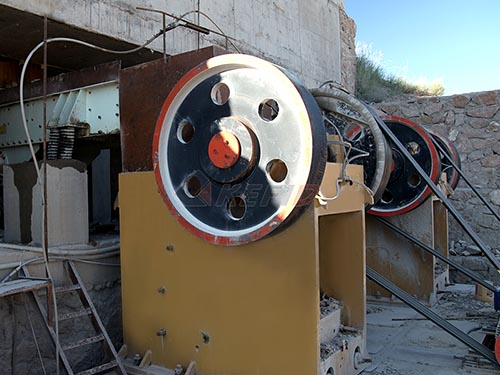

H1: Custom Gold Ore Crushing Equipment | Engineered for HighMineralization & Abrasive Feed
1. PAINPOINT DRIVEN OPENING
Processing goldbearing ore presents distinct and costly challenges that standard crushing circuits are not designed to handle. Are you experiencing these operational inefficiencies?
High Abrasion Costs: Quartz, sulphides, and hard rock associated with gold ore rapidly wear crusher liners and wear parts, leading to excessive maintenance costs and unplanned downtime for replacements.
Throughput Bottlenecks: Inconsistent feed size or moisture content can cause plugging and choking in primary stages, stalling your entire processing line and reducing mill feed.
Inefficient Liberation: Inadequate or inconsistent particle size reduction fails to optimally liberate gold particles for downstream recovery processes (e.g., leaching, flotation), directly impacting your overall recovery rate.
High Energy Consumption: Overgrinding in secondary/tertiary stages to achieve target liberation wastes significant energy per ton of ore processed.
Dust & Fines Generation: Excessive fines creation during crushing can lead to material loss, dust control issues, and complications in agglomeration or heap leach stacking.
Addressing these issues requires more than an offtheshelf crusher. It demands a Custom Gold Ore Crushing Equipment solution engineered from the ground up for your specific ore body and plant configuration.
2. PRODUCT OVERVIEW
Our Custom Gold Ore Crushing Equipment refers to purposeengineered primary, secondary, and tertiary crushing systems configured for the unique hardness, abrasiveness, and moisture content of gold ores. The workflow is designed for maximum availability and optimal size reduction.
1. Primary Size Reduction: A rugged jaw or gyratory crusher receives runofmine (ROM) ore, designed with a large feed opening and high nip angle to handle large, variable feed.
2. Secondary Crushing & Screening: A cone crusher or impactor further reduces material, working in closed circuit with a screen to ensure correct topsize feed for the next stage.
3. Tertiary/Fine Crushing: Specialized cone crushers or highpressure grinding rolls (HPGR) produce the final product size, precisely calibrated for optimal downstream gold liberation.
Application Scope: Ideal for hard rock gold mining (lode deposits), complex sulphide ores, and highvolume operations where ore characteristics deviate from standard aggregates. Not recommended as a direct replacement in simple, lowabrasion sand/gravel applications without significant reengineering.
3. CORE FEATURES
Advanced Liner Technology | Technical Basis: Highchrome white iron alloys & composite matrix designs | Operational Benefit: Liner life extended by 3060% compared to standard manganese steel in highly abrasive gold ore | ROI Impact: Reduces liner changeout frequency and cost per ton crushed; increases crusher availability.
Adaptive Crushing Chamber Design | Technical Basis: Chamber geometry optimized via CFD analysis for specific ore compression characteristics | Operational Benefit: Maintains consistent product gradation with fewer fines and reduces risk of chamber packing | ROI Impact: Improves downstream recovery efficiency and lowers energy consumption in grinding circuits.
Intelligent Tramp Release & Clearing | Technical Basis: Hydraulic or hybrid clearing systems with pressure sensing and autoreverse functions | Operational Benefit: Automatically clears uncrushable material or chamber blockages without manual intervention | ROI Impact: Minimizes downtime from stalls; protects crusher from catastrophic damage.
Integrated Dust Suppression Sealing | Technical Basis: Positivepressure air sealing systems combined with targeted water spray manifolds at transfer points | Operational Benefit: Contains silica dust at source, improving site safety and environmental compliance | ROI Impact: Reduces cleanup costs and mitigates health risk liabilities.
Modular Configuration & Access | Technical Basis: Unitized base frames with walkin/service platforms designed around major components | Operational Benefit: Enables faster, safer maintenance procedures for liner changes and mechanical servicing | ROI Impact: Cuts planned maintenance time by up to 40%, directly increasing operational uptime.
Condition Monitoring Integration | Technical Basis: Prefitted sensor ports for vibration, temperature, pressure, and liner wear monitoring | Operational Benefit: Provides realtime data for predictive maintenance scheduling versus reactive breakdowns | ROI Impact: Prevents unexpected failures; allows parts inventory optimization.
4. COMPETITIVE ADVANTAGES
| Performance Metric | Industry Standard Crusher (OfftheShelf) | Our Custom Gold Ore Crushing Solution | Advantage (% Improvement) |
| : | : | : | : |
| Liner Wear Life (Abrasive Ore) | Baseline (e.g., 500k tons) | Engineered Alloy & Design Optimization| +30% to +60% |
| System Availability (Scheduled Maintenance) ~95% ~97%+ +2 percentage points |
| Energy Efficiency (kWh/ton) Baseline Optimized Chamber & Drive Configuration 10% to 15% |
| Product Consistency (% within target PSD) +/ 15% +/ 8% ~47% improvement in variance |
| Mean Time To Repair (MTTR Liner Change) Baseline Modular Access & Design Features 25% to 40% |
5. TECHNICAL SPECIFICATIONS
Capacity Range: Configurable from 100 TPH pilotscale circuits to 2,500+ TPH highproduction installations.
Power Requirements: Drive systems from 75 kW to over 500 kW per unit; designed for both fixedplant electrical supply or hybrid dieselelectric mobile setups.
Material Specifications: Highgrade steel fabrications (ASTM A36/A572); Crusher liners in NiHard, HighChrome White Iron (HCWI), or custom composite alloys; Shafting in forged alloy steel.
Physical Dimensions: Customengineered footprint based on plant layout constraints; typical primary unit dimensions range from 6m(L) x 3m(W) x 4m(H) upwards.
Environmental Operating Range: Designed for ambient temperatures from 25°C to +50°C; sealing systems effective in highdust environments; corrosionresistant treatments available for saline or highhumidity conditions.
6. APPLICATION SCENARIOS
Hard Rock Underground Mine Expansion
Challenge: An existing operation expanding throughput faced bottlenecks with an aging jaw crusher unable to handle increased tonnage of a new, more abrasive quartz vein ore zone without constant liner wear issues.
Solution: Implementation of a customconfigured gyratory crusher as the new primary station featuring enhanced liner metallurgy and a chamber profile optimized for the specific rock mechanics data.
Results: Achieved a 35% increase in sustained throughput while extending liner service intervals by 50%, meeting expansion targets without increasing the planned maintenance crew.
Heap Leach Operation with Clay Content
Challenge: A surface mine processing transitional oxidesulphide ore experienced frequent plugging at the secondary cone due to variable moisture and clay content, causing daily operational delays.
Solution: Deployment of a custom secondary crushing circuit utilizing an impact crusher with a proprietary internal geometry resistant to packing, paired with an aggressive prescreening scalper.
Results: Eliminated daily plugging events (>99% reduction), increasing overall plant runtime by an average of 1.5 hours per day and ensuring consistent sub1inch feed for the agglomeration drums.
7. COMMERCIAL CONSIDERATIONS
Our custom solutions are priced based on scope complexity:
Tier 1 – Component Retrofit: Upgrading existing crushers with custom liners, rotors/shaf ts , or control systems. Offers significant performance gains at lower capital outlay.
Tier 2 – SkidMounted Module: A fully customized crushing stage (e.g., secondary cone with screen) preassembled on a single skid for faster installation.
Tier 3 – Turnkey Circuit Design & Supply: Complete system engineering from primary feed to final product stockpile integration.
Optional features include advanced automation packages (PLC/HMI), premium wear part packages with guaranteed tonnage contracts ,and remote monitoring subscriptions . We offer flexible financing through partner institutions , including leasetoown models tailored to project cash flow .
8. FAQ
Q1 How do you determine the right level of customization needed for our gold ore?
A1 Our process begins with a detailed analysis of your ore characterization data (Bond Work Index , abrasion index , moisture content )and review of your current production bottlenecks . Pilot testing can be arranged if sample material is available .
Q2 Can this equipment integrate with our existing crushing plant?
A2 Yes . Custom engineering specifically addresses interface points such as feed chutes , discharge conveyors ,and electrical controls . We designfor seamless integration into brownfield sites .
Q3 What is the typical lead timefora custom solution?
A3 Lead times vary by complexity . A component retrofit may shipin812 weeks whilea full turnkey circuit requires612 monthsfor detailed engineering , fabrication ,and testing .
Q4 How does the operational cost compareto standard equipment?
A4 Whilethe initial capital investment maybe higher,the total costof ownershipis consistently lower.Field data shows reductionsin costper toncrushed due todramatically extendedwear partlife andreduceddowntime .
Q5 What service supportis provided after installation?
A5 We offer tiered service packages rangingfrom basic commissioningand operator trainingto comprehensive annual inspection programsand dedicatedonsite technical supportcontracts .
Q6 Are performance guarantees offered?
A6 Yes .We provideguarantees on key metrics including throughput capacity under defined conditions , maximum product top size,and wear part life expectancy basedon agreeduponore specifications .
Q7 Do you assistwith permittingand foundation design?
A7 For turnkey projects we provideall necessary general arrangement drawings foundation load data,and noise/dust emission specifications requiredfor local permitting processes .