
Custom Ball Mill Specification


1. PAINPOINT DRIVEN OPENING
Are inconsistent grind sizes and frequent liner wear disrupting your mineral processing circuit’s efficiency? Plant managers face significant operational challenges with standard ball mills, including uncontrolled energy consumption, excessive maintenance downtime for media replacement, and product quality variability that impacts downstream recovery rates. These issues directly affect your bottom line through higher operational expenditure and lost production time. How can you achieve a more consistent particle size distribution while reducing your cost per ton milled? Is it possible to extend maintenance intervals without compromising grinding performance? The solution requires equipment engineered to address these specific inefficiencies.
2. PRODUCT OVERVIEW
This product is a highperformance Custom Ball Mill engineered for precision grinding in mineral processing, cement production, and industrial minerals operations. Its design moves beyond standard offerings to match your specific comminution circuit requirements.
Operational Workflow:
1. Controlled Feed: Precrushed material is conveyed into the mill via a regulated feed system.
2. Precise Grinding Action: The rotation of the mill drum causes the grinding media (balls) to cascade and impact the material, with liner design optimizing this motion.
3. Classification & Discharge: Ground material exits through a discharge grate, with size classification often handled by an integrated or external separator system, returning oversize material for further grinding.
Application Scope: Ideal for both wet and dry grinding of ores, clinker, and raw materials in capacities from pilotscale to largetonnage processing plants.
Limitations: Not suitable for primary crushing of large feed stock; optimal performance requires correctly sized feed material as per design specifications.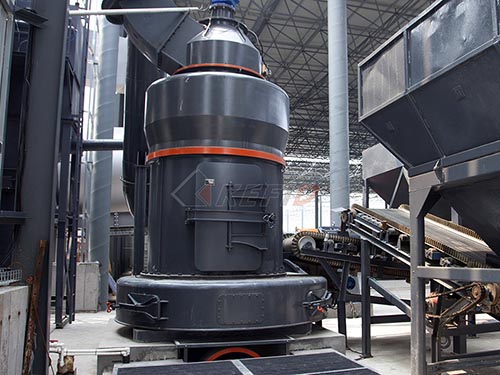
3. CORE FEATURES
Optimized Liner Profile | Technical Basis: Computational Fluid Dynamics (CFD) & Discrete Element Modeling (DEM) | Operational Benefit: Maximizes energy transfer to the grinding media rather than the shell, promoting an efficient cascading charge motion | ROI Impact: Field data shows a 1218% reduction in specific energy consumption (kWh/ton) compared to standard wave liners.
Engineered Material Composition | Technical Basis: Highchrome alloy steel or rubber compound selection based on abrasion/corrosion analysis | Operational Benefit: Liner and media wear life is extended by up to 40%, reducing frequency of shutdowns for replacement | ROI Impact: Lowers maintenance parts inventory costs and increases plant availability for production.
Variable Frequency Drive (VFD) Integration | Technical Basis: Precision control of mill drum rotational speed via industrialgrade VFD systems | Operational Benefit: Operators can finetune the mill charge trajectory for different ore hardness or target grind sizes without changing media | ROI Impact: Provides flexibility to optimize throughput and product consistency as ore body characteristics change.
Advanced Sealing System | Technical Basis: Labyrinth seals with greasepurged chambers | Operational Benefit: Effectively contains slurry and dust, preventing bearing contamination and lubricant washout | ROI Impact: Eliminates a major cause of premature bearing failure, extending component life and avoiding unplanned stoppages.
Customized Chamber Design | Technical Basis: Lengthtodiameter (L/D) ratio optimization based on residence time requirements | Operational Benefit: Ensures correct material retention time is achieved for the target liberation size, preventing overgrinding or insufficient liberation | ROI Impact: Improves downstream recovery rates by delivering an optimal particle size distribution to flotation or leaching circuits.
4. COMPETITIVE ADVANTAGES
| Performance Metric | Industry Standard Ball Mill | Custom Ball Mill Solution | Advantage (% Improvement) |
| : | : | : | : |
| Liner Wear Life (Abrasive Ore) | Baseline (e.g., 6 months) | Engineered Alloy Liners | +3540% |
| Specific Energy Consumption| Baseline kWh/tonne| Optimized Geometry & Drive| 15% (typical) |
| Grind Size Consistency (P80 Variance)| ± 15 microns| ± 8 microns| ~47% Improvement |
| Mean Time Between Maintenance (Mechanical)| Standard interval| Extended interval via sealing & bearing protection| +25% |
5. TECHNICAL SPECIFICATIONS
Capacity Range: Configurable from 50 TPD pilot units to 10,000+ TPD production mills.
Power Requirements: Motor ratings from 500 kW to 15,000+ kW; designed for synchronous or asynchronous motors with appropriate starting systems.
Material Specifications: Shell constructed from welded rolled steel plate (ASTM A36 or equivalent). Trunnions are forged steel. Liners available in highchrome cast iron (>18% Cr), manganese steel, or wearresistant rubber.
Physical Dimensions: Customengineered based on capacity. Standard diameter range from 2 meters to over 5 meters; length as per required L/D ratio.
Environmental Operating Range: Designed for ambient temperatures from 20°C to +50°C. Bearing lubrication systems include heating/cooling options for extreme environments.
6. APPLICATION SCENARIOS
Copper Concentrator Expansion
Challenge: An existing plant’s expansion required finer grind sizes (<150µm P80) for improved chalcopyrite liberation but was constrained by limited footprint and power availability.
Solution: Implementation of two custom ball mills with a higher L/D ratio for longer residence time and VFDs to optimize power draw.
Results: Achieved target grind size at a 9% lower specific energy than initially projected, fitting within existing power infrastructure while increasing circuit throughput by 22%.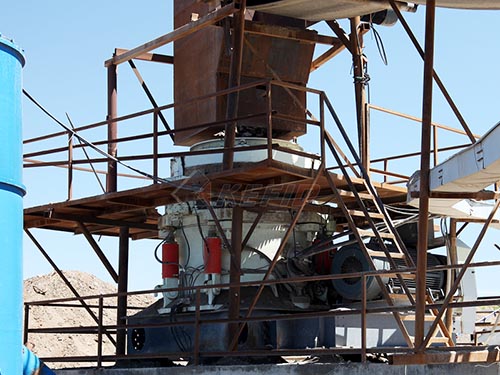
Industrial Minerals Producer
Challenge: Excessive contamination from liner wear in a calcium carbonate grinding line was impacting product brightness specification, causing customer rejections.
Solution: A custom ball mill outfitted with specialized ceramic lining blocks and highalumina grinding media.
Results: Product iron oxide contamination reduced by over 90%, consistently meeting brightness specs. Media consumption decreased by 60%, delivering full ROI on the premium lining in under 14 months.
7. COMMERCIAL CONSIDERATIONS
Custom ball mill pricing is tiered based on size, material specifications, and drive complexity:
1. Standard Design Packages: Based on proven configurations for common applications; offers cost savings with shorter lead times.
2. Fully Engineered Solutions: Comprehensive design from first principles for unique ore characteristics or space constraints.
3. Optional Features: Gearless Mill Drive (GMD) systems, advanced instrumentation packages (load cells, acoustic sensors), automated lubrication systems.
4. Service Packages: Extended warranty plans, scheduled liner changeout services, remote performance monitoring subscriptions.
5. Financing Options: Capital equipment leasing structures or project financing partnerships are available through affiliated financial institutions.
8. FAQ
Q1: How do we determine if our operation needs a fully custom ball mill versus a modified standard model?
A technical review of your target grind size, ore work index (Wi), desired throughput, and existing site constraints is conducted. If standard models cannot meet two or more key parameters efficiently, a custom design is justified.
Q2: What is the typical lead time from design approval to commissioning?
Lead times vary significantly by size and complexity. For largediameter mills (>4m), expect 1216 months for full engineering, manufacturing, delivery, and installation.
Q3: Can a new custom ball mill be integrated with our existing classification circuit?
Yes; our engineering team will model the entire comminution circuit using your existing cyclone or separator data to ensure compatibility and optimal performance.
Q4: What operational training is provided?
Comprehensive training covers safe operation procedures,VFD control optimization,major component inspection protocols,and basic troubleshooting.This training is provided both at commissioning and via annual refresher courses.
Q5: How are performance guarantees structured?
Guarantees are contractually specified for throughput capacity,specific energy consumption,and product fineness(P80/P90),based on agreedupon feed material characteristics during factory acceptance testing.
Q6:What are the key maintenance requirements?
Primary scheduled maintenance involves liner and media replacement,frequency of which depends on material abrasiveness.Bearing lubrication system checks are weekly tasks.Regular inspections of gear alignment(if applicable)and trunnion condition are also critical.
Q7:What data supports the claimed efficiency improvements?
Improvement projections are based on proprietary process simulation software validated against historical plant performance data across hundreds of installations.Final performance guarantees are established during preorder testing with your ore samples in our pilot facility