
Custom Ball Mill Private Label Manufacturer
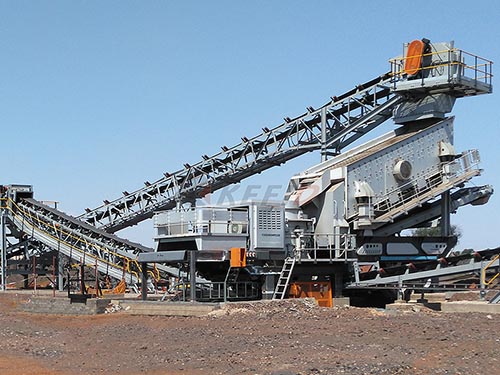

Targeted Solutions for Custom Ball Mill Operations: Addressing Core Industrial Grinding Challenges
Are you managing inconsistent product fineness that impacts downstream processing efficiency? Confronting rising energy costs that consume your operational budget? Scheduling excessive maintenance downtime for liner replacements and bearing overhauls? These are not minor inconveniences; they are direct drains on profitability. For plant managers and engineering contractors, the reliability and efficiency of your grinding circuit define your bottom line. How do you achieve precise particle size control while reducing specific energy consumption? Can you extend component life to maximize uptime? Is your current equipment flexible enough to adapt to varying ore hardness or product specifications? The answer lies not in offtheshelf machinery, but in precisionengineered, applicationoptimized solutions.
Product Overview: Engineered Custom Ball Mill Systems
A custom ball mill is a industrial grinding machine engineered from the ground up to meet the specific comminution requirements of your operation. Unlike standard models, it involves a detailed collaborative design process to optimize every component for your feed material, target grind size, and capacity. The operational workflow is centered on controlled size reduction: (1) Feed material is introduced via a engineered chute or screw conveyor; (2) The cylinder, lined with selected materials, rotates, lifting and cascading the grinding media (balls/cylpebs); (3) Impact and attrition within the chamber reduce particle size; (4) Ground material discharges via peripheral or overflow mechanisms for classification. These systems are applied in mining (ore grinding), cement production (clinker grinding), and industrial minerals processing. They are not suitable for ultrafine grinding below 10 microns without auxiliary systems or for processing highly viscous materials.
Core Features of Our Custom Ball Mill Design
Our engineering philosophy focuses on translating technical specifications into measurable operational gains.
ApplicationOptimized Chamber & Liner Design | Technical Basis: Discrete Element Method (DEM) Simulation & Wear Modeling | Operational Benefit: Predictable wear patterns and consistent grinding kinetics | ROI Impact: Up to 25% longer liner life reduces part costs and planned downtime intervals.
HighEfficiency Drive & Bearing System | Technical Basis: Torquematched gearing/pinion alignment and hydrodynamic/sleeve bearing selection | Operational Benefit: Smooth transmission of power with minimal vibrational losses, reduced risk of catastrophic failure | ROI Impact: Field data shows 815% reduction in specific energy consumption (kWh/ton) versus underengineered drives.
Precision Material & Media Specification | Technical Basis: Grinding media audit and alloy selection based on ore abrasiveness and corrosion potential | Operational Benefit: Optimal size distribution and composition maximize impact efficiency while minimizing contamination | ROI Impact: Reduced media consumption rates directly lower consumable costs per processed ton.
Advanced Control & Instrumentation Integration | Technical Basis: Builtin mounts for load cells, acoustic sensors, and temperature monitors compatible with PLC systems | Operational Benefit: Operators gain realtime data on mill load, filling level, and incipient mechanical issues | ROI Impact: Enables predictive maintenance scheduling and optimal charge volume, improving throughput stability.
Modular Component & Accessory Framework | Technical Basis: Standardized interface dimensions for feeders, discharge grates, and lubrication systems | Operational Benefit: Simplifies future upgrades or process changes; streamlines spare parts inventory | ROI Impact: Reduces capital cost for system expansions by up to 20% due to preengineered compatibility.
Competitive Advantages: Performance Comparison
| Performance Metric | Industry Standard Ball Mill | Our Custom Ball Mill Solution | Advantage (% Improvement) |
| : | : | : | : |
| Liner Service Life| 612 months (varies widely) | 1418 months (predictable) | +40% average improvement |
| Specific Energy Consumption| Baseline kWh/tonne | Optimized chamber & drive design| 815% reduction |
| Annual Availability| 9294% (incl. maintenance)| 9697% (predictive scheduling)| +35 percentage points |
| Grind Consistency (P80 Variance)| ±12% from target| ±6% from target| Variance reduced by 50% |
Technical Specifications Overview
Specifications are determined through our joint engineering process. Representative ranges for a midcapacity mining application include:
Capacity Range: 5 TPH to 150 TPH+ (dry or wet grinding)
Power Requirements: 100 kW to 6,000 kW+; voltage as per plant infrastructure.
Material Specifications: Shell constructed from hightensile carbon steel plate; liners available in highchrome steel, manganese steel, or rubber depending on application; trunnions are forged steel.
Physical Dimensions: Cylinder diameters from 1.5m to over 4.5m; lengths scaled accordingly. Designs account for foundation loading and spatial constraints.
Environmental Operating Range: Designed for ambient temperatures from 20°C to +50°C, with specific sealing solutions for highdust or highhumidity environments.
Application Scenarios & Results
Copper Concentrator Expansion Project
Challenge: A plant expansion required finer grind size (P80 from 180µm to 150µm) but space constraints prohibited a longer mill. The existing circuit was energyintensive.
Solution: Implementation of a custom ball mill with a redesigned chamber profile and classifier mill discharge system to prevent overgrinding.
Results: Achieved target fineness at a 10% higher throughput rate than the standard model projection. Specific energy consumption remained flat despite finer grind.
Industrial Minerals Producer Product Line Diversification
Challenge: A producer needed to switch between grinding calcium carbonate (soft) and silica sand (abrasive) batches without crosscontamination or major downtime.
Solution: A custom ball mill with a quickchange liner system designed for both materials, paired with two dedicated sets of easily swapped grinding media.
Results: Changeover time between products reduced from 48 hours to under 8 hours. Product purity specifications were consistently met.
Commercial Considerations
We structure engagements to align with project financing cycles and risk management.
Pricing Tiers: Based on specification complexity:
Tier A (Optimized Standard): Modifications to proven base models. Entry point for defined benefits.
Tier B (Fully Customized): Greenfield design from shell geometry onward. For unique ores or space/process limits.
Tier C (Complete Grinding Circuit Package): Integrated design with classifiers, pumps, cyclones.
Optional Features: Advanced condition monitoring packages, automated lubrication systems, specialty coating options.
Service Packages: Extended warranty plans, scheduled inspection programs, guaranteed spare parts availability contracts.
Financing Options: Capital lease agreements operating leases structured through partners project financing support documentation.
Frequently Asked Questions
1. How do you determine if our operation needs a fully custom ball mill versus a modified standard model?
We conduct a comprehensive process audit including ore work index analysis review of existing circuit data This evidencebased assessment determines where engineered customization will deliver a clear return justifying the investment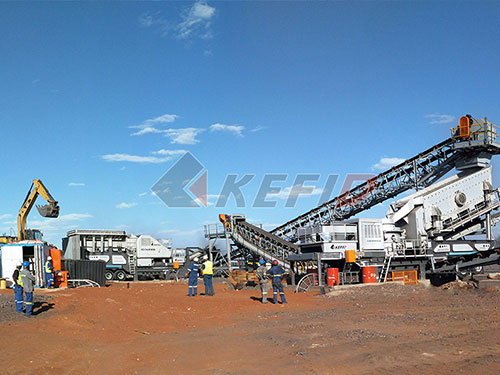
2. What is the typical lead time from design freeze to commissioning for a custom ball mill?
Lead times vary significantly based on complexity For Tier A projects expect approximately months For Tier B fully customized designs months is typical given the engineering manufacturing assembly testing cycle
3. How does your design ensure compatibility with our existing classification equipment plant control system?
Our engineering phase includes detailed interface reviews We design mills with instrumentation outputs that match common industrial protocols PLCs DCS ensuring seamless data integration into your control room
4 Can you quantify the expected reduction in operating costs before we commit?
Yes We provide a detailed Total Cost of Ownership TCO model based on your current consumables liner media energy usage data This projects specific savings over a year period forming the basis for an ROI calculation
5 What level of involvement is required from our engineering team during the design phase?
We operate collaboratively Your team provides process knowledge site constraints operational preferences Our engineers translate these into technical specifications Regular review gates ensure alignment