
Crushing And Screening Equipment Importer Best Price
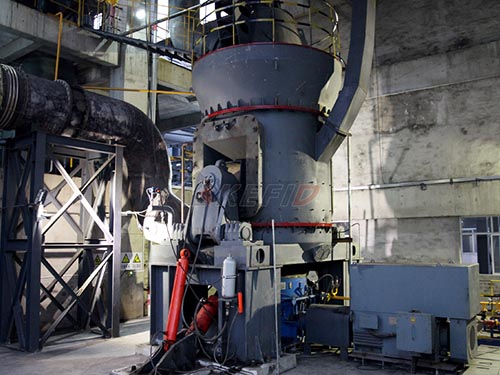

Crushing And Screening Equipment Importer Best Price
The Real Cost of Procurement Delays and Substandard Crushing Machinery
Every day your crushing and screening operation runs below capacity, you lose measurable revenue. Industry data indicates that unplanned downtime in aggregate processing costs operators between $2,000 and $8,000 per hour depending on throughput volume. When your importer fails to deliver on schedule, or the equipment requires frequent component replacement, your project timelines slip and your contractual penalties accumulate.
Beyond delivery delays, many plant managers face the challenge of inconsistent equipment quality from overseas suppliers. Variations in manganese steel composition, improper bearing tolerances, and substandard hydraulic systems lead to premature wear—often reducing crusher liner life by 3040% compared to OEM specifications. This translates directly into higher wear parts consumption and increased maintenance labor costs.
Are you currently managing the risk of equipment failure without a reliable import partner? Do you need crushing and screening equipment at the best price without compromising on metallurgical standards and operational reliability? This guide addresses the specific procurement challenges you face when sourcing crushing and screening equipment as an importer, focusing on total cost of ownership rather than just the initial purchase price.
Product Overview: Complete Crushing and Screening Import Solutions
This equipment category encompasses primary jaw crushers, secondary cone crushers, vertical shaft impactors (VSI), horizontal screens, and mobile crushing plants designed for aggregate production, mining operations, and construction material recycling. As an importer, you gain access to a full processing line configured to your specific feed material characteristics and output specifications.
Operational Workflow
1. Primary Crushing: Runofmine or quarry feed material (up to 1,000mm) is reduced to 150250mm using heavyduty jaw crushers with hydraulic wedge adjustment systems
2. Secondary Crushing: Cone crushers or impact crushers further reduce material to 4080mm, with CSS (closed side setting) adjustable from 6mm to 45mm
3. Screening and Classification: Multideck inclined or horizontal screens separate material into fractions ranging from 05mm to 2040mm, with optional washing systems for sand and aggregate production
4. Tertiary Crushing (Optional): VSI crushers produce cubicalshaped final products for asphalt and concrete applications
5. Material Handling: Conveyor systems transfer material between stages, with metal detectors and magnetic separators protecting downstream equipment
Application Scope
This equipment serves stationary and semimobile installations in hard rock quarries, sand and gravel pits, construction and demolition waste recycling facilities, and mining operations. The equipment handles feed materials with compressive strength up to 300 MPa, including granite, basalt, quartzite, and iron ore.
Operational Limitations
The equipment requires a minimum feed size consistency to maintain optimal throughput. Oversized feed material may require hydraulic rock breakers or grizzly feeders. Additionally, moisture content above 8% in fine materials can reduce screening efficiency by up to 15%, requiring additional drying or washing stages.
Core Features
HeavyDuty Frame Construction | Technical Basis: Finite Element Analysis (FEA) optimized stress distribution | Operational Benefit: Maintains alignment under highimpact loading, reducing vibrationrelated failures | ROI Impact: Extends structural service life by 810 years, reducing capital replacement costs by 35%
HighChrome Wear Components | Technical Basis: Metallurgical composition with 1822% chromium content for abrasion resistance | Operational Benefit: Wear life increases from 200 hours to 450+ hours in abrasive applications | ROI Impact: Reduces annual wear parts expenditure by approximately $45,000 for a 250 tph plant
Hydraulic CSS Adjustment System | Technical Basis: Hydraulic cylinders with accumulator pressure compensation | Operational Benefit: Changes product setting in under 5 minutes without manual shimming | ROI Impact: Eliminates 23 hours of downtime per adjustment, saving $6,000$24,000 annually
Modular Screen Decks | Technical Basis: Boltin polyurethane or rubber screen media panels | Operational Benefit: Deck replacement completed in 4 hours versus 12 hours for traditional systems | ROI Impact: Reduces screening media changeout labor costs by 60%
Integrated Lubrication Monitoring | Technical Basis: Continuous oil temperature, pressure, and flow sensors with PLC integration | Operational Benefit: Detects bearing wear progression before catastrophic failure | ROI Impact: Prevents $150,000+ unplanned bearing replacement events
Dust Suppression System | Technical Basis: Water spray nozzles with atomized mist generation at transfer points | Operational Benefit: Reduces airborne particulate emissions by up to 85% | ROI Impact: Ensures environmental compliance, avoiding fines of $10,000$50,000 per violation

Remote Monitoring Capability | Technical Basis: IoTenabled control system with cellular or satellite connectivity | Operational Benefit: Realtime production data accessible from any device | ROI Impact: Optimizes plant utilization by 812% through datadriven operational adjustments
Competitive Advantages
| Performance Metric | Industry Standard | Imported Crushing & Screening Solution | Advantage |
|||||
| Crusher Availability | 8590% | 9496% | 68% improvement |
| Wear Parts Lifespan | 200300 hours | 400500 hours | 4060% improvement |
| Energy Consumption per Ton | 0.81.2 kWh/t | 0.60.9 kWh/t | 2530% reduction |
| Screen Efficiency | 8590% | 9295% | 57% improvement |
| Maintenance Downtime | 1520% of operating time | 812% of operating time | 4050% reduction |
| Initial Capital Cost | $850,000 $1,200,000 | $650,000 $950,000 | 2025% cost savings |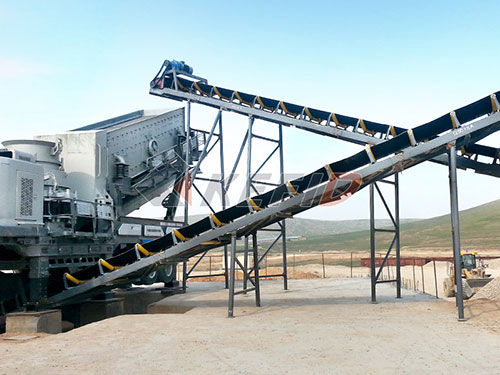
Technical Specifications
Primary Jaw Crusher (PE750×1060)
- Feed Opening: 750mm × 1060mm
- Max Feed Size: 630mm
- Capacity Range: 110320 t/h
- Motor Power: 90110 kW
- Eccentric Shaft Speed: 250300 rpm
- Discharge Opening Range: 80200mm
- Machine Weight: 28,500 kg
- Dimensions (L×W×H): 3,380mm × 2,560mm × 2,560mm
- Crushing Chamber: Standard or short head
- Max Feed Size: 215mm
- Capacity Range: 280480 t/h
- Motor Power: 160180 kW
- Eccentric Throw: 2535mm
- CSS Range: 1030mm
- Machine Weight: 50,300 kg
- Dimensions (L×W×H): 4,870mm × 3,450mm × 4,540mm
- Number of Decks: 3
- Screen Area: 12.9 m² per deck
- Screen Size: 2,100mm × 6,000mm
- Vibration Frequency: 750900 rpm
- Amplitude: 812mm
- Motor Power: 37 kW
- Max Feed Size: 200mm
- Processing Capacity: 100400 t/h
- Operating Temperature: 20°C to +50°C
- Altitude: Up to 2,000m without derating
- Humidity: Up to 95% noncondensing
- Dust Exposure: IP54 rated electrical enclosures
- Automated Control System: $35,000 $55,000 (PLCbased with touchscreen interface)
- Remote Monitoring Package: $12,000 $18,000 (includes cellular modem and cloud subscription)
- Extended Wear Parts Package: $28,000 $45,000 (includes 12month supply of liners and screens)
- Dust Collection System: $40,000 $65,000 (baghouse or cartridge filtration)
- Mobile Chassis Conversion: $180,000 $250,000 (for converting stationary units to trackmounted)
- Standard Warranty: 12 months or 2,000 operating hours (whichever comes first)
- Extended Warranty: Additional 24 months at 46% of equipment value
- Preventive Maintenance Contract: $2,500 $4,000 per month (includes scheduled inspections and priority service response)
- Operator Training Program: $8,000 $12,000 (5day onsite training for up to 8 operators)
- Equipment Leasing: 3660 month terms with 1020% residual value
- Deferred Payment Plans: 30% down payment, balance over 1224 months
- TradeIn Programs: Credit for existing equipment valued at 4060% of original purchase price
- PerformanceBased Financing: Payment tied to equipment uptime and throughput guarantees
Secondary Cone Crusher (PYB1750)
Vibrating Screen (3YK2160)
Environmental Operating Range
Application Scenarios
Hard Rock Quarry Operation | Challenge: Processing abrasive granite with 1520% silica content caused excessive wear on conventional crusher liners, requiring replacement every 180 hours and reducing plant availability to 82% | Solution: Implementation of imported highchrome wear components and modified crushing chamber geometry | Results: Liner life extended to 420 hours, plant availability increased to 94%, annual maintenance costs reduced by $180,000, and production output increased by 12% to 310 t/h
Construction Demolition Recycling Facility | Challenge: Inconsistent feed material containing rebar, concrete, and asphalt created frequent jamming and damage to standard screening equipment | Solution: Deployment of heavyduty impact crusher with hydraulic opening system and punch plate screens with 25mm apertures | Results: Processing capacity increased from 80 t/h to 140 t/h, downtime due to blockages reduced by 75%, and recovered metal content improved by 18%, generating additional revenue of $45,000 annually
Iron Ore Mining Operation | Challenge: High moisture content (1214%) in ore feed caused severe screen blinding, reducing screening efficiency to 68% and limiting overall plant throughput | Solution: Installation of heated screen decks and highfrequency vibrating screens with selfcleaning mechanisms | Results: Screening efficiency improved to 91%, plant throughput increased from 450 t/h to 580 t/h, and moisturerelated downtime eliminated, saving $320,000 in annual lost production
Commercial Considerations
Equipment Pricing Tiers
| Configuration | Price Range (USD) | Includes |
||||
| Basic Stationary Plant | $650,000 $850,000 | Jaw crusher, cone crusher, 2deck screen, conveyors |
| Standard Plant with Washing | $850,000 $1,100,000 | Basic plant plus sand washing unit and hydrocyclone |
| Premium Mobile Plant | $1,200,000 $1,600,000 | Fully mobile jaw + cone + screen combination with onboard conveyors |
| Turnkey Engineered Solution | $1,800,000 $2,500,000 | Complete plant design, installation supervision, commissioning, and operator training |
Optional Features
Service Packages
Financing Options
FAQ
Q1: What is the typical lead time for imported crushing and screening equipment?
Standard lead time is 4560 days from order confirmation for stationary plants, and 6090 days for mobile configurations. This includes manufacturing, quality inspection, and ocean freight. Expedited production is available at 1015% cost premium for urgent requirements.
Q2: How does the import process affect warranty coverage?
The manufacturer provides a 12month international warranty covering parts and workmanship. Warranty claims are processed through the local importer or distributor, with replacement parts shipped within 710 business days. Extended warranty options are available for coverage up to 36 months.
Q3: What are the minimum order quantities for direct import pricing?
Direct factory pricing typically requires a minimum order of $500,000 or a complete processing plant. For smaller orders, working through an authorized importer provides consolidated shipping benefits and localized support at a 58% price premium.
Q4: How does equipment performance vary between different feed materials?
Crushing and screening equipment performance depends on feed material hardness, abrasiveness, moisture content, and particle size distribution. For example, processing limestone (compressive strength 80120 MPa) achieves 1520% higher throughput than granite (150250 MPa). Your importer should provide performance guarantees based on your specific material testing.
Q5: What infrastructure requirements must be in place before installation?
Minimum requirements include a 400V/50Hz threephase power supply (or 480V/60Hz for North American installations), a concrete foundation meeting the equipment manufacturer's specifications, and adequate clearance for maintenance access. The importer can provide foundation drawings and installation guidelines.
Q6: How does the total cost of ownership compare between imported and locally manufactured equipment?
While the initial purchase price for imported equipment is typically 2030% lower, total cost of ownership depends on spare parts availability, service response times, and operator training. With proper preventive maintenance and a local parts inventory, imported equipment achieves comparable or lower total cost of ownership over a 10year operating period.
Q7: What training and documentation are provided with the equipment?
Each equipment package includes comprehensive operation and maintenance manuals, hydraulic and electrical schematics, and a parts catalog. Onsite operator training is available as an optional service package. Remote technical support is provided via phone and video during the warranty period.
Q8: Can the equipment be customized for specific project requirements?
Yes, the manufacturer offers customization options including special voltage configurations, modified feed hoppers, custom conveyor lengths, and enhanced dust suppression systems. Custom engineering typically adds 34 weeks to the production schedule and 510% to the equipment cost.
Q9: What are the payment terms and conditions for international transactions?
Standard payment terms are 30% advance payment, 40% against Bill of Lading, and 30% after installation and commissioning. Letters of Credit are accepted for orders above $1 million. All payments are processed in USD or EUR.
Q10: How does the importer handle customs clearance and logistics?
Your importer manages all export documentation, customs clearance, and inland transportation to your site. The quoted price includes FOB or CIF terms as specified. For CIF terms, the importer assumes responsibility for insurance and freight to the destination port.