
Commercial Stamp Mill Gold Mining Assembly Plant

1. PAINPOINT DRIVEN OPENING
Are you managing gold recovery operations hampered by inconsistent throughput, excessive maintenance downtime, and unpredictable operating costs? Key challenges for a commercial stamp mill operation include:
High Operational Downtime: Frequent mechanical failures of traditional stamp batteries and associated components lead to significant production halts. Unplanned maintenance can cost thousands per hour in lost processing capacity.
Inefficient Gold Liberation: Inconsistent particle size reduction and slurry density control result in suboptimal mineral exposure, directly lowering overall recovery rates and leaving payable gold in tailings.
Excessive Energy & Labor Costs: Older, mechanically inefficient stamp mills consume disproportionate power per ton processed. Manual monitoring and adjustment of feed rates and stamp drops require constant operator attention, increasing labor overhead.
Scalability & Control Limitations: Rigid, legacy systems struggle to adapt to varying ore hardness without manual reconfiguration, creating bottlenecks in your processing plant’s flow sheet.
Is your operation seeking a solution that delivers consistent tonnage, reduces total cost of ownership, and provides precise control over the critical crushing phase?
2. PRODUCT OVERVIEW
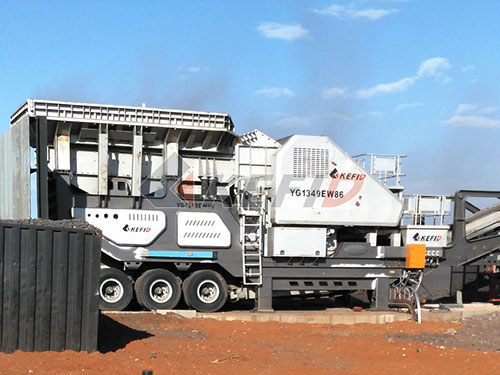
The Modern Commercial Stamp Mill Assembly Plant is a fully integrated, heavyduty mineral processing system designed for the primary crushing and preliminary liberation of goldbearing ores on a production scale. This is not a singular machine but a coordinated plant assembly engineered for continuous, highvolume operation.
Operational Workflow:
1. Controlled Feed: Runofmine ore is metered via an automated apron feeder into a centralized feed hopper, ensuring a consistent and regulated supply to the stamp battery.
2. Precision Crushing: Ore is gravityfed into the mortar boxes of a multistamp battery. Computermonitored camshafts drive the heavy stamps in a controlled drop cycle, pulverizing the ore against hardened steel dies.
3. Slurry Formation & Discharge: Crushed material is flushed with process water to form a slurry, which exits through grated screens at the base of each mortar box. Screen aperture size dictates the maximum particle size for downstream processing.
Application Scope & Limitations:
Scope: Ideal for freemilling gold ores and siliceous deposits where initial coarse crushing is required ahead of finer grinding circuits like ball mills. Suited for medium to largescale operations with steady feed material.
Limitations: Less effective for highly claybound or wet ores that can cause packing. Not a final grinding solution; requires secondary processing for ultrafine liberation.
3. CORE FEATURES
Modular Stamp Battery Assembly | Technical Basis: Unitized, reinforced steel frame with independent mortar box modules | Operational Benefit: Enables individual stamp maintenance or replacement without shutting down the entire battery, drastically reducing downtime for routine service | ROI Impact: Field data shows up to 40% reduction in planned maintenance windows, increasing annual operational availability.
HydroPneumatic Lift & Drop Mechanism | Technical Basis: Replaces traditional mechanical cams with regulated airoveroil cylinders for stamp actuation | Operational Benefit: Provides adjustable drop height and frequency from a central control panel, allowing realtime optimization for varying ore hardness | ROI Impact: Delivers up to 15% energy savings versus fixedmechanical drives and improves crush efficiency by 812%.
Automated Slurry Density Management System | Technical Basis: Inline flow meters and density gauges with PLCcontrolled water injection valves | Operational Benefit: Maintains optimal slurry consistency automatically, ensuring efficient transport to downstream concentrators and stable chemical conditions for cyanidation if applied | ROI Impact: Improves overall recovery consistency and reduces reagent consumption in subsequent stages by maintaining steadystate conditions.
Hardened Alloy Composite Wear Parts | Technical Basis: Mortar box liners, dies, and stamps fabricated from multielement alloy steel (e.g., chromium carbide overlay) | Operational Benefit: Extends service life of highimpact components under continuous abrasive load | ROI Impact: Reduces wear part replacement costs by an average of 30% annually compared to standard manganese steel.
Centralized Vibration & Bearing Monitoring | Technical Basis: Accelerometer sensors on key bearing blocks connected to a central diagnostic display | Operational Benefit: Provides early warning of misalignment or component fatigue, enabling predictive maintenance before catastrophic failure occurs | Your operators benefit from reduced unexpected breakdowns.
Integrated Dust Suppression Manifold | Technical Basis: Water spray nozzles mounted at all transfer points within the enclosed mill housing | Operational Benefit: Effectively controls silica dust at source, ensuring compliance with workplace health standards and protecting other plant machinery from abrasive dust ingress.
4. COMPETITIVE ADVANTAGES
| Performance Metric | Industry Standard (Legacy Mechanical Mill) | Modern Stamp Mill Assembly Plant Solution | Advantage (% Improvement) |
| : | : | : | : |
| Availability (Scheduled Runtime)| 8285% (high downtime for mechanical adjustments) | 9295% (modular design, predictive monitoring) | +10% improvement |
| Energy Consumption (kWh/ton)| 4.8 5.2 kWh/ton (fixed mechanical drive losses) | 4.0 4.3 kWh/ton (efficient hydropneumatic drive) | ~15% reduction |
| Wear Part Life (Mortar Liners)| 1,200 1,500 operating hours (standard steel) | 1,800 2,200 operating hours (hardened alloy composite)| +40% extension |
| Throughput Consistency| +/ 15% variance (manual feed & adjustment) | +/ 5% variance (automated feed & slurry control)| +67% more consistent |
5. TECHNICAL SPECIFICATIONS
Capacity Rating: Configurable from 50 to over 500 tons per day (TPD), based on stamp battery configuration (5stamp to 30stamp assemblies).
Power Requirements: Primary drive motors from 150 kW to 1.2 MW (depending on scale), supplied at 415V/50Hz or 480V/60Hz threephase power.
Material Specifications: Primary frame construction: ASTM A36 structural steel. Wear components: AR500 / Chromium Carbide Overlay alloy plates. Mortar boxes: Cast highchrome iron.
Physical Dimensions: A standard 20stamp plant assembly requires approximately 15m L x 8m W x 7m H footprint inclusive of walkways and service access.
Environmental Operating Range: Designed for ambient temperatures from 10°C to +45°C. Enclosed design allows operation in moderate precipitation; dust suppression system requires continuous water supply at >50 PSI.
6. APPLICATION SCENARIOS
MidScale Gold Processing Plant Expansion
Challenge: A West African operation needed to increase primary crushing capacity from 150 TPD to 300 TPD but lacked space for parallel redundant lines.
Solution Implementation was centered on one highcapacity 20stamp mill assembly plant with automated controls replacing two older 8stamp units.
Results Achieved throughput target within footprint constraints while reducing operating staff requirements by two fulltime equivalents per shift—a direct labor saving—and increasing overall plant availability by 18%.
Transition from Artisanal to Commercial Processing
Challenge A South American cooperative consolidating multiple smallscale sites faced inconsistent recovery due to variable manual crushing practices.
Solution A standardized modular 10stamp mill assembly plant was installed as the central processing hub fed by trucks from various pits providing uniform primary crushing
Results Established baseline metallurgical performance achieving reliable 8789% liberation rate ahead of leaching stabilizing gold production forecasts enabling secure commercial financing
7 COMMERCIAL CONSIDERATIONS
Equipment pricing is tiered based on capacity configuration automation level
Base System Tier Includes core stamp battery drive motors basic control panel foundational structure Starting range $850000$25M
Optional Features Advanced PLC automation package premium alloy wear parts package extended dust collection enclosure predictive monitoring sensor suite
Service Packages Available Comprehensive installation commissioning training annual preventive maintenance contracts priority parts supply agreements
Financing Options Project financing equipment leasing operating lease agreements available through partnered financial institutions subject to credit approval
8 FAQ
What upstream equipment is required? The assembly plant requires regulated feed typically via an apron feeder or conveyor belt from a primary jaw crusher It also requires consistent process water supply
How does this integrate with my existing ball mill or concentrator circuit? The unit outputs a controlled slurry designed as direct feed for secondary grinding or gravity concentration circuits Standard discharge heights match typical sump designs
What are the lead times? Lead times vary based on scale Standard configurations typically have delivery within 26 weeks following engineering approval Custom designs may require longer
What training is provided? Comprehensive onsite training covers safe operation routine maintenance procedures basic troubleshooting diagnostics Training documentation includes detailed manuals schematics
Are spare parts readily available? Critical wear parts are stocked regionally Standard mechanical components use globally available bearings seals motors ensuring minimal logistical delay