
Commercial Quarry Ballast Crushing Equipment Price


1. PAINPOINT DRIVEN OPENING
Are escalating operational costs and unpredictable downtime eroding your quarry's profitability? For plant managers and contractors producing railway ballast, consistent quality and volume are nonnegotiable, yet traditional crushing methods often fall short. Key challenges include:
Excessive Fines Generation: Up to 1520% of processed material can fall below spec, turning potential revenue into waste stockpile.
Unscheduled Downtime: Frequent liner changes and unexpected mechanical failures in primary crushers halt your entire processing line, costing thousands per hour in lost production.
High Maintenance Labor Costs: Complex, timeconsuming maintenance routines for legacy equipment tie up skilled personnel and increase direct operating expenses.
Inconsistent Product Cubicity: Poorly shaped aggregate leads to reduced interlock in the ballast bed, potentially failing track specification audits and leading to product rejection.
Is your current setup equipped to deliver the precise, highvolume output required for major infrastructure contracts while controlling the true cost of ownership?
2. PRODUCT OVERVIEW
The solution is a dedicated Commercial Quarry Ballast Crushing Plant, specifically engineered for hightonnage production of railway ballast aggregate. This is not a single machine but a coordinated system, typically centered on a highperformance cone crusher configured for secondary or tertiary crushing.
Operational Workflow:
1. Primarycrushed feed (typically 250mm) is consistently delivered to the ballast crusher via conveyor.
2. The crusher chamber, configured with specific liner profiles and crushing parameters, applies interparticle compression to fracture rock along natural lines.
3. This process yields a high proportion of optimally sized, cubical product (e.g., 4070mm) while minimizing elongated or flaky particles.
4. Crushed material is screened; onspec ballast is conveyed to stockpile, while oversize is recirculated (closedcircuit) or recrushed.
Application Scope & Limitations:
This equipment is designed for continuous, highvolume production in medium to largescale quarry operations feeding national rail projects or bulk supply contracts. It is optimal for hard, abrasive igneous rock (granite, basalt) and limestone meeting specific hardness criteria. It is not a primary crusher for runofquarry rock and requires consistent, prescreened feed for optimal efficiency.
3. CORE FEATURES
Advanced Chamber Geometry | Technical Basis: Optimized kinematics & cavity profile | Operational Benefit: Produces a higher percentage of inspec, cubical product directly from the first pass | ROI Impact: Reduces recirculating load by up to 30%, increasing net throughput and lowering energy cost per ton.
Hydraulic Adjustment & Clearing | Technical Basis: Integrated hydraulic cylinders for CSS adjustment and uncrushable material release | Operational Benefit: Operators can adjust product size or clear a stall in under 60 seconds without stopping feed | ROI Impact: Minimizes downtime events; field data shows a 40% reduction in crusherrelated stoppages.
Automated Wear Compensation | Technical Basis: PLCcontrolled system that monitors operation and adjusts crusher parameters to maintain consistent output | Operational Benefit: Your product gradation remains stable over liner life without manual intervention | ROI Impact: Ensures continuous compliance with rail spec, avoiding costly load rejections.
HeavyDuty Bearing & Drive Design | Technical Basis: Oversized roller bearings and direct drive configuration | Operational Benefit: Handles peak loads from hard rock and tramp metal with higher reliability | ROI Impact: Extends major component service life; documented cases show bearing life exceeding 25,000 hours in ballast service.
Centralized Greasing & Lube System | Technical Basis: Automated lubrication with realtime monitoring and failsafe controls | Operational Benefit: Eliminates manual greasing points, ensuring critical components are protected continuously | ROI Impact: Reduces labor for routine servicing and prevents costly bearing failures due to lubrication oversight.
4. COMPETITIVE ADVANTAGES
| Performance Metric | Industry Standard (Legacy Cone Crushers) | Commercial Quarry Ballast Crusher Solution | Advantage (% improvement) |
| : | : | : | : |
| Product Yield (InSpec Ballast) | ~7580% of total throughput | Consistently achieves 8590% yield | +1015% more saleable product |
| Liner Changeout Time| 812 hours with manual labor & tools| 46 hours using hydraulicassisted systems| ~50% reduction in downtime |
| Power Consumption per Ton| Baseline reference (100%)| Up to 15% lower due to efficient crushing action & direct drive| 15% improvement in energy efficiency |
| Maintenance Labor Hours/Month| High frequent manual adjustments & checks| Low centralized systems & automation reduce routine tasks| Approximately 35% reduction |
5. TECHNICAL SPECIFICATIONS
Capacity/Rating: Modeldependent; ranges from 350 800+ tonnes per hour of finished ballast product.
Power Requirements: Main crusher drive from 300 kW to 500 kW. Total plant auxiliary power varies by configuration.
Material Specifications: Engineered for compressive strength rock >150 MPa. Tungsten carbide wear parts available for highly abrasive feeds.
Physical Dimensions (Crusher Unit): Approx. length: 4m, width: 3m, height: 3m (excluding feed hopper/discharge conveyor).
Environmental Operating Range: Full functionality from 20°C to +45°C ambient temperature with appropriate lubricants and housing.
6. APPLICATION SCENARIOS
National Rail Network Supplier Challenge:
A major quarry supplying a government rail upgrade needed guaranteed +600tph of strict specification ballast but faced constant fines overrun with their existing VSIbased system.
Solution:
Implementation of a tertiarystage cone crusher plant specifically tuned for ballast production within their existing circuit.
Results:
Fines generation reduced from ~18% to under 9%. Net saleable tonnage increased by 22%, allowing the quarry to secure an exclusive contract based on reliable volume guarantees.
Portable Contracting Fleet Challenge:
A civil engineering contractor needed mobile crushing capacity for remote track projects but required rapid setup/teardown and minimal onsite maintenance expertise.
Solution:
Deployment of a trackmounted closedcircuit cone crusher plant preconfigured for railway ballast specifications.
Results:
Plant operational within 45 minutes of arrival on site. The automated systems allowed operation by general plant personnel, producing consistent ballast that passed all onsite QA testing without adjustment over multiple project sites.
7. COMMERCIAL CONSIDERATIONS
Pricing Tiers: Capital investment scales with capacity and automation level.
Standard Tier: Highcapacity cone crusher core system with basic controls.
Performance Tier: Includes automated wear compensation, advanced telemetry, and hydraulic setting adjustment.
Modular Plant Tier: Fully integrated crushing/screening module on a single chassis for rapid deployment.
Optional Features: Remote monitoring telematics package; dust suppression canopy; tramp metal detection system; spare parts starter kit.
Service Packages: Choose from scheduled maintenance plans offering fixedcost coverage of wear parts and labor or comprehensive performance contracts guaranteeing uptime percentages.
Financing Options: Equipment can be acquired through capital purchase, finance lease (opex model), or longterm rentalwithmaintenance agreements tailored to project duration.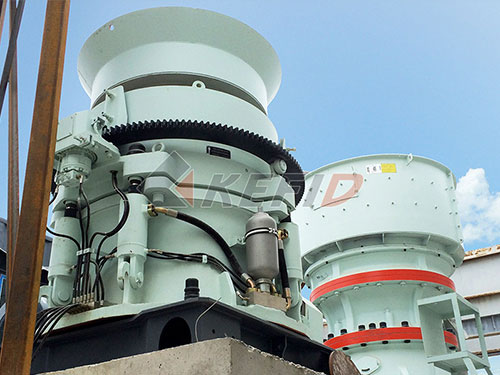
8. FAQ
1. Is this equipment compatible with our existing primary crushing and screening setup?
Yes. These systems are designed as modular secondary/tertiary stages. Our engineering team can review your current flow sheet to ensure seamless integration via conveyors and chute work.
2. What is the expected operational impact on our overall plant throughput?
By significantly reducing recirculating load and improving firstpass yield, field data typically shows an overall plant throughput increase of between . This directly increases saleable tonnage without increasing feed from the face.
3. How does the financing model affect our project's capital expenditure?
Lease or rental options transform a large capital outlay into a predictable operating expense aligned with your specific contract timeline preserving capital
4
for other uses
4
for other uses
5
for other uses
6
for other uses