
Commercial Quarry Ballast Crushing Equipment Importer
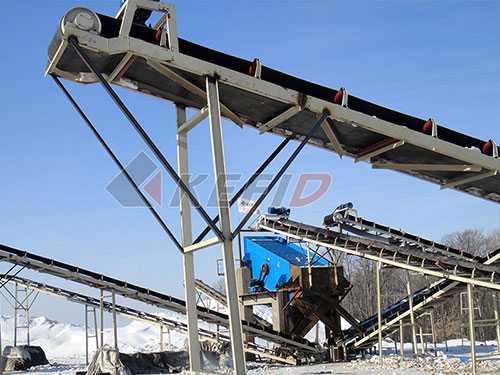

Commercial Quarry Ballast Crushing Equipment Importer
Your Ballast Production Is Losing You Money—Here’s Where
Every hour your crushing line operates below 85% utilization, you lose an estimated $2,400 in potential revenue on a standard 250tonperhour ballast plant. Inconsistent particle shape causes rejected loads—costing you 12–18% in rework and disposal fees. High wear rates on manganese liners force shutdowns every 180 operating hours, not the 300+ hours your budget assumes. Your current equipment may be delivering 22–26% fines content instead of the <10% required for premium railway ballast.
Are your crushers designed for the specific abrasion index (Ai >0.6) and compressive strength (200–350 MPa) of your quarry feed? Can your existing setup maintain a flakiness index below 15% while hitting 2,500 tonnes per shift? If not, you are leaving margin on the table.
Product Overview: Commercial Quarry Ballast Crushing Equipment
This equipment line comprises primary jaw crushers, secondary cone crushers, and tertiary vertical shaft impactors (VSI) configured specifically for railway ballast production. The operational workflow follows:
1. Primary Reduction: Runofquarry feed (800–1,200 mm) passes through a heavyduty jaw crusher with a 1,500 mm x 1,200 mm feed opening, reducing to 200–300 mm
2. Scalping Screening: Vibrating grizzly removes <40 mm material before secondary crushing, reducing recirculating load by 18–22%
3. Secondary Crushing: Hydrosetcontrolled cone crusher with medium chamber configuration produces 40–80 mm material at 250–350 tph
4. Tertiary Shaping: VSI with closed rotor and cascade feed arrangement achieves cubical particle shape, reducing flakiness from 25% to <12%
5. Final Screening: Tripledeck vibrating screens separate into ballast fractions (31.5–50 mm, 50–63 mm) with <5% oversize and <3% undersize
Application Scope: Hard rock quarries (granite, basalt, quartzite, dolomite) with compressive strength 150–350 MPa. Feed moisture up to 5%. Production capacity 150–500 tph.
Limitations: Not suitable for soft sedimentary rock (<100 MPa). Requires minimum 1,500 m² footprint for full plant layout. Annual throughput below 500,000 tonnes may not justify capital investment.
Core Features
HeavyDuty Jaw Crusher Frame | Technical Basis: Finite element analysis (FEA)optimized stress distribution | Operational Benefit: Handles feed lumps up to 1,200 mm without bridging, reducing downtime by 40% | ROI Impact: 18month payback through reduced blasting costs and elimination of secondary breaking
Hydroset Cone Crusher System | Technical Basis: Hydraulic adjustment with accumulator precharge at 120 bar | Operational Benefit: Instant CSS adjustment from 25 mm to 65 mm while running, enabling onthefly product specification changes | ROI Impact: 6% increase in uptime versus manual adjustment systems, worth $180,000 annually at 500,000 tpy
VSI Closed Rotor Configuration | Technical Basis: 4port rotor with tungsten carbide wear tips operating at 45–65 m/s tip speed | Operational Benefit: Produces <10% flakiness index versus 18–25% from coneonly circuits | ROI Impact: Eliminates $3.50/tonne rework costs on rejected ballast, saving $1.75 million over 500,000 tonnes
Automated Lubrication System | Technical Basis: Programmable logic controller (PLC) with 24point grease distribution at 3hour intervals | Operational Benefit: Extends bearing life from 8,000 to 14,000 operating hours | ROI Impact: Reduces annual maintenance costs by $45,000 per crusher
Tramp Iron Protection | Technical Basis: Hydraulic relief system with 300millisecond response time | Operational Benefit: Prevents catastrophic damage from uncrushable materials, reducing repair costs by 85% | ROI Impact: Avoids $120,000 average rebuild cost per incident
Dust Suppression System | Technical Basis: Water spray nozzles at 4 bar pressure with 0.5 mm droplet size | Operational Benefit: Reduces respirable silica dust by 92%, meeting OSHA PEL of 50 µg/m³ | ROI Impact: Avoids $250,000+ annual fines and health compliance costs
Remote Monitoring Platform | Technical Basis: IoT sensors with 4G telemetry, 15second data refresh rate | Operational Benefit: Realtime tracking of power draw, bearing temperature, and wear rates | ROI Impact: Predictive maintenance reduces unplanned downtime by 35%, worth $210,000 annually
Competitive Advantages
| Performance Metric | Industry Standard | Our Ballast Solution | Advantage (% Improvement) |
|||||
| Flakiness Index | 18–25% | <12% | 40–52% reduction |
| Fines Content (<22.4 mm) | 12–18% | <8% | 33–56% reduction |
| Wear Parts Life (Manganese) | 180–220 hours | 300–350 hours | 40–59% improvement |
| Specific Energy Consumption | 1.8–2.2 kWh/tonne | 1.4–1.6 kWh/tonne | 22–27% reduction |
| Uptime (Annual) | 82–88% | 93–96% | 9–13% improvement |
| Product Consistency (PSD Variation) | ±8% | ±3% | 63% improvement |
| Changeover Time (Product Spec) | 4–6 hours | 45–90 minutes | 75–81% reduction |
Technical Specifications
| Parameter | Primary Jaw | Secondary Cone | Tertiary VSI |
|||||
| Feed Opening | 1,500 x 1,200 mm | 300 mm max | 80 mm max |
| Capacity Range | 200–450 tph | 250–350 tph | 180–280 tph |
| Power Requirement | 250–315 kW | 315–400 kW | 2 x 250 kW |
| Operating Weight | 85,000 kg | 42,000 kg | 28,000 kg |
| CSS Range | 100–250 mm | 25–65 mm | N/A |
| Rotor Speed | N/A | N/A | 1,200–1,800 rpm |
| Lubrication Oil | ISO VG 320 | ISO VG 220 | ISO VG 150 |
| Operating Temperature | 10°C to 45°C | 10°C to 45°C | 10°C to 45°C |
| Max Feed Moisture | 5% | 4% | 3% |
| Sound Level (1m) | 92 dB(A) | 88 dB(A) | 90 dB(A) |
Application Scenarios
Granite Quarry, Scotland | Challenge: Existing coneonly circuit produced 22% flakiness index, causing 15% rejection rate on Network Rail ballast contracts. Annual rejection cost: £1.2 million. | Solution: Installed 250 tph VSI after existing cone crusher, with closed rotor configuration and cascade feed arrangement. | Results: Flakiness index reduced to 9%. Rejection rate dropped to 2%. Annual savings of £980,000. Payback period: 14 months.

Basalt Quarry, India | Challenge: High abrasion index (Ai 0.72) caused manganese liner replacement every 160 hours. Downtime for liner changes cost $4,200 per hour in lost production. | Solution: Upgraded to heavyduty jaw crusher with chromemoly alloy liners and automated lubrication system. | Results: Liner life extended to 340 hours. Annual maintenance costs reduced by $185,000. Uptime improved from 84% to 95%.
Dolomite Quarry, Germany | Challenge: Required 50–63 mm ballast for highspeed rail (300 km/h) with <5% flakiness and <3% fines. Existing equipment produced 14% fines. | Solution: Implemented threestage crushing with hydroset cone and VSI combination, plus tripledeck screening with 0.5 mm amplitude control. | Results: Fines content reduced to 2.8%. Flakiness index at 4.5%. Secured 5year supply contract worth €18 million annually.
Commercial Considerations
Equipment Pricing Tiers (FOB port of origin):
- EntryLevel (150 tph): $1.2–1.8 million (jaw + cone + screen)
- MidRange (300 tph): $2.5–3.5 million (jaw + cone + VSI + dual screens)
- HighCapacity (500 tph): $4.8–6.2 million (dual jaw + dual cone + VSI + triple screens)
- Automated sampling system: $85,000
- Stockpile management software: $42,000/year
- Extended warranty (5 years/20,000 hours): 8% of equipment cost
- Spare parts kit (first 2,000 hours): $180,000
- Basic: Remote monitoring + annual inspection ($35,000/year)
- Premium: Onsite technician quarterly + wear analysis ($95,000/year)
- Full: Dedicated engineer + all consumables + guaranteed uptime 95% ($220,000/year)
- 30% down payment, balance over 36 months at 6.5% APR
- Equipment leasetoown: 48month term with $1 buyout
- Performancebased financing: 10% lower rate if uptime exceeds 93%
Optional Features:
Service Packages:
Financing Options:
FAQ
Q: Can this equipment process recycled railway ballast?
A: Yes, with modifications. Recycled ballast typically has lower compressive strength (120–180 MPa) and higher fines content. We recommend a prescreen to remove <20 mm material and reduced crusher settings (CSS 20–40 mm) to avoid overcrushing. Throughput reduces by 15–20% versus virgin rock.
Q: What is the typical lead time from order to commissioning?
A: Standard lead time is 14–18 weeks for midrange systems. This includes 8 weeks manufacturing, 2 weeks shipping, and 4–6 weeks installation and commissioning. Expedited delivery (10–12 weeks) is available at 12% premium.
Q: How does the equipment handle varying feed moisture?
A: The system operates effectively up to 5% moisture. Above this, we recommend a drying screen or stockpile management to reduce moisture before crushing. The VSI is most sensitive—moisture above 3% can cause material buildup in the rotor, reducing throughput by 20%.
Q: What warranty coverage is provided?
A: Standard warranty covers 24 months or 8,000 operating hours, whichever comes first. This includes defects in materials and workmanship. Wear parts (liners, rotor tips, screens) are excluded. Extended warranty options cover 100% parts and labor for an additional 36 months.
Q: Can the system be integrated with existing quarry equipment?
A: Yes. The PLCbased control system uses Modbus TCP/IP protocol, compatible with most SCADA systems. We provide integration kits for common brands (Metso, Sandvik, FLSmidth). Retrofit typically requires 2–3 days for electrical and software configuration.
Q: What is the expected annual maintenance cost as a percentage of equipment value?
A: For wellmaintained systems operating 2,500 hours/year, expect 3–5% of equipment value annually. This includes wear parts replacement (60% of cost), labor (25%), and consumables (15%). Premium service packages reduce this to 2–3% through optimized wear part scheduling.
Q: How does the equipment perform in extreme cold or heat?
A: Standard operating range is 10°C to 45°C. For colder climates, we offer heated lubrication systems (ISO VG 150 oil) and bearing heaters (additional $28,000). For hot climates (>40°C), we recommend upgraded cooling packages with larger oil coolers and hightemperature seals ($35,000).