
Commercial Iron Ore Crushing Plant Prices
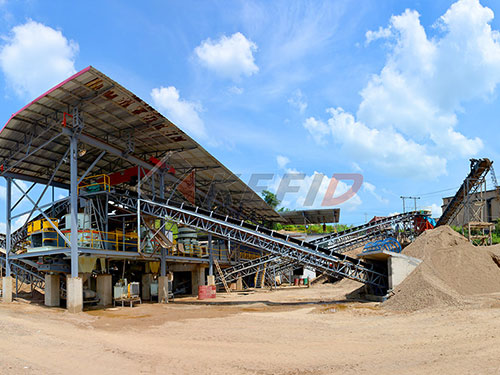

H1: Optimize Your Primary Crushing Circuit with a Commercial Iron Ore Crushing Plant
Subtitle: Engineered for HighAbrasion, HighTonnage Operations to Reduce Cost Per Ton and Maximize Plant Uptime
1. The Operational Challenges of Primary Iron Ore Crushing
Managing the primary crushing stage for iron ore is a critical bottleneck that directly impacts your entire downstream process and profitability. Are you facing these quantified challenges?
Excessive Downtime for Maintenance: Hard, abrasive magnetite or hematite causes rapid wear on crusher liners and components. Unplanned stops for liner changes or repairs can cost over $15,000 per hour in lost production.
Inconsistent Feed Size & Capacity Fluctuations: Variations in runofmine (ROM) ore size and hardness lead to crusher cavity flooding or bridging, causing erratic throughput and reducing your plant’s average capacity by 1020%.
High Energy Consumption Per Ton: Inefficient crushing action and improper machine selection force your primary crusher to draw excessive power, making energy one of the single largest operational costs in size reduction.
Product Quality Issues for Downstream Processing: Poorly sized crusher product with excessive fines or slabby material reduces the efficiency of your SAG mills, increases screening load, and can affect pellet or sinter feed chemistry.
The central question for plant managers is this: How can you achieve predictable, lowercost tonnage through the primary circuit while protecting your downstream operations from feed variability?
2. Product Overview: Stationary & SemiStationary Primary Crushing Plants
A commercial iron ore crushing plant is a engineered system centered on a primary jaw or gyratory crusher, designed specifically to accept large, variable ROM feed and produce a consistent, conveyable product for secondary processing.
Operational Workflow:
1. ROM Receiving & PreScreening: Dump trucks or shovels discharge ore into a robust hopper. A grizzly or scalping screen removes subfines to bypass the crusher, increasing capacity and reducing wear.
2. Primary Size Reduction: The core crusher (e.g., Jaw Crusher or Primary Gyratory Crusher) applies compressive force to break large lumps (often up to 1.5m) down to a manageable size (typically 200250mm).
3. Product Conveyance: A heavyduty apron feeder or vibrating feeder under the crusher regulates material flow onto the main product conveyor for transport to the next processing stage.
Application Scope: Ideal for greenfield mine development, expansion projects requiring increased primary throughput, or replacement of aging, inefficient crushing infrastructure. Best suited for processing medium to very hard iron ores (UCS > 150 MPa).
Key Limitations: This overview focuses on primary crushing stations. A complete processing solution requires secondary/tertiary crushing, screening, and beneficiation circuits tailored to your specific ore body.
3. Core Features of Our Iron Ore Crushing Plant Design
HeavyDuty Crusher Platform | Technical Basis: Reinforced main frame & oversized bearings | Operational Benefit: Handles peak loads from oversized feed and tramp metal without stress cracking | ROI Impact: Extends structural service life by decades, avoiding multimillion dollar frame replacement.
Intelligent Wear Protection System | Technical Basis: Modular liner design in abrasionresistant alloys (e.g., Mnsteel composites) | Operational Benefit: Reduces liner changeout time by up to 40% via hydraulicassisted tools and standardized parts | ROI Impact: Lowers maintenance labor costs and increases annual available crushing hours.
Advanced Feed Control & Automation | Technical Basis: Variable Frequency Drive (VFD) on apron feeder paired with crusher cavity level sensors | Operational Benefit: Maintains optimal chokefed condition for maximum throughput and power efficiency regardless of feed variation | ROI Impact: Field data shows a 712% increase in average throughput while reducing specific energy consumption (kWh/ton).
Integrated Tramp Metal Protection | Technical Basis: Hydraulic or pneumatic tramp release system on the crusher with automatic reset | Operational Benefit: Prevents catastrophic damage from uncrushable material; system clears itself in minutes versus hours of manual clearing | ROI Impact: Eliminates an estimated 90% of unplanned downtime events related to tramp iron.
Dust Suppression & Containment | Technical Basis: Nozzlebased fogging system at transfer points with sealing skirting on conveyors | Operational Benefit: Maintains regulatory compliance for particulate matter, improves site visibility and worker safety | ROI Impact: Reduces water consumption versus traditional sprinklers and avoids potential fines for noncompliance.
Modular Structural Design | Technical Basis: Bolttogether, preengineered support structures and walkways | Operational Benefit: Reduces field fabrication time during installation by approximately 30%, allowing faster commissioning | ROI Impact: Lowers total installed cost through reduced crane time and onsite labor.
4. Competitive Advantages
| Performance Metric | Industry Standard Baseline | Our Iron Ore Crushing Plant Solution | Documented Advantage |
| : | : | : | : |
| Availability (Scheduled Runtime) | 8892% | 9496%+ | +4% improvement |
| Liner Life (Million Tons) Jaw/Mantle| Varies by ore; baseline = 1.0x| Up to 1.4x baseline life| Up to 40% longer life |
| Specific Energy Consumption| Baseline kWh/tonne| Up to 15% reduction vs. baseline| Lower operational cost per ton |
| Mean Time To Repair (MTTR) Liner Change| 2436 hours (jaw)| <20 hours| Over 30% faster turnaround |
| Throughput Consistency (± from design)| ±15% fluctuation common|< ±8% fluctuation via automation| More stable downstream feed |
5. Representative Technical Specifications
Design Capacity Range: 1,500 6,000 tonnes per hour (TPH), depending on ore characteristics and product size requirement.
Primary Crusher Options: Heavyduty Jaw Crusher (1.5m x 1.2m feed opening) or Primary Gyratory Crusher (60”+ feed opening).
Power Requirements: Main crusher drive from 300 kW up to 800 kW. Total installed plant power typically ranges from 600 kW to 1.5 MW.
Material Specifications: Critical wear components manufactured from certified highgrade manganese steel or chromium iron alloys; structural steel grade S355JR.
Physical Dimensions (Approximate): Feed hopper volume up to 120m³; overall plant footprint tailored but typically starting at ~25m L x ~15m W x ~15m H.
Environmental Operating Range: Designed for ambient temperatures from 40°C to +50°C with appropriate lubrication systems and component specifications.
6. Application Scenarios
Magnetite Concentrator Expansion Challenge:| Challenge:| A major magnetite operation needed to increase primary crushed tonnage by 25% without expanding their truck dump footprint or adding a second shift of maintenance crews.
Solution:| Implementation of a semistationary gyratory crusher plant with advanced liner geometry and fully automated feed control.
Results:| Achieved the required throughput increase within the same footprint. Liner life improved by an average of ~35%, reducing annual planned maintenance events from three to two.
Hematite Direct Shipping Ore (DSO) Operation Challenge:| Challenge:| Highly variable ROM hardness caused frequent plugging in the existing jaw crusher, leading to daily downtime averaging over two hours for manual clearing.
Solution:| Replacement with a new jaw crusher plant featuring an aggressive nip angle design optimized for slabby material and an enhanced hydraulic toggle tensioning/tramp relief system.
Results:| Plugging incidents reduced by over ~85%. Annual production increased by an estimated ~62k tonnes due solely to regained uptime.
7. Commercial Considerations
Pricing Tiers:
Standard Configuration: Includes core crusher, base feeders/support structure,and basic control system.Capital investment scales primarily with capacity rating.
HighAvailability Package: Adds automation suite(ASRi),advanced wear monitoring sensors,and premium alloy liners.Increases initial capital outlay but provides fastest operational ROI in highutilization scenarios.
Modular RapidDeploy: Preassembled skidmounted sections minimize civil works.Designedfor remote sitesor temporarypitcrushing.Higherequipmentcostpertonbutlower total installedcostandtime.
Optional Features:
Onboard weighing systems,dust collection baghouses(versussuppression),extended lubrication packagefor extreme climates,custom guarding standards(MSHA,CENetc.).
Service Packages:
Comprehensive multiyear maintenance agreementswith guaranteed parts availabilityand fixed annual costare available.Predictive service packages include regular vibration analysisand liner thickness scanningtoplan outagesprecisely.
Financing Options:
Flexible commercial structures including capital sale,fleet leasing,and throughputbased agreementscan be tailoredto match project cash flow models.New equipment financing often availablethrough partnered institutionsat competitive ratesfor qualified buyers
Frequently Asked Questions
Q1:What factors determine whether we should selecta jawor gyratorycrushefor ourironore?
A:The choice depends primarilyonfeed size(top lump size),requiredcapacity,and overallplant design.Jawcrushersare often preferredfor smaller capacities(3000tph)and handle slabby material efficientlywith less sensitivityto feeding conditions.A detailedanalysisofyourROMsize distributionis recommended
Q2 How does thisplant integratewithour existingsecondarycrushingandscreeningcircuit?
A:Theprimarycrushingplantis engineeredto deliveraconsistentproductP80size thatoptimizesyour existingsecondarycrushers'performance.We willspecifytheprimarydischargesize basedon your downstream equipmentmodelsand targetoverallcircuitproduct.Thecontrolsystemcanbe interfacedwithyourplantwideSCADAfor coordinatedoperation
Q3 Whatisthetypicalinstallationandcommissioningtimeline?
A:Forsemistationaryplantswithsignificantpreassembly,target8to14weeksfromfoundationreadinessuntilcommissioningbegins.This timelineassumesallcivilworksare preparedaccordingtosupplieddrawings.Fullstationaryplantsrequirelongeronsiteerectiontime
Q4 Arewearpartsguaranteedtobe compatiblewithourlegacyequipmentofotherbrands?
A:Linercompatibilityis machinespecific.Wecanmanufacturewearpartsto fitalmostanyexistingcrusherof similartypeand modelbasedon OEMdrawingsor physicalmeasurementsHoweveroptimalperformanceis guaranteedonlywhenusingpartsdesignedforspecificcrusherequipment
Q5 Canweupgradeouroldcrushingstationwiththenewautomationfeatureswithoutreplacingtheentirecrushe
A InmanycasesyesAutomationsystemslikeASRiforfeedcontrolcanberetrofittedtoexistingcrushersprovidingmanyofthesamethroughputandefficiencybenefitsAnengineeringassessmentofyourexistingmachine'sconditionandsuitabilityis requiredfirst
Q6 Whatistheexpectedserviceintervalformajoroverhauls?
A Majoroverhauls(bearinginspections/replacements)dependonoperatinghoursandloadbutindustrytestingdemonstratesdesignlife formaincomponentsoften exceeds60000operatinghoursunderproper maintenanceconditionsRegularoilanalysisis keytopredictiveplanning
Q7 Whatcommercialtermsaretypicalforequipmentofthisscale?
A Transactionsare structuredas capitalequipment salesStandardtermsincludeprogresspayments tiedtomilestoneslikeengineeringrelease shopassembly completionand shipmentBalancepaymentisdueuponreceiptAcceptanceisfinalizedafter successfulperformance testingat yousiteagainstagreed metrics