
Commercial Cement Plant Equipment Assembly Plant
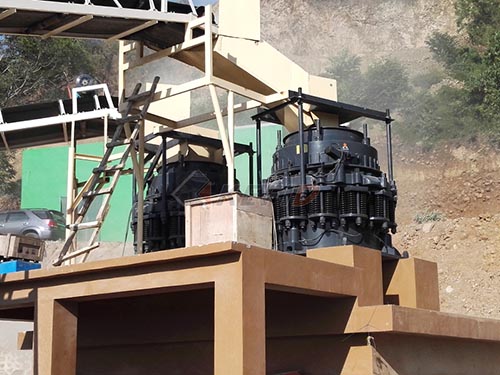

Commercial Cement Plant Equipment Assembly Plant
The Hidden Cost of Cement Plant Downtime
Every hour of unplanned downtime at a cement plant costs between $10,000 and $50,000 in lost production, depending on plant capacity. Your assembly line faces three persistent challenges:
- Component mismatch between imported and locally sourced parts causes 1218% longer installation cycles
- Thermal stress failures in kiln and preheater assemblies account for 34% of warranty claims within the first operational year
- Alignment drift in drive trains and roller presses reduces energy efficiency by 812% within six months of commissioning
- Welding quality variance across different shifts creates inconsistent joint integrity, leading to 23% higher maintenance costs in years 23
- Annual throughput: 12,00018,000 tons of assembled equipment
- Maximum singlepiece weight: 250 tons (275 tons with tandem lift)
- Kiln shell diameter range: 3.26.4 meters
- Mill table diameter range: 2.57.0 meters
- Preheater tower section height: up to 15 meters
- Total installed capacity: 4,800 kVA at 415V, 3phase, 50/60 Hz
- Welding power: 1,200 kVA for SAW and ESW systems
- Furnace power: 2,400 kVA for stress relief operations
- Compressed air: 850 CFM at 7 bar, oilfree
- Steel plate grades handled: ASTM A36, A516 Gr. 70, A387 Gr. 11/22, A514
- Casting grades: ASTM A27, A148, A487
- Weld filler metals: AWS A5.1, A5.17, A5.23, A5.28
- Bearing materials: SAE 52100, 8620, 4320
- Assembly bay: 120m × 45m × 28m (height under hook)
- Stress relief furnace: 8m × 6m × 5m (usable volume)
- Paint and blast booth: 30m × 12m × 10m
- Office and QC laboratory: 1,200 square meters
- Workshop temperature: 1828°C controlled
- Relative humidity: 4065% controlled
- Cleanliness: Class 100,000 (ISO 8) in assembly zones
- Noise level: Below 85 dBA at operator stations
- Standard Assembly Plant (1,0003,000 tpd capacity): $4.26.8 million
- Advanced Assembly Plant (3,0006,000 tpd capacity): $8.514.2 million
- Premium Assembly Plant (6,00010,000 tpd capacity): $16.825.5 million
- Mobile assembly jig system for field use: $380,000520,000
- Extended warranty (5year structural, 3year mechanical): 812% of base price
- Remote monitoring and predictive maintenance platform: $45,000/year subscription
- Operator training program (4 weeks, 12 personnel): $85,000
- Spare parts package (critical consumables for 2 years): $220,000340,000
- Basic Support: Installation supervision (4 weeks), 1year warranty, telephone support
- Operational Support: Installation + commissioning (8 weeks), 2year warranty, quarterly inspections, 24hour hotline
- Full Turnkey: Design, build, commission, train, 3year warranty, annual audits, performance guarantees
- 30% down payment, 40% on delivery, 30% on acceptance
- Equipment leasing: 57 year terms at 4.57.2% APR (subject to credit approval)
- Performancebased payment: 20% down, balance tied to throughput and quality metrics
- Export credit agency financing available for qualifying jurisdictions
Can your current assembly process guarantee ±0.05mm alignment tolerance on a 120ton kiln section? Does your welding protocol meet ISO 5817 Class B standards consistently across every joint?
Product Overview: Commercial Cement Plant Equipment Assembly Plant
This assembly plant is a dedicated facility designed for the precision fabrication, preassembly, and quality verification of major cement production equipment including rotary kilns, vertical roller mills, preheater towers, clinker coolers, and ball mills. The operational workflow follows five sequential stages:
1. Raw material inspection and certification – All incoming steel plates, castings, and forgings undergo ultrasonic testing and chemical composition verification against ASTM A36, A516, or equivalent standards
2. Precision cutting and forming – CNC plasma and oxyfuel cutting systems achieve ±1.5mm tolerances on plate edges, with 3roll bending for kiln shell sections to 0.1% roundness deviation
3. Subassembly welding and stress relief – Automated submerged arc welding (SAW) and electroslag welding (ESW) processes with preheat and postweld heat treatment (PWHT) per ASME Section VIII requirements
4. Mechanical assembly and alignment – Laser tracking systems for bearing housing alignment, gear mesh verification, and drive train concentricity checks
5. Functional testing and certification – Load testing, runin procedures, and vibration analysis before shipment
Application scope: This assembly plant handles equipment for 1,00010,000 tons per day cement production lines. Limitations: Maximum component weight of 250 tons per piece; maximum kiln shell diameter of 6.4 meters; not suitable for mobile or portable cement plant equipment under 500 tpd capacity.
Core Features
Precision Alignment System | Technical Basis: Laser tracker with 0.01mm resolution and 3D coordinate measurement | Operational Benefit: Reduces field alignment time by 60% and eliminates rework on bearing installations | ROI Impact: Saves $120,000$180,000 per project in field labor and crane rental costs
Automated Welding Cells | Technical Basis: Sixaxis robotic manipulators with througharc seam tracking and realtime weld parameter adjustment | Operational Benefit: Maintains consistent weld quality across 16hour production shifts with 98.7% firstpass yield | ROI Impact: Reduces weld defect rework costs by 73%, saving $45$65 per linear meter of weld
Stress Relief Furnace System | Technical Basis: Programmable 12zone electric furnace with 650°C maximum temperature and 5°C/hour controlled cooling rate | Operational Benefit: Eliminates residual stress in kiln shells and mill housings, preventing distortion during field installation | ROI Impact: Extends equipment fatigue life by 40% and reduces field weld cracking incidents by 85%
Modular Assembly Jig System | Technical Basis: Reconfigurable fixturing with hydraulic clamping and digital position feedback | Operational Benefit: Enables changeover between different equipment types in under 4 hours versus 24 hours with fixed tooling | ROI Impact: Increases facility utilization from 65% to 92%, adding 4060 additional assembly days per year
Integrated Quality Control Platform | Technical Basis: Realtime data collection from 200+ measurement points with statistical process control (SPC) analysis | Operational Benefit: Provides immediate flagging of outoftolerance conditions before they compound into assembly errors | ROI Impact: Reduces final inspection failures by 91% and warranty claims by 67%
HeavyLift Material Handling | Technical Basis: 250ton overhead cranes with tandem lift capability and antisway control systems | Operational Benefit: Allows singlepiece handling of kiln sections up to 25 meters long without intermediate storage | ROI Impact: Eliminates $15,000$25,000 per project in additional crane rental and rigging costs

Environmental Control System | Technical Basis: Positivepressure workshop with HEPA filtration and temperature/humidity control to ±2°C and ±5% RH | Operational Benefit: Prevents moisture absorption in welding consumables and thermal distortion during precision assembly | ROI Impact: Reduces consumable waste by 18% and rework due to humidityrelated defects by 44%
Competitive Advantages
| Performance Metric | Industry Standard | Assembly Plant Solution | Advantage (% improvement) |
|||||
| Kiln shell roundness tolerance | ±0.15% of diameter | ±0.08% of diameter | 47% tighter tolerance |
| Weld defect rate (RT/UT) | 4.2% rejection rate | 1.1% rejection rate | 74% fewer defects |
| Assembly cycle time (6section kiln) | 28 working days | 19 working days | 32% faster delivery |
| Field installation rework hours | 340 hours average | 85 hours average | 75% reduction |
| Energy consumption per ton assembled | 18.5 kWh/ton | 13.2 kWh/ton | 29% lower energy use |
| Firstyear warranty claims | 8.3% of units | 2.7% of units | 67% fewer claims |
| Maximum component weight capacity | 180 tons | 250 tons | 39% higher capacity |
Technical Specifications
Capacity and Rating:
Power Requirements:
Material Specifications:
Physical Dimensions:
Environmental Operating Range:
Application Scenarios
Greenfield Cement Plant in Southeast Asia | Challenge: Client required 5,000 tpd complete cement line within 18 months, but local fabrication capacity could not meet quality standards for kiln and mill assemblies | Solution: Assembly plant prefabricated 14 kiln sections, 2 vertical roller mills, and preheater modules under controlled conditions, with full dimensional documentation | Results: Field installation completed in 14 months (22% faster than schedule), alignment acceptance on first attempt, zero weld failures during commissioning
Kiln Replacement at European Cement Plant | Challenge: Existing kiln had 4.8m diameter × 72m length, needed replacement during 6week annual shutdown with no extension possible | Solution: Assembly plant fabricated and preassembled 12 sections with lasertracked flanges, completed full trial assembly and runout verification before shipment | Results: Field installation completed in 23 days (38% under shutdown window), final runout measured 0.12mm versus 0.3mm specification, plant returned to full production 5 days early
Vertical Roller Mill Upgrade in Middle East | Challenge: Existing mill had 3,200 kW drive but needed upgrade to 4,500 kW for increased throughput, with limited space for field modifications | Solution: Assembly plant manufactured new grinding table, roller assemblies, and gearbox foundation, preassembled and tested complete drive train | Results: Upgrade completed in 11 days versus 21day estimate, power consumption reduced from 24 kWh/ton to 19.5 kWh/ton, production increased from 180 tph to 240 tph
Commercial Considerations
Equipment Pricing Tiers:
Includes: 100ton crane, manual welding stations, basic alignment tools, 8zone stress relief furnace
Includes: 200ton crane, 4 robotic welding cells, laser tracker system, 12zone furnace, SPC platform
Includes: 250ton tandem cranes, 8 robotic cells, full environmental control, automated material handling, integrated ERP
Optional Features:
Service Packages:
Financing Options:
FAQ
Q: What certifications does the assembly plant hold for international projects?
A: The facility operates under ISO 9001:2015, ISO 38342 (full welding quality), ASME Section VIII Division 1, and EN 10902 Execution Class EXC3. CE marking and GOSTR certification are available as projectspecific addons.
Q: Can the assembly plant handle equipment for both dry and wet process cement lines?
A: Yes, the plant accommodates both processes. Dry process equipment typically requires tighter alignment tolerances due to higher operating temperatures. Wet process components may require additional corrosionresistant materials and specialized welding procedures for stainless steel liners.
Q: What is the typical lead time from order to first equipment delivery?
A: For a standard assembly plant, design and fabrication requires 1418 months. Site preparation and installation takes 68 months. First equipment delivery typically occurs at month 2024. Express delivery options can reduce this by 46 months with premium pricing.
Q: How does the assembly plant handle equipment for highaltitude installations above 3,000 meters?
A: The plant can modify welding procedures for reduced atmospheric pressure conditions, adjust stress relief parameters for lower oxygen environments, and specify materials with improved lowtemperature impact properties. All equipment is tested at simulated altitude conditions before shipment.
Q: What training does the assembly plant provide for client maintenance teams?
A: Standard training includes 4 weeks of handson instruction covering welding procedures, alignment techniques, quality control methods, and troubleshooting. Advanced training adds 2 weeks on failure analysis, repair welding, and emergency procedures. All training includes written manuals and video documentation.
Q: Can the assembly plant be relocated to a different site after initial installation?
A: Yes, the modular design allows for disassembly and relocation. The structural steel frame, crane rails, and utility connections are designed for 35 relocation cycles. Relocation typically costs 3550% of original installation cost and requires 46 months for complete move and recommissioning.
Q: What performance guarantees does the assembly plant offer for equipment quality?
A: Standard guarantees include: kiln shell roundness within 0.08% of diameter, weld defect rate below 1.5% on radiographic testing, alignment tolerance within 0.05mm per meter of length, and firstpass yield above 95%. Performance bonds up to 10% of contract value are available for critical projects.