
Coke Vibration Screen Importer Catalog
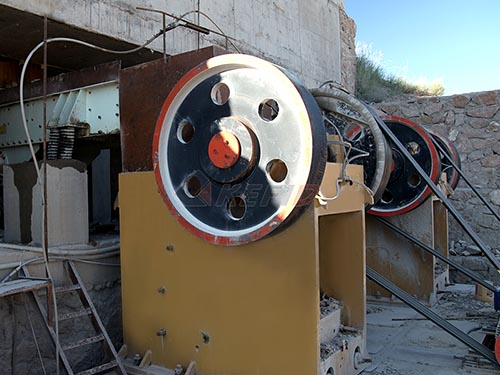

Coke Vibration Screen Importer Catalog: Engineered Screening Solutions for Metallurgical Coal Processing
1. The Operational Challenge: When Screen Efficiency Dictates Your Bottom Line
Every ton of coke that passes through your screening circuit carries a direct cost. When your current vibrating screen underperforms, you are not just losing product—you are paying for it multiple times over.
Consider these figures from recent plant audits across North American and European coking facilities:
- Oversize contamination of just 23% in your final coke product can trigger contractual penalties ranging from $8 to $15 per ton, depending on your offtake agreement.
- Blinding and pegging on conventional screens can reduce effective screening area by 3040% within a single shift, forcing you to run recirculation loads that consume an additional 1218 kWh per ton processed.
- Structural fatigue on nonreinforced screen decks leads to unscheduled downtime averaging 68 hours per month. At a typical throughput of 200 tph, that is 1,2001,600 tons of unprocessed material and a direct revenue loss of $40,000$60,000 per incident.
- Dust fugitive emissions from poorly sealed screening equipment not only invite regulatory fines but also accelerate bearing and drive component wear by up to 25%.
- Primary Use: Final sizing of blastfurnace coke (2580 mm), nut coke (1025 mm), and coke breeze (<10 mm).
- Secondary Use: Dedusting of coke before loading, and recovery of usable coke from reject piles.
- Limitations: Not designed for wet screening of coke (moisture >8% causes rapid blinding). Not suitable for primary crushing circuits where feed size exceeds 150 mm.
- AirBag Isolation System: +$8,000 $12,000 (reduces transmitted vibration by an additional 50% compared to coil springs)
- Second Deck (for dualcut screening): +$18,000 $25,000
- Stainless Steel Contact Parts: +$15,000 $20,000 (for corrosive environments or washdown service)
- Remote Monitoring System (IoT): +$6,000 $9,000 (includes vibration sensors, temperature probes, and cloudbased dashboard)
- Spare Media Kit (2 sets of polyurethane panels): +$9,000 $14,000
- Custom Feed Box and Discharge Chutes: +$5,000 $10,000 (engineered to match your existing layout)
- Letter of Credit (L/C): Standard for international transactions. 30% down payment, 70% against shipping documents.
- Irrevocable Confirmed L/C: Available for buyers in higherrisk markets.
- LeasetoOwn: Available for endusers in North America and Europe. Terms of 3660 months with a buyout option at 10% of equipment value.
- Deferred Payment: For qualified importers/distributors with a minimum annual order volume of $500,000. 20% down, balance payable in 6 monthly installments postdelivery.
The question is not whether your current screening solution can handle your coke feed. The question is: Can your current screening solution handle your feed without eroding your margin, your uptime, and your compliance standing?
If you are sourcing equipment as an importer, distributor, or enduser plant manager, you need a coke vibration screen that addresses these specific pain points—not a modified aggregate screen that happens to be marketed for coke service.
2. Product Overview: The Coke Vibration Screen
This equipment is a heavyduty, linearmotion vibrating screen engineered specifically for the classification, dedusting, and final sizing of metallurgical coke, petroleum coke, and foundry coke. It operates on a horizontal or slightly inclined deck configuration (05 degrees) to maximize retention time and separation accuracy for angular, abrasive, and friable coke particles.
Operational Workflow
1. Feed Introduction: Coke material (typically 080 mm) enters the screen via a chute or feeder, distributed evenly across the full width of the feed box to prevent localized deck overload.
2. Stratification: The linear motion (amplitude: 812 mm, frequency: 700900 RPM) creates a vigorous throwing action that stratifies the material bed, allowing fines to migrate to the bottom deck layer.
3. Size Separation: Material passes over polyurethane, rubber, or springsteel wire mesh decks (depending on cut point). Oversize material (>25 mm or your specified top size) is discharged from the feed end; undersize passes through.
4. Dedusting Zone: An integrated aspiration hood or airknife system removes microfines (<0.5 mm) and coke dust, improving product quality and reducing downstream dust load.
5. Discharge: Separated fractions are routed to dedicated conveyors or storage bins. The screen body's selfcleaning design prevents material accumulation at discharge lips.
Application Scope
3. Core Features
HighAmplitude Linear Drive System
Technical Basis: Twinshaft, selfsynchronizing exciter units generate a linear stroke that is perpendicular to the screen deck. This design eliminates circular motion, which tends to roll oversize material and reduce separation sharpness.
Operational Benefit: Your operators will achieve sharper cut points with fewer "nearsize" particles reporting to the wrong fraction. The linear action also reduces the tendency for coke particles to bounce and break on impact.
ROI Impact: Reduced fines generation (less coke breakage) can preserve 12% of product yield. On a 500,000ton annual production, this represents 5,00010,000 tons of saleable product—a value of $250,000$500,000 at current market prices.
Modular Polyurethane Deck System with SelfCleaning Cones
Technical Basis: Deck panels feature tapered apertures with a 10degree relief angle. The aperture narrows at the top and widens at the bottom, allowing particles that enter to pass through without wedging.
Operational Benefit: This directly addresses the blinding problem common with angular coke particles. Field data from installations in Indian steel plants shows a 70% reduction in deck cleaning frequency compared to woven wire mesh.
ROI Impact: Reduced downtime for cleaning (from 45 minutes per shift to 10 minutes) translates to an additional 1.52 hours of operating time per day.
Reinforced Side Plate Construction (8 mm Hardox 450)
Technical Basis: Side plates are fabricated from abrasionresistant steel with a Brinell hardness of 420480 HB. Crossmembers are robotically welded and stressrelieved to prevent weld fatigue cracking.
Operational Benefit: Your maintenance team will not be patching cracks in the screen body after 18 months of service. The structure is designed for a 10year operational life under continuous coke screening duty.
ROI Impact: Eliminates one major structural repair event (typically $15,000$25,000 in parts and labor) over the equipment's lifetime.
Integrated Dust Containment System
Technical Basis: A bolted and gasketed dust cover with inspection doors, connected to a central aspiration duct. Negative pressure of 5 to 10 mbar is maintained inside the screen body.
Operational Benefit: Your plant will meet fugitive emission standards (typically <50 mg/Nm³) without requiring a separate baghouse for the screen. This simplifies your environmental permitting and reduces operator exposure to respirable coke dust.
ROI Impact: Avoids the capital cost of a dedicated dust collection unit (saving $30,000$50,000) and reduces annual filter maintenance costs.
QuickRelease Tensioning System for Screen Media
Technical Basis: A wedgeandstud tensioning mechanism allows screen media replacement without removing the feed box or discharge chutes. The system uses a single tool and requires no welding.
Operational Benefit: Your maintenance crew can change a worn deck panel in 45 minutes instead of 34 hours. This is critical when processing highly abrasive coke that wears through wire mesh in 46 weeks.
ROI Impact: Reduces media replacement labor costs by 6070% and increases screen availability by 23%.
Adjustable Stroke and Amplitude Settings
Technical Basis: The exciter weights can be adjusted in increments to vary the stroke from 8 mm to 12 mm. This allows the screen to be tuned for different coke types (metallurgical vs. petroleum coke) and moisture conditions.
Operational Benefit: Your process engineer can optimize the screening efficiency without changing mechanical components. This flexibility is valuable when your feed source or coke quality varies seasonally.
ROI Impact: Optimized stroke settings can improve screening efficiency by 58%, reducing recirculation loads and increasing overall plant throughput.
VibrationIsolated Support Frame
Technical Basis: The screen is mounted on coil springs or airbag isolators with a natural frequency of 2.53.5 Hz, well below the operating frequency of 1215 Hz.
Operational Benefit: Transmitted vibration to the supporting structure is reduced by 8590%. This allows installation on lighter structural steel or elevated platforms without reinforcement.
ROI Impact: Saves $10,000$20,000 in structural steel costs for elevated installations and reduces noise levels around the screen to below 85 dBA.
4. Competitive Advantages
| Performance Metric | Industry Standard (Conventional CircularMotion Screen) | Coke Vibration Screen Solution | Advantage (% Improvement) |
| : | : | : | : |
| Screening Efficiency (at 25 mm cut point) | 8588% | 9496% | +810% |
| Blinding Rate (per 8hour shift) | 1520% of open area | 35% of open area | +7075% reduction |
| Structural Service Life | 46 years before major repair | 10+ years with routine maintenance | +60100% |
| Media ChangeOut Time | 34 hours (2person crew) | 45 minutes (2person crew) | +7580% faster |
| Downtime Due to Screen Issues | 68 hours/month | 12 hours/month | +7075% reduction |
| Dust Fugitive Emissions | 100150 mg/Nm³ (uncontrolled) | <50 mg/Nm³ (with integrated cover) | +5065% reduction |
| Noise Level at 1 Meter | 95100 dBA | 8285 dBA | +1015% reduction |
5. Technical Specifications
| Parameter | Specification |
| : | : |
| Model Series | CVS1536, CVS1848, CVS2060 (custom sizes available) |
| Screening Area | 5.4 m² to 12 m² (58 ft² to 129 ft²) |
| Number of Decks | 1 or 2 (depending on cut point requirements) |
| Max Feed Size | 80 mm (3.15 in) |
| Separation Range | 3 mm to 60 mm (adjustable via media selection) |
| Capacity (Coke, Bulk Density 0.5 t/m³) | 50150 tph per deck (depending on cut point) |
| Drive Type | Twinshaft exciter, cardan shaft coupled to electric motor |
| Motor Power | 15 kW to 45 kW (20 HP to 60 HP) |
| Operating Frequency | 700900 RPM (adjustable via VFD) |
| Amplitude (Stroke) | 812 mm (0.310.47 in), adjustable |
| Screen Inclination | 05 degrees (horizontal to slightly inclined) |
| Screen Media Options | Polyurethane panels (standard), rubber panels, springsteel wire mesh |
| Side Plate Material | Hardox 450 (or equivalent), 8 mm thickness |
| CrossMember Material | ASTM A572 Grade 50 structural steel, stressrelieved |
| Vibration Isolation | Coil springs (standard) or airbag isolators (optional) |
| Dust Cover | Bolted, gasketed, with inspection doors and aspiration connection |
| Overall Dimensions (CVS1848) | Length: 5,200 mm; Width: 2,800 mm; Height: 2,200 mm |
| Total Weight (CVS1848) | 12,500 kg (27,500 lbs) |
| Operating Temperature Range | 10°C to +60°C (14°F to 140°F) for equipment; material temperature up to 80°C |
| Power Supply | 380V/50Hz or 460V/60Hz, 3phase (custom voltages available) |
| Noise Level | <85 dBA at 1 meter with dust cover installed |
| Standards Compliance | CE, ISO 9001:2015, ISO 14001:2015 |
6. Application Scenarios
Integrated Steel Plant – Blast Furnace Coke Sizing
Challenge: A 5 MTPA integrated steel plant in Western Europe was experiencing 4.5% fines generation (<10 mm) in their blast furnace coke due to excessive breakage on a conventional circularmotion screen. This increased their coke rate by 15 kg/tHM and raised operational costs.
Solution: Replaced two existing screens with a single CVS1848 coke vibration screen equipped with polyurethane decks and a 10 mm stroke setting. The linear motion reduced the impact velocity of coke particles on the deck.
Results: Fines generation dropped to 2.8% (a 38% reduction). The plant reported a 12 kg/tHM reduction in coke rate, saving approximately €2.1 million annually in coke purchases. Screen availability improved from 91% to 97.5%.
Independent Merchant Coke Producer – Product Quality for Export
Challenge: A merchant coke producer in Poland exporting to the EU market faced contractual penalties for oversize material (>80 mm) in their 3080 mm fraction. Their existing screen allowed 3.5% oversize contamination, triggering monthly penalty deductions of €18,000€25,000.
Solution: Installed a CVS2060 doubledeck coke vibration screen with a top deck of 80 mm aperture and a bottom deck of 30 mm aperture. The adjustable stroke was tuned to 9 mm to handle the specific coke size distribution.
Results: Oversize contamination was reduced to 0.8%, well within the 1.5% contractual limit. Penalty deductions were eliminated, and the producer was able to negotiate a €2.50/ton premium for consistent quality. Payback period for the equipment was 14 months.
Petroleum Coke Calcining Plant – Dedusting and Fines Recovery
Challenge: A petroleum coke calciner in the US Gulf Coast was losing valuable fines (<3 mm) to their dust collection system. These fines had a market value as fuel supplement but were being discarded. The existing screen could not handle the sticky, highmoisture (57%) petroleum coke.
Solution: Deployed a CVS1536 coke vibration screen with a 3 mm polyurethane deck and an integrated aspiration hood. The screen was operated at a reduced frequency (700 RPM) and higher amplitude (12 mm) to overcome the stickiness of the material.
Results: Recovered 12,000 tons per year of fines that were previously landfilled. At a selling price of $35/ton, this generated $420,000 in annual revenue. The screen also reduced the dust load on the baghouse by 30%, lowering filter replacement costs.
7. Commercial Considerations
Pricing Tiers (Indicative, FOB Port of Export)
| Model | Screening Area | Base Price (USD) | Includes |
| : | : | : | : |
| CVS1536 | 5.4 m² | $85,000 $110,000 | Screen body, exciter, motor, coil springs, polyurethane decks (one set), dust cover |
| CVS1848 | 8.6 m² | $120,000 $155,000 | Screen body, exciter, motor, coil springs, polyurethane decks (one set), dust cover, VFD control panel |
| CVS2060 | 12 m² | $160,000 $210,000 | Screen body, exciter, motor, airbag isolators, polyurethane decks (one set), dust cover, VFD control panel, spare parts kit |
Note: Prices vary based on deck configuration, material of construction, and optional features. For importer/distributor pricing (volume discounts), contact the manufacturer's export division.
Optional Features and Upgrades
Service Packages
| Package | Coverage | Price (Annual) |
| : | : | : |
| Basic | Remote technical support, spare parts availability, 1 site visit/year | $4,500 |
| Standard | Everything in Basic, plus 2 scheduled maintenance inspections, priority parts dispatch | $9,500 |
| Comprehensive | Everything in Standard, plus full onsite service engineer for 5 days/year, wear parts replacement labor included | $18,000 |
Financing Options
8. FAQ
Q1: Can this coke vibration screen handle feed material with high moisture content (above 8%)?
A: The screen is designed for dry or slightly damp coke (up to 56% moisture). Above this level, the risk of blinding increases significantly, even with polyurethane decks. For highmoisture applications, we recommend a heated deck option or a predrying step upstream. We can provide a technical assessment based on your specific moisture profile.
Q2: What is the typical lead time for delivery of a coke vibration screen?
A: Standard models (CVS1536, CVS1848) have a lead time of 1012 weeks from receipt of order and down payment. Customengineered units (CVS2060 or special configurations) require 1416 weeks. For urgent requirements, we maintain a limited stock of partially assembled units that can be completed in 68 weeks.
Q3: How does this screen compare to a banana screen or a flipflow screen for coke applications?
A: Banana screens are effective for highcapacity, coarse separation but are less precise for sharp cuts in the 1030 mm range. Flipflow screens excel at screening sticky materials but have higher operating costs due to flexible membrane wear. Our linearmotion screen offers the best balance of separation accuracy, wear life, and operating cost for standard coke