
China Stone Crusher Machine Vendors
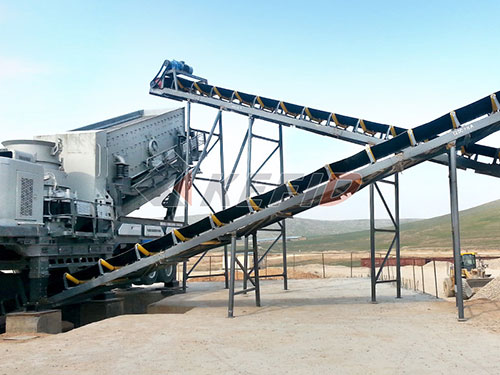

Targeting HighCost Crushing Operations: The Real Cost of Inefficient Primary Reduction
Are your aggregate production or mining margins being eroded by persistent, unplanned downtime? For plant managers and procurement specialists, the primary crushing stage is a critical bottleneck where equipment failure carries exponential costs. Common challenges with traditional stone crusher machines include:
Unscheduled Downtime: Bearing failures or component wear can halt entire production lines, costing thousands per hour in lost throughput and idle labor.
High Wear Part Consumption: Frequent replacement of manganese jaws, liners, or blow bars under highabrasion conditions creates volatile operational expenses and inventory burdens.
Inconsistent Product Gradation: Poorly controlled output leads to downstream processing inefficiencies, reducing the yield of highvalue aggregate fractions and increasing recirculating load.
Excessive Energy Consumption: Older or poorly designed crushers draw disproportionate power per ton of material processed, directly impacting your bottom line.
Rigidity in Application: Can your single machine handle variations in feed material hardness (from limestone to granite) or accommodate changes in required product size without major reconfiguration?
The central question is: does your primary stone crusher machine provide predictable operating costs and reliable uptime, or is it a source of recurring capital drain?
Product Overview: HeavyDuty Primary Jaw Crusher for Stationary Plants
This product line encompasses a series of robust, stationary primary jaw crushers engineered for the first stage of size reduction in quarrying, mining, and largescale construction waste recycling. The operational workflow is designed for integration into fixed plant layouts:
1. Feed Intake: Large raw material (0800mm) is delivered via dump truck or wheel loader into a vibrating grizzly feeder.
2. Primary Crushing: Material enters the crushing chamber where a steep nip angle and aggressive jaw geometry facilitate initial breakage.
3. Pressure Breakage & Discharge: The compressive force exerted by the oscillating jaw against the fixed jaw fractures the stone; crushed material gravitates to the bottom discharge point.
4. Product Conveyance: Sized output is transported via belt conveyor to secondary screening or crushing stages.
Application Scope & Limitations:
Scope: Ideal for hard rock (granite, basalt), abrasive rock (quartzite), and recycled concrete. Suited for hightonnage stationary plants requiring consistent, coarse output (typically CSS from 125mm to 250mm).
Limitations: Not designed as a standalone finishing crusher for producing spec sand. Requires a stable concrete foundation and significant upfront installation planning. Feed size must be controlled within designed opening parameters.
Core Features: Engineered for Lower CostPerTon
Deep Crushing Chamber & Optimized Kinematics | Technical Basis: Increased feed opening volume and steeper nip angle | Operational Benefit: Enables higher throughput of slabby material and reduces bridging risk | ROI Impact: Improves overall plant throughput by 815%, maximizing primary line utilization
HeavyDuty Frame Construction | Technical Basis: Fabricated from highintegrity steel plate with reinforced stress points | Operational Benefit: Absorbs high cyclic loads without fatigue deformation over decades of service | ROI Impact: Extends structural machine life beyond wear components, protecting longterm capital investment
WedgeBased CSS Adjustment System | Technical Basis: Mechanical wedge lock positioning for the closedside setting | Operational Benefit: Allows operators to change product size quickly without hydraulic assists; maintains setting under load | ROI Impact: Reduces adjustment downtime by approximately 70% compared to shimbased systems
Integrated Motor Base & Belt Drive | Technical Basis: Unified baseplate for crusher, motor, and sheaves with automatic belt tensioning | Operational Benefit: Simplifies installation, ensures proper Vbelt alignment, and reduces maintenance checks | ROI Impact: Lowers installation costs by an estimated 15% and extends drive belt service life
HighPerformance Bearing Housings | Technical Basis: Spherical roller bearings with labyrinth seals and grease purging channels | Operational Benefit: Provides high radial load capacity while excluding dust and contaminants | ROI Impact: Field data shows a >30% improvement in bearing service intervals under highdust conditions
BoltOn Wear Liners & Replaceable Jaw Faces | Technical Basis: Modular wear parts secured with captive bolts | Operational Benefit: Enables safe and fast replacement of wear items without specialized welding or complex disassembly | ROI Impact: Reduces liner changeout time by up to 50%, lowering labor costs during maintenance windows
Competitive Advantages Against Standard Solutions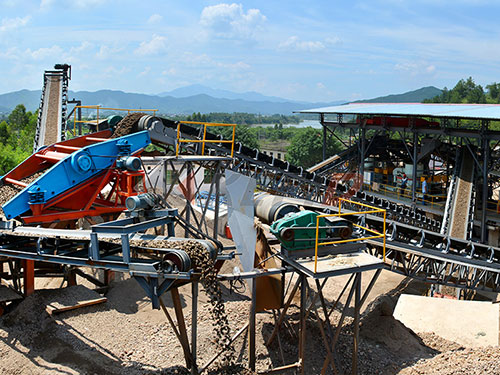
| Performance Metric | Industry Standard for Primary Jaw Crushers | This Stone Crusher Machine Solution | Advantage (% Improvement) |
| : | : | : | : |
| Availability (Uptime) | ~9294% (planned & unplanned stops) |>96% documented in field reports |>24% absolute increase |
| Wear Life (Jaw Plates Granite) | ~120,000 150,000 metric tons |>180,000 metric tons |>2025% longer life |
| Energy Consumption (kWh/tonne) Varies by rock type| Baseline reference |>510% reduction per tonne processed |>510% efficiency gain |
| ClosedSide Setting Adjustment Time| 60 90 minutes using manual shims|70% faster adjustment |
Technical Specifications
Model Range Capacity: Throughput from 350 to 1,200 metric tons per hour (dependent on feed material and closedside setting).
Feed Opening Sizes: Ranging from 800mm x 500mm up to 1500mm x 1200mm.
Power Requirements: Main crusher motor from 75 kW to 200 kW; total installed power includes ancillary drives. Designed for standard industrial voltages (400V/50Hz or 480V/60Hz).
Material Specifications: Main frame fabricated from S355J2 steel; jaw plates available in premium manganese steel grades (Mn18Cr2/Mn22Cr2); shaft forged from highstrength alloy steel.
Physical Dimensions & Weight: Approximate weights range from ~25 tonnes to ~85 tonnes; detailed foundation load drawings are provided per model.
Environmental Operating Range: Designed for ambient temperatures from 20°C to +45°C. Dust sealing effective for typical quarry environments.
Application Scenarios
Granite Quarry Primary Crushing Plant
Challenge: A large granite quarry faced excessive wear part costs on their existing jaw crusher (~130k tons/jaw set) and suffered from thermalrelated bearing seizures during summer operations.
Solution: Implementation of our heavyduty primary jaw crusher machine with Mn22Cr2 jaw plates and enhanced bearing cooling seals.
Results: Wear life extended to over 185k tons per set. Zero bearingrelated failures over two years of operation. The resulting costperton reduction for wear parts was calculated at approximately $0.12/ton.
Urban Construction & Demolition Waste Recycling
Challenge: A C&D recycling facility needed a robust primary crusher capable of handling highly variable feed (reinforced concrete, asphalt, mixed debris) without frequent blockages or damage from tramp metal.
Solution: Installation was configured with a hydraulic overload protection system (optional) on the flywheel and an integrated prescreening grizzly feeder.
Results: The plant achieved consistent throughput of mixed material with automatic release of uncrushable objects. Downtime due to chamber blockages was reduced by over 90%, ensuring steady feed to downstream sorting lines.
Commercial Considerations
Our pricing structure reflects build quality aimed at minimizing total cost of ownership.
Equipment Pricing Tiers:
Base Model Series (Standard Duty): For consistent limestone/medium abrasive applications.
HD Model Series (Heavy Duty): For hard rock (granite/basalt). Includes upgraded bearings & liners (~1520% premium).
XHD Model Series (Extra Heavy Duty): For highly abrasive feed (e.g., quartzite) or severeduty cycles (~2530% premium).
Optional Features Include: Hydraulic toggle tensioning systems; automatic lubrication systems; motorization packages; custom discharge heights; advanced condition monitoring sensor ports.
Service Packages:
Commissioning & Training Package
Planned Maintenance Agreement with guaranteed parts availability
Remote Diagnostics Support Subscription
Financing options are available through partners including equipment leasing structures tailored to project cash flow profiles.
Frequently Asked Questions
1. Q:What is the compatibility with my existing plant layout?
A:Dimensional drawings including foundation requirements are provided prior to order.All models are designed around standard discharge heights compatible with common conveyor systems.Feed hopper interfaces can be adapted based on your current feeder design.
2.Q:What impact will this have on my overall plant efficiency?
A:The primary impact will be increased reliability at the initial bottleneck.Field data shows plants experience fewer unplanned stops leading directly to higher utilization rates.Downstream processes benefit from more consistent feed gradation reducing surges.
3.Q:What are typical lead times?
A.For standard models lead times range between weeks.For fully customized configurations engineering adds weeks.Detailed schedules are confirmed upon project initiation.
4.Q:What commercial terms are offered?
A.We offer FOB pricing exworks.Payment terms typically involve an advance payment against proforma invoice balance before shipment.Warranty covers manufacturing defects in materials/workmanship months from commissioning covering all major structural components subject proper use maintenance documented our guidelines.
5.Q:What training do you provide?
A.Commissioning includes onsite training covering safe operation routine maintenance procedures troubleshooting common issues.Documentation includes detailed parts manuals lubrication schedules recommended inspection checklists video resources accessible online portal dedicated customer support channel technical queries spare parts ordering