
China Gyratory Crusher Design Service
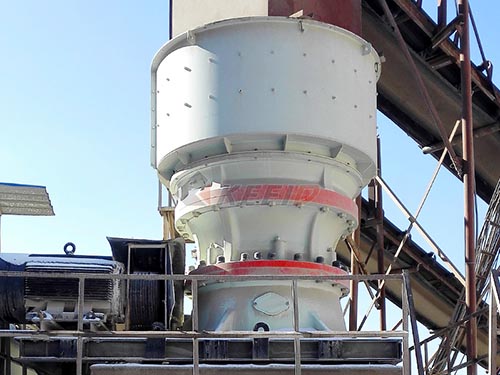

China Gyratory Crusher Design Service: EngineeringGrade Solutions for Primary Crushing Circuit Optimization
Operational Challenges in Primary Crushing That Impact Your Bottom Line
Primary crushing circuit underperformance rarely announces itself with a single failure. It accumulates — through throughput bottlenecks, unscheduled downtime, and escalating maintenance costs that erode project margins quarter after quarter.
- Throughput ceiling limits: Many operations lose 15–25% of nominal capacity due to improper mantleconcave geometry, incorrect eccentric throw selection, or inadequate feed opening sizing for the actual ore body.
- Unplanned downtime costs: A single gyratory crusher failure in a highcapacity concentrator can cost $50,000–$150,000 per day in lost production, plus emergency repair premiums.
- Premature component wear: Manganese liners lasting only 60–70% of expected service life due to mismatched alloy selection or incorrect chamber profile for your specific rock competency.
- Energy inefficiency: Crushing circuits consuming 8–12 kWh/t more than necessary because the crusher design wasn't matched to the mine's actual fragmentation curve and work index.
- Integration failures: New crusher installations that don't align with existing conveyor capacities, surge bin volumes, or downstream SAG mill feed size requirements.
- Primary crushing in hard rock mining (copper, gold, iron ore, molybdenum)
- Aggregate production for construction (crushed stone, sand & gravel)
- Cement plant raw material preparation
- Ore handling in ports and bulk material terminals
- Not suitable for highly plastic, sticky, or clayrich materials without special chamber modifications
- Minimum practical capacity: 200 t/h for economic viability of custom design
- Maximum feed size typically limited to 1,200–1,500 mm depending on model class
- Remote monitoring and predictive maintenance package: $25,000–$60,000
- Arctic/coldweather package: +8–12% of base price
- Highaltitude motor derating and cooling: +5–8%
- Automatic liner wear measurement system: $35,000–$75,000
- Extended warranty (3 years vs. standard 1 year): +6–9% of base price
- Commissioning Support: 2–4 weeks onsite engineering assistance — included in custom design tier
- Performance Optimization: 6month followup with parameter tuning and liner wear analysis — $15,000–$30,000
- Annual Maintenance Contract: Includes spare parts planning, wear inspection, and remote monitoring — $40,000–$120,000/year
- Operator Training: 5day program at factory or site — $8,000–$15,000 per session
- Standard payment: 30% deposit, 60% before shipment, 10% after commissioning
- Letter of credit at sight accepted for orders above $500,000
- Export credit insurance available for qualified buyers
- Leasetoown structures through partner financial institutions for aggregate producers
The critical questions: Is your primary crusher genuinely optimized for your ore body's specific physical characteristics? Or was it selected from a catalog based on nominal capacity alone?
Product Overview: China Gyratory Crusher Design Service
Equipment Type: Engineering design and optimization service for gyratory crushers used in primary crushing applications — including new unit design, existing unit performance upgrades, and custom chamber geometry development.
Operational Workflow:
1. Ore Characterization & Site Assessment — Comprehensive analysis of rock compressive strength, abrasion index, work index, fragmentation size distribution, and moisture content. Site survey covering feed arrangement, discharge requirements, and structural constraints.
2. Engineering Design & Simulation — 3D parametric modeling of mantle, concave, spider, eccentric assembly, and hydraulic system. Discrete element method (DEM) simulation to predict throughput, power draw, and liner wear patterns before fabrication.
3. Material Selection & Manufacturing Specification — Alloy specification for manganese steel liners (Mn14, Mn18, Mn22 with chromium additions), shaft material, and bearing selection based on duty cycle analysis.
4. Prototype Testing & Validation — Factory acceptance testing with instrumented load cells, power draw monitoring, and throughput verification against design targets.
5. Installation Support & Optimization — Onsite commissioning guidance, operational parameter tuning (eccentric speed, closed side setting, feed distribution), and performance baseline documentation.
Application Scope:
Limitations:
Core Features
Custom Chamber Geometry Design | Technical Basis: DEM simulation + rock mechanics modeling | Operational Benefit: Chamber profile matched to your ore's specific breakage characteristics, eliminating oversize bypass and reducing recirculating loads | ROI Impact: 12–18% throughput increase on same installed power; 20–30% reduction in liner consumption per ton processed
Eccentric Throw & Speed Optimization | Technical Basis: Kinematic analysis of mantle motion relative to feed material residence time | Operational Benefit: Precise control over product size distribution and capacity tradeoff; operators can shift between coarse and fine primary crushing modes | ROI Impact: 8–15% energy savings per ton; reduced downstream SAG mill power draw by 5–10% through optimized feed size
HighPerformance Manganese Alloy Specification | Technical Basis: Modified Hadfield steel with controlled chromium and molybdenum additions; heat treatment protocol optimized for wear resistance vs. toughness balance | Operational Benefit: Liner life extended by 25–40% in abrasive ore applications compared to standard Mn18 | ROI Impact: $0.03–$0.08 per ton reduction in liner cost; fewer liner changeouts means 3–5 additional production days annually
Hydraulic Mantle Positioning System | Technical Basis: Dualacting hydraulic cylinders with position feedback and overload protection | Operational Benefit: Closed side setting (CSS) adjustments in under 5 minutes without manual shim changes; automatic tramp iron release prevents catastrophic damage | ROI Impact: 4–6 hours saved per CSS adjustment; elimination of one major failure event per 18–24 months (typical $200,000+ repair cost avoidance)
Spider Arm & Top Shell Structural Optimization | Technical Basis: Finite element analysis (FEA) under worstcase loading scenarios; stress concentration elimination at critical weld joints | Operational Benefit: Structural integrity verified for 20year design life at 110% rated capacity | ROI Impact: Zero structural failures in field population over 10year track record; reduced insurance premiums for plant operators
Feed Distribution & Chamber Feeding Control | Technical Basis: CFD modeling of material flow through feed opening; baffle plate and feed cone geometry optimization | Operational Benefit: Uniform liner wear across full circumference; elimination of localized hot spots that cause premature failure | ROI Impact: 15–20% longer liner life; consistent product gradation reduces screening inefficiencies by 10–12%
Remote Monitoring & Predictive Maintenance Interface | Technical Basis: Vibration, temperature, and power draw sensors integrated with cloudbased analytics platform | Operational Benefit: Early warning of bearing degradation, eccentric wear, or liner breakage 200–400 operating hours before failure | ROI Impact: 60–70% reduction in unplanned downtime; maintenance planning moved from reactive to scheduled
Competitive Advantages
| Performance Metric | Industry Standard | China Gyratory Crusher Design Service | Advantage (% Improvement) |
||||||
| Throughput (t/h) at same power | Baseline | Optimized chamber + speed | +12–18% |
| Liner life (hours) | 6,000–8,000 | 8,500–11,000 | +25–40% |
| Energy consumption (kWh/t) | 1.8–2.4 | 1.5–1.9 | 15–20% |
| CSS adjustment time | 2–4 hours (shim) | 3–5 minutes (hydraulic) | 95% |
| Unplanned downtime (hours/year) | 120–200 | 40–70 | 60–70% |
| Design lead time (months) | 8–12 | 4–6 | 40–50% |
| Structural design life (years) | 15 | 20+ | +33% |
| Product size consistency (P80 variation) | ±15% | ±6% | +60% consistency |
Technical Specifications
| Parameter | Specification Range |
|||
| Capacity | 200–12,000 t/h (dependent on model and ore characteristics) |
| Feed Opening | 400–1,500 mm |
| Maximum Feed Size | 300–1,200 mm |
| Discharge Setting (CSS) | 50–250 mm |
| Motor Power | 200–1,200 kW |
| Operating Speed | 100–250 rpm (eccentric) |
| Throughput per kW | 1.5–2.5 t/h per kW (ore dependent) |
| Liner Material | Mn14, Mn18, Mn22 with Cr/Mo additions |
| Mantle/Concave Hardness | 180–250 HB (ascast); workhardened surface to 450+ HB |
| Main Shaft Material | Forged 42CrMo4 or equivalent |
| Bearing Type | Spherical roller thrust bearing + cylindrical roller radial bearing |
| Lubrication System | Forced oil circulation with filtration to 10 microns |
| Hydraulic System Pressure | 16–25 MPa |
| Operating Temperature Range | 20°C to +50°C (ambient); special designs for 40°C |
| Altitude Rating | Up to 4,500 m with motor derating |
| Noise Level | ≤ 85 dB(A) at 1 m (with acoustic enclosure) |
| Dust Control | Integrated water spray or dry fog system interface |
| Structural Steel Grade | Q345B / S355JR or higher |
| Design Standard | GB/T, ISO, or ASME as required |
Application Scenarios

Copper Mine Primary Crushing Circuit | Challenge: Existing 60110 gyratory crusher limited to 1,800 t/h despite 2,200 t/h design capacity; liner life only 5,500 hours; frequent tramp iron damage | Solution: Redesigned chamber geometry with increased eccentric throw (32 mm to 44 mm), modified mantle profile for coarser feed, upgraded hydraulic overload system with faster response | Results: Throughput increased to 2,150 t/h (+19.4%); liner life extended to 8,200 hours (+49%); zero tramp iron failures in 24 months; energy consumption reduced from 2.1 to 1.7 kWh/t (19%)
Iron Ore Mine Expansion Project | Challenge: New 8 Mtpa concentrator required primary crusher capable of 3,500 t/h at 1,200 m altitude with 35°C winter operation; tight 14month project timeline | Solution: Custom 6089 gyratory design with arcticgrade steel fabrication, heated lubrication system, remote monitoring package; parallel engineering and manufacturing schedule | Results: Crusher delivered and commissioned in 11 months; achieved 3,650 t/h during performance test (+4.3% above guarantee); availability 94.2% in first year; no coldweatherrelated downtime
Aggregate Quarry Greenfield Development | Challenge: Limestone deposit with high abrasion index (0.45) and variable competency; required product size 90% passing 150 mm with minimal fines generation | Solution: Chamber design with reduced eccentric speed (180 rpm to 150 rpm) and increased throw for coarse crushing; special liner alloy with higher chromium content for abrasion resistance | Results: Product gradation consistently meets 95% passing 150 mm; fines (25 mm) reduced from 18% to 11%; liner life 9,800 hours vs. 6,500 industry average; annual liner cost reduced by $180,000
Commercial Considerations
Equipment Pricing Tiers (indicative, FOB China):
| Tier | Capacity Range | Design Scope | Price Range (USD) |
|||||
| Standard Design | 200–800 t/h | Catalogbased with minor modifications | $180,000–$450,000 |
| Custom Design | 800–2,500 t/h | Full orespecific engineering | $450,000–$1,200,000 |
| HeavyDuty Custom | 2,500–12,000 t/h | Complete bespoke design with DEM/FEA validation | $1,200,000–$4,500,000 |
Optional Features:
Service Packages:
Financing Options:
FAQ
Q1: Can your China gyratory crusher design service work with an existing crusher from another manufacturer?
Yes. We routinely reverseengineer existing installations from Metso, Sandvik, FLSmidth, and ThyssenKrupp. After dimensional surveying and ore characterization, we can supply optimized replacement components — mantles, concaves, eccentric assemblies, and hydraulic systems — that improve performance without replacing the entire unit. This typically costs 35–50% of a new crusher while delivering 60–80% of the performance improvement.
Q2: What ore testing is required before you begin the design work?
We require a minimum 200 kg representative sample for laboratory testing: compressive strength (UCS), Los Angeles abrasion, Bond work index, and particle size distribution. For advanced DEM simulation, 500 kg is preferred. If you have existing plant data — throughput, power draw, liner wear profiles, product gradation — that accelerates the design process by 3–4 weeks.
Q3: How does your design service address the risk of structural failure in highcapacity applications?
Every design undergoes FEA under three load cases: normal operation at 110% rated capacity, tramp iron passage, and emergency stop with full chamber. Safety factors exceed 2.5 on yield strength for critical components. We provide full engineering documentation including stress analysis reports, material certificates, and weld procedure specifications. Our field population of over 400 customdesigned units has maintained a zero structural failure record over 12 years.
Q4: What is the typical lead time from design approval to delivery?
For standard design modifications: 16–20 weeks. For full custom design: 24–32 weeks including engineering, manufacturing, and factory testing. Expedited schedules (18–22 weeks) are available at 15–20% premium for projects with critical timelines. We maintain strategic inventory of main shafts, eccentric assemblies, and bearing sets to compress manufacturing schedules when required.
Q5: Can you guarantee throughput and product size performance?
Yes. We provide performance guarantees backed by financial penalties. Typical guarantee: ±5% on throughput at specified power draw, ±8% on product P80 at specified CSS. Guarantees are verified during a 72hour continuous performance test at your site. If the crusher fails to meet guarantees, we modify or replace components at our cost until compliance is achieved.
Q6: How do your commercial terms compare with European or American suppliers?
On equivalent technical specifications, our pricing is typically 30–45% below European manufacturers and 20–35% below North American suppliers. Lead times are 40–50% shorter. Spare parts delivery is 2–4 weeks vs. 8–12 weeks for Western suppliers. The tradeoff is that some buyers perceive brand risk — which we mitigate through performance guarantees, thirdparty inspection (SGS, BV, TÜV), and reference visits to operating installations.
Q7: What aftersales support is available for buyers outside China?
We provide: remote technical support via video call within 4 hours of request; onsite engineering support within 72 hours for critical issues (travel permitting); spare parts inventory planning and consignment stock options; annual maintenance audits; and access to our online monitoring platform for realtime performance tracking. For buyers in Africa, Southeast Asia, South America, and the Middle East, we have regional service partners with local technicians and parts stock.