
Certified Quarry Ballast Crushing Equipment Design Service

1. PAINPOINT DRIVEN OPENING
Are you managing a quarry ballast production operation where inconsistent product gradation, excessive wear part costs, and unplanned downtime are eroding your margins? Commercial buyers and plant managers face tangible, recurring challenges in certified quarry ballast crushing:
Gradation NonCompliance: Failing to meet stringent rail or construction specification envelopes (e.g., ASTM D448, AREMA 4) leads to rejected loads, contractual penalties, and reputational damage.
Unscheduled Downtime: The frequent failure of crusher components under highabrasion conditions causes production halts, with costs exceeding thousands per hour in lost throughput and labor.
High Operational Cost per Ton: Premature liner wear, inefficient power consumption, and manual adjustment cycles drive your cost per ton of certified ballast above competitive levels.
Product Shape Deficiencies: Producing an excess of flaky or elongated particles reduces compaction efficiency for endusers and can limit the marketability of your aggregate.
How do you achieve consistent specification compliance while controlling operational expenditure and maximizing plant availability? The solution lies in a purposeengineered approach to certified quarry ballast crushing equipment design.
2. PRODUCT OVERVIEW
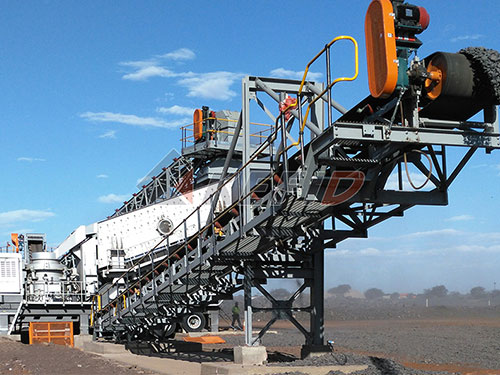
This service provides a complete, engineered design package for stationary or semimobile crushing circuits specifically optimized for producing certified railway and construction ballast. Our design process translates your raw feed characteristics and production goals into a functional, efficient plant layout.
Operational Workflow:
1. Primary Reduction: Dump feed is reduced by a robust jaw crusher or primary gyratory to a manageable size.
2. Secondary & Tertiary Crushing: Material is precisely shaped and sized through cone crushers configured in closed circuit with screening decks.
3. Critical Screening: Multideck screens rigorously separate output into oversize, multiple specification products (e.g., singlesize ballast), and undersize fines.
4. Recirculation & Washing (Optional): Oversize is returned for recrushing; integrated log washers or scrubbers can be included to meet cleanliness specifications.
5. Stockpiling & Loadout: Specificationcertified ballast is conveyed to segregated stockpiles for direct loadout.
Application Scope & Limitations:
Scope: Ideal for hard rock quarries (granite, basalt, trap rock) producing highvolume, specificationgrade aggregates. Designs are scalable from 200 to over 1000 tons per hour.
Limitations: Not designed for soft or highly variable sedimentary rock without specific circuit modifications. Full mobility (trackmounted) for frequent relocation is not the focus of this engineered stationary/semimobile design service.
3. CORE FEATURES
Engineered Chamber Geometry | Technical Basis: CADoptimized cavity profiles and kinematics | Operational Benefit: Direct control over particle size distribution (PSD) and reduction ratio for target ballast specifications | ROI Impact: Reduces recirculating load by up to 15%, lowering energy cost per ton and increasing net usable output
Automated Setting Regulation | Technical Basis: Hydropneumatic or hydraulic crusher adjustment systems with PLC control | Operational Benefit: Maintains closedside setting (CSS) consistently to compensate for wear, ensuring stable product gradation | ROI Impact: Eliminates manual adjustment downtime; field data shows a 2030% extension in liner service life through even wear
Liner Material Specification | Technical Basis: Selection from premium manganese steel alloys with tailored metallurgy (e.g., TIC inserts) based on feed abrasion index | Operational Benefit: Increased resistance to abrasion and impact fatigue in highstress zones | ROI Impact: Documented increase of 3550% in liner lifetime compared to standard alloys, directly reducing cost per ton
Integrated Circuit Logic | Technical Basis: Plantwide PLC with loadmanagement interlocks and feeder rate controls | Operational Benefit: Prevents crusher overloads, optimizes feeder rates, and ensures smooth material flow through the entire circuit | ROI Impact: Protects major components from damage; industry testing demonstrates a 58% reduction in overall plant energy consumption
Dedicated Fines Removal System | Technical Basis: Highfrequency screen decks or air classifiers placed strategically in the circuit | Operational Benefit: Actively removes undersize material before final crushing stages, reducing crusher cavity packing and wear | ROI Impact: Increases final product quality consistency; improves tertiary crusher throughput by up to 12%
Modular Structural Design | Technical Basis: Bolttogether, heavyduty support structures designed for specific load dynamics | Operational Benefit: Simplifies installation, allows for future plant reconfiguration or expansion with minimal fabrication work | ROI Impact: Reduces initial installation time by an estimated 25%, accelerating timetorevenue
4. COMPETITIVE ADVANTAGES
| Performance Metric | Industry Standard Solution | Our Certified Quarry Ballast Crushing Design Service Solution | Advantage (% Improvement) |
| : | : | : | : |
| Product Gradation Consistency (PSD Envelope Adherence) | Manual CSS adjustment leading to gradation drift over liner life | Automated CSS regulation maintains spec throughout liner cycle. | ~40% less deviation from target midpoint |
| Wear Part Cost per Ton Processed| Standard manganese liners changed on failurebased schedule| Optimized chamber design + premium alloy liners extend service intervals.| Up to 35% reduction demonstrated |
| Plant Availability (%)| ~8588%, factoring in adjustment & unplanned downtime| Robust design + automation reduces unscheduled stops.| Increases to >92% operational availability |
| Electrical Energy Consumption (kWh/ton)| Inefficient recirculation loads and constantspeed motors| Loadmanaged circuits & targeted fines removal optimize flow.| ~7% reduction in specific energy use |
5. TECHNICAL SPECIFICATIONS
Design Capacity Range: 200 – 1,200 metric tons per hour (tph), based on feed material with Bulk Density ~1.6 t/m³.
Power Requirements: Total installed power typically ranges from 400 kW (for 200 tph circuits) to over 1.2 MW (for >800 tph circuits). Designs accommodate regional voltage standards (e.g., 400V/50Hz or 480V/60Hz).
Material Specifications: Equipment designed for compressive strength of feed material >150 MPa. Crusher liners utilize ASTM A128 Grade B3/B4 manganese steel or equivalent proprietary alloys.
Physical Dimensions (Example): A typical 500 tph semimobile plant footprint may approximate 35m (L) x 22m (W) x 15m (H). Full structural drawings are provided.
Environmental Operating Range: Component specifications ensure operation from 20°C to +45°C ambient temperature. Dust suppression system interfaces are standard in design.
6. APPLICATION SCENARIOS
Railway Ballast Production for HeavyHaul Corridor
Challenge: A granite quarry supplying a national railway needed guaranteed adherence to AREMA 4A specifications but faced excessive crusher maintenance downtime every 120 operating hours.
Solution: Implementation of our designed tertiary crushing circuit featuring an automated cone crusher with chamber optimization and integrated prescreening fines removal.
Results: Liner service life extended to over 200 hours; product rejection rate at loadout fell from ~8% to under 0.5%; plant achieved consistent monthly output targets.
HighSpecification Construction Ballast for Port Infrastructure
Challenge: A coastal basalt quarry winning a major port contract required producing three separate certified singlesize products concurrently while managing high moisture content in feed.
Solution: A designed multistage crushing and screening circuit incorporating a primary jaw crusher, two secondary cone crushers dedicated to different products, and rinsing screens.
Results: The plant simultaneously produced compliant 40mm, 20mm,and10mm singlesize ballast at a combined rate of450 tph.Material cleanliness exceeded project washloss requirements.
7. COMMERCIAL CONSIDERATIONS
Our certified quarry ballast crushing equipment design service is offered in structured tiers:
Basic Design Package: Includes concept development,crusherand screen sizing,major equipment list,and general arrangement drawings.Suitablefor clientswith internal engineering teams.
Detailed Engineering Package: Comprehensive package including all basic elements plus foundation loading drawings,dust suppressionand electrical schematic interfaces,belt conveyor designs,and detailed bill of materialsfor tendering.
Full Implementation Package: Detailed engineering coupledwith project management support,factory acceptance testing oversight,and commissioning assistance.
Optional features include advanced process control system design,natural frequency screen analysis,and noise attenuation modeling.Service packages forequipment supply,supported by OEM financing partners offering leasingor term loan optionsare available separately followingdesignfinalization.
8.FAQ
1.Q:What if my rock type varies within the quarry reserve?
A:The design process begins witha full analysisof your reserve geology.We modelthe circuitfor the most challenging competent feedand includecontrol strategies(e.g.,adjustable feeder speeds,tramp release systems)tomanage hardness variationswithout compromisingproduct specs.
2.Q.How does this designed solution integratewith my existing primarycrushingor screening equipment?
A:A key phaseof our serviceis the site auditand gap analysis.We specifythe necessaryinterfacing components(conveyors,bins,surge controls)toseamlessly connect newmoduleswithyour current infrastructureensuringbalanced flow.
3.Q.Whatisthe typical payback periodon the investmentin an optimizedballastcrushing circuitdesign?
A.Basedon historical project datafrom similar operations,the efficiency gainsin throughputwear savingsand energy reductiontypically yieldapaybackon thedesignand equipmentinvestmentwithin18to30 monthsof operationdependingon production volume.
4.Q.Do you provideperformance guaranteesforthe finalplant output?
A.Yesthe detailed engineeringpackageincludespredictionsfor capacityproductgradationcurveand power consumptionbasedon pilot testingor simulation software.Guaranteesare then establishedwiththe selectedequipment OEMsduringthe procurement phasewhichwecan facilitate
5.Q.Arethe designs adaptableto futureexpansion?
A.The modular structural philosophyis centralto our approach.We create designs thatallowfor increasedcapacity(e.g.addingacrusher parallelcircuit)withminimal disruptionoftenby predesigningfuturefoundation pointsandsurge capacity