
Certified Quarry Ballast Crushing Equipment Customization

1. PAINPOINT DRIVEN OPENING
Are inconsistent feed material and fluctuating hardness specifications causing unpredictable wear and premature failure in your primary crushing stage? Do you face escalating costs from excessive fines generation that fail to meet rail or construction ballast specifications, turning potential profit into waste? Is unplanned downtime for liner changes and maintenance on your primary crusher creating bottlenecks that delay entire production schedules?
These operational challenges directly impact your bottom line through wasted material, lost production hours, and uncontrolled maintenance expenses. The core question for plant managers is this: how can you achieve consistent, inspec quarry ballast output at the lowest possible cost per ton, while maximizing equipment availability?
2. PRODUCT OVERVIEW: HEAVYDUTY JAW CRUSHER FOR QUARRY BALLAST PRODUCTION
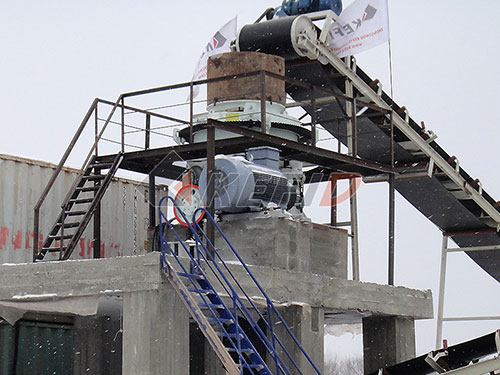
This product line focuses on heavyduty, customized jaw crushers engineered specifically for primary crushing in quarry ballast applications. The operational workflow is designed for reliability and specification control:
1. Primary Reduction: Oversized quarryrun rock (typically up to 8001000mm) is fed into the crusher's robust chamber.
2. Controlled Compression: A steep nip angle and optimized crushing geometry apply compressive force to fracture rock along natural cleavage lines, minimizing wasteful abrasion.
3. SpecificationOriented Discharge: The closedside setting (CSS) is precisely adjusted to yield a primary crushed product where the majority of material falls within a tight target range (e.g., 4090mm), ideal for secondary processing into ballast.
4. PreScreening Bypass: Correctly sized material can bypass further crushing via an integrated grizzly or prescreen, boosting efficiency.
Application Scope: Ideal for hard rock quarries (granite, basalt, trap rock) producing railway ballast, construction aggregate base, or drainage layer materials. Limitations: Not suitable for highly abrasive, siliceous materials without specific liner alloy customization; requires a competent feed system to ensure optimal cavity filling.
3. CORE FEATURES
Optimized Cavity Geometry | Technical Basis: Kinematic dynamics & finite element analysis | Operational Benefit: Promotes interparticle crushing and reduces liner wear per ton crushed | ROI Impact: Up to 20% longer liner life translates to lower consumable costs and less downtime for changes.
Hydraulic Toggle & CSS Adjustment | Technical Basis: Integrated hydraulic ram system | Operational Benefit: Enables remote adjustment of the closedside setting for quick product size changes and provides overload protection by releasing tramp metal | ROI Impact: Reduces changeover time by up to 80% compared to manual shim systems, protecting revenue during specification shifts.
HeavyDuty Fabricated Frame | Technical Basis: Highstrength steel plate with stressrelieved welding | Operational Benefit: Provides exceptional structural integrity to withstand continuous highcycle loading without fatigue failure | ROI Impact: Extends crusher service life beyond industry average, delivering a higher total lifetime tonnage and protecting capital investment.
QuarryGrade Spherical Roller Bearings | Technical Basis: Oversized bearings with continuous lubrication systems | Operational Benefit: Supports the high radial and axial loads of hard rock crushing with superior heat dissipation | ROI Impact: Industry data shows bearingrelated failures are a top cause of downtime; this design virtually eliminates them under proper maintenance.
Integrated Motor Base & Belt Drive | Technical Basis: Unified subframe construction | Operational Benefit: Eliminates complex alignment procedures during installation or after maintenance; ensures consistent Vbelt tensioning | ROI Impact: Reduces installation time by approximately 30% and improves power transmission efficiency for lower operating costs.
4. COMPETITIVE ADVANTAGES
| Performance Metric | Industry Standard Solution | Customized Quarry Ballast Jaw Crusher Solution | Advantage (% Improvement) |
| : | : | : | : |
| Liner Life (Abrasive Rock)| Manganese liners replaced every 450,000 tons| Premium alloy liners & optimized geometry last ~550,000 tons| ~22% longer life |
| Tonnage Efficiency| Fixed throughput based on nominal motor size| Customized flywheel mass & kinematics for optimal inertia| Up to 15% higher throughput in similar footprint |
| Availability (%)| ~92% (including planned liner changes)| ~95% due to faster changeouts & protected components| ~3 percentage points |
| Fines Generation (10mm)| Typically 1825% of total output| Cavity design reduces to 1218% through controlled compression| Up to 30% reduction in waste fines |
5. TECHNICAL SPECIFICATIONS
Capacity Range: 350 1,800 tonnes per hour (dependent on feed material hardness and required product sizing).
Feed Opening: From 800mm x 500mm up to 1500mm x 1200mm.
Power Requirements: Electric motor drive from 75 kW to 300 kW; voltage tailored to site infrastructure.
Material Specifications: Highstrength welded steel frame (ASTM A36/A572); Austenitic manganese or optional chromium iron alloy wear liners; forged alloy steel eccentric shaft.
Physical Dimensions (Example Model): Approx. Length: 4.5m, Width: 3.2m, Height: 3.8m; weight approx. 65,000 kg.
Environmental Operating Range: Designed for ambient temperatures from 20°C to +45°C; dust seals protect bearings from particulate ingress; noise emissions compliant with relevant directives (<85 dB(A) at operator station with optional kits).
6. APPLICATION SCENARIOS
Granite Quarry Supplying National Rail Network | Challenge: A major quarry's existing primary crusher produced excessive fines (>28%) when processing very hard granite, failing rail ballast spec consistently and wasting valuable tonnage. Unplanned stoppages for blockages were frequent. | Solution: Implementation of a customized heavyduty jaw crusher with a specially profiled cavity and a slightly reduced nip angle to promote slabby product formation over fines generation. An automatic hydraulic toggle system was included for tramp iron protection.| Results: Fines generation reduced to below 16%. Plant availability increased by approximately 14% in the first year due to elimination of blockagerelated stoppages. The consistent primary product improved secondary cone crusher efficiency by 8%.
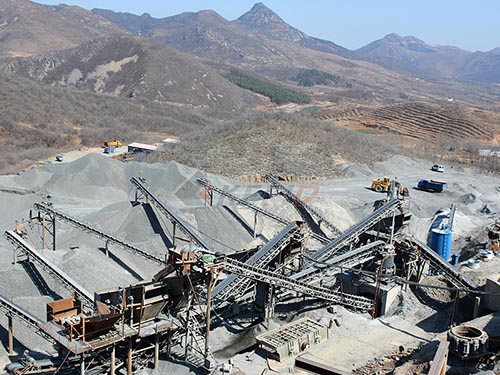
Basalt Aggregate Producer Expanding into Rail Contracts | Challenge: The producer needed guaranteed specification output but faced highly variable feed block sizes from blasting operations, leading to erratic crusher feeding and poor chamber utilization.| Solution:A customized quarry ballast jaw crusher was paired with an integrated static grizzly feeder section at the inlet.This "scalping" unit diverted subCSS material directly onto the product belt.| Results:Crusher cavity consistently operated at full capacity,increasing throughput by an average of 22%.Wear on the primary crushing chamber was distributed more evenly,increasing projected liner life.Consistent feed allowed precise CSS tuning,yielding 98% of primary crush within target range.
7.COMMERCIAL CONSIDERATIONS
Pricing Tiers: Configured across three value tiers:
1.Essential Reliability Package
2.Performance Optimization Package
3.Total Uptime Package
Optional Features: Automated grease lubrication systems,motor starters & soft starts,wear part monitoring sensors,dust suppression spray bars,and special alloy liner packages.
Service Packages: Annual inspection & condition reporting,major component exchange programs,and remote diagnostics support.Planned maintenance contracts are available that cap annual service costs.
Financing Options: Includes capital purchase,direct leasetoown agreements,and throughputbased rental contracts where payment is tied to verified production tonnage,suitable for projectbased work.
8.FAQ
Q1.Is this equipment compatible with our existing secondary/tertiary crushing circuit?
Field engineers conduct a circuit audit.The jaw crusher can be customized in discharge opening range and overall capacity specifically as an optimized "first stage"to match your existing downstream equipment,maximizing total plant flow.
Q2.What is the expected operational impact on our overall plant power consumption?
Due to optimized kinematics and efficient drive design,the specific energy consumption( kWh per ton crushed ) typically decreases between 510%,depending on previous equipment age.The integrated design avoids parasitic losses from misaligned drives.
Q3.How does the hydraulic toggle system affect maintenance safety?
It removes the need for personnel entry into the crusher feed area during clearing operations or CSS adjustment.Settings are changed via control panel from outside the machine,a documented safety improvement that reduces risk exposure.
Q4.Are there commercial terms available beyond outright purchase?
Yes.Financing structures including leasing are common.For qualifying operations,a productionbased rental model can be structured where payments correlate directly with monthly tonnage processed reducing upfront capital outlay
Q5.What level of customization is truly possible versus standard models?
Core customization areas include wear part metallurgy,cavity profile design,motor mounting configuration,and integration points with your specific feed system/support structure.We engineer from a modular platform not a onesizefitsall catalog
Q6.How long does implementation typically take from order commissioning?
For standard configurations lead time averages 16 weeks.Complex customizations may require 2024 weeks.Onsite commissioning supervised by factory technicians typically requires 510 working days depending on foundation readiness
Q7.What evidence supports your claims on improved liner life?
We provide comparative wear part tracking documentation from sites with similar geology.Liner profile scanning data shows more uniform wear distribution extending service intervals.Final performance will depend on your specific rock abrasiveness index