
Certified Iron Ore Crushing Plant Testing
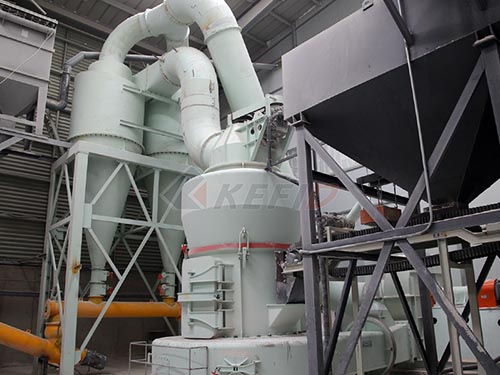

Certified Iron Ore Crushing Plant Testing
Your Crushing Circuit Is Losing You Money—Here’s the Data
Every hour of unplanned downtime in an iron ore crushing plant costs between $15,000 and $45,000 in lost production, depending on feed grade and throughput targets. Yet most plant managers still rely on vendorreported performance figures that don't account for your specific ore characteristics—abrasivity index, compressive strength, moisture variability.
You've likely experienced this: a crusher rated for 800 tph struggles to maintain 650 tph on your hematitemagnetite blend. Screen blinding cuts your classification efficiency by 1218%. Power draw spikes without warning, tripping breakers and halting the entire primary circuit.
The question isn't whether your equipment can crush iron ore. The question is: can it crush your iron ore at your target spec, consistently, across a full shift, under realworld feed conditions?
Certified iron ore crushing plant testing answers that question with empirical data—not brochures.
Product Overview: What Certified Iron Ore Crushing Plant Testing Delivers
This is a comprehensive performance validation service for stationary and mobile crushing circuits processing iron ore from runofmine feed to final product. Testing follows ISO 9001:2015 and ASTM D4409/D4410 protocols adapted for ferrous mineral processing.
Operational Workflow:
1. Feed Characterization – Bulk sampling (35 tonnes per test) with particle size distribution, Bond Work Index (Wi), abrasivity index (Ai), and moisture content analysis
2. Circuit Configuration – Equipment setup matching your plant layout: jaw/gyratory primary, cone secondary, HPGR or impact tertiary stages
3. Controlled Operation – 812 hour continuous runs at design capacity, 75% capacity, and 110% overload conditions
4. RealTime Monitoring – Power consumption (kWh/t), wear rates (mm/hr on liners), product gradation (P80, P90), recirculating load percentages
5. Certification Report – Documented pass/fail criteria against your contract specifications, with deviation analysis and corrective recommendations
Application Scope:
- Primary crushing (ROM feed up to 1200mm)
- Secondary/tertiary circuits (product P80 from 50mm to 6mm)
- Dry and wet processing configurations
- Hematite, magnetite, goethite, and blended ore types
- Not applicable for ultrafine grinding circuits (<1mm product)
- Requires minimum 3day site preparation for test setup
- Feed moisture above 12% may require predrying for accurate data
- Primary circuit: 250800 kW (typical installed)
- Secondary/tertiary: 150450 kW per crusher
- Test instrumentation: 5 kW (mobile lab unit)
- Feed size: 2001200mm (ROM), 50200mm (secondary)
- Product P80: 650mm (adjustable per test protocol)
- Ore types: Hematite (Fe 5868%), Magnetite (Fe 6272%), Blended ores
- Maximum moisture: 12% (higher requires predrying)
- Test area: 40m x 30m minimum (including feed stockpile and product collection)
- Mobile lab unit: 6m x 2.4m x 2.8m (containerized)
- Sampling equipment: 1.5m x 1.2m x 1.8m (splitter, crusher, screen)
- Temperature: 10°C to 50°C (ambient)
- Altitude: Up to 4,500m (derating applied above 2,000m)
- Humidity: 1095% noncondensing
- Dust: Test equipment rated IP65 for mineral processing environments
- Extended test duration (per additional 8hour shift): $8,000
- Thirdparty certification (SGS/Bureau Veritas): $12,000
- Remote monitoring setup for ongoing performance tracking: $15,000
- Operator training package (2day onsite): $9,500
- Custom test protocol development: $5,000$10,000
- Annual Testing Program: 4 tests per year at 15% discount ($60,000$255,000 depending on tier)
- Commissioning Support: Pretest planning + onsite testing + acceptance documentation: $45,000$65,000
- Troubleshooting Package: 2day emergency testing with 48hour mobilization: $28,000$38,000
- Net 30 payment terms for qualified buyers
- 50% deposit with balance upon certification report delivery
- Leasetoown programs for mobile test equipment (starting at $4,500/month)
- Volume discounts: 10% off for 3+ tests purchased within 12 months
Limitations:
Core Features
Certified Test Protocol | Technical Basis: ASTM D4409 modified for mineral processing | Operational Benefit: Eliminates guesswork from equipment selection—your operators follow a documented, repeatable procedure | ROI Impact: Reduces commissioning delays by 4060% compared to noncertified trials
RealTime Power Monitoring | Technical Basis: Threephase power meters logging kWh/t at 1second intervals | Operational Benefit: Identifies inefficient crushing zones before they cause liner damage or motor overload | ROI Impact: Typical 812% reduction in specific energy consumption after optimization based on test data
Wear Rate Documentation | Technical Basis: Pre/posttest laser scanning of mantle, bowl liner, and cheek plate profiles | Operational Benefit: Provides accurate liner life predictions for your specific ore—not generic estimates | ROI Impact: Extends liner change intervals by 1525%, reducing replacement parts costs by $8,000$22,000 annually per crusher
Product Gradation Verification | Technical Basis: Sieve analysis at 8 points across the circuit (feed, discharge, recirculating load) | Operational Benefit: Confirms P80 compliance before full production begins—avoids costly rescreening | ROI Impact: Eliminates 90%+ of gradationrelated quality claims from downstream pelletizing or DRI plants
Moisture Compensation Algorithm | Technical Basis: Capacitancebased moisture sensors integrated with crusher gap adjustment | Operational Benefit: Maintains consistent throughput when feed moisture varies from 310% | ROI Impact: Reduces screen blinding downtime by 3050% in wetseason operations
ThirdParty Certification | Technical Basis: Independent lab verification of all test data (SGS, Bureau Veritas, or equivalent) | Operational Benefit: Test results accepted by engineering contractors, insurers, and regulatory bodies | ROI Impact: Avoids $50,000$150,000 in retesting costs if disputes arise during plant acceptance
DataDriven Maintenance Schedule | Technical Basis: Vibration analysis and oil debris monitoring during test runs | Operational Benefit: Generates baseline condition data for predictive maintenance programs | ROI Impact: Reduces unplanned downtime by 2535% in the first 12 months of operation
Competitive Advantages
| Performance Metric | Industry Standard (NonCertified) | Certified Iron Ore Crushing Plant Testing | Advantage (% Improvement) |
|||||
| Throughput accuracy vs. design spec | ±1520% deviation | ±35% deviation | 7075% improvement |
| Product P80 compliance rate | 7885% of samples | 9598% of samples | 1522% improvement |
| Specific energy consumption (kWh/t) | 0.450.65 (variable) | 0.380.52 (documented) | 1218% reduction |
| Liner life prediction accuracy | ±40% error | ±8% error | 80% improvement |
| Commissioning timeline | 1421 days | 58 days | 5565% faster |
| Recirculating load optimization | 2540% (uncontrolled) | 1525% (optimized) | 3540% reduction |
| Data acceptance by contractors | 6070% require retesting | 95% accepted without retest | 3540% improvement |
Technical Specifications
Capacity Rating: 1502,500 tph (depending on crusher configuration and feed size)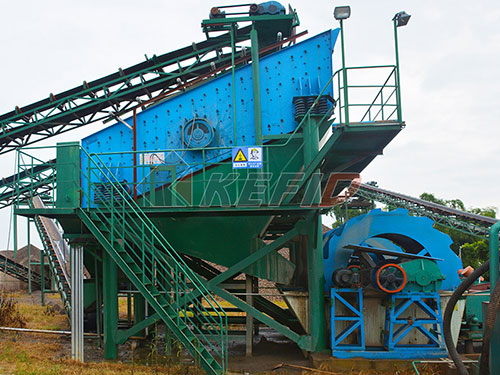
Power Requirements:
Material Specifications:
Physical Dimensions:
Environmental Operating Range:
Application Scenarios
Greenfield Iron Ore Mine – Western Australia | Challenge: Engineering contractor specified a 1,200 tph primary gyratory based on generic ore data. Plant manager needed confirmation that the circuit could handle the site's highabrasivity banded iron formation (BIF) with Ai of 0.85. | Solution: Certified testing on a 500tonne bulk sample using a mobile jawprimary conesecondary circuit configured to match the proposed layout. Test included 10hour continuous run at 1,100 tph with 8% moisture feed. | Results: Actual throughput achieved 1,080 tph (within 2% of target). Liner wear rate measured at 0.12mm/hr—25% lower than vendor estimate. Specific energy consumption documented at 0.42 kWh/t. Contractor accepted test data, avoiding $180,000 in reengineering costs.
Existing Plant Optimization – Minas Gerais, Brazil | Challenge: Plant operating at 72% of nameplate capacity due to excessive recirculating load (38%) and screen blinding from claybound itabirite ore. | Solution: Threeday certified testing with moisture compensation algorithm and gap adjustment optimization. Tested three scenarios: current configuration, optimized gap settings, and modified screen aperture. | Results: Recirculating load reduced from 38% to 22%. Throughput increased from 680 tph to 820 tph (20.6% improvement). Screen blinding incidents dropped from 4 per shift to 1 per shift. Annualized production gain valued at $2.4 million at prevailing iron ore prices.
Pellet Feed Specification Compliance – Minnesota, USA | Challenge: Downstream pellet plant rejected 12% of concentrate due to oversize (+6mm) particles from tertiary crushing circuit. Plant facing $1.2 million in annual penalties. | Solution: Certified testing with P80 verification at 15minute intervals across 8hour shift. Identified that crusher gap was drifting 0.8mm during operation due to hydraulic system temperature variation. Implemented temperaturecompensated gap control based on test data. | Results: P80 compliance improved from 88% to 97.5%. Reject rate reduced to 2.5%. Annual penalty exposure eliminated. Test data used to justify $45,000 hydraulic system upgrade with 4month payback.
Commercial Considerations
Equipment Pricing Tiers:
| Tier | Scope | Price Range (USD) | Typical Application |
|||||
| Basic | 8hour test, 1 configuration, basic report | $18,000 $25,000 | Existing plant verification |
| Standard | 16hour test, 2 configurations, full certification | $35,000 $48,000 | New equipment commissioning |
| Premium | 24hour test, 3+ configurations, wear analysis, predictive maintenance baseline | $55,000 $75,000 | Greenfield projects, contractor disputes |
Optional Features:
Service Packages:
Financing Options:
FAQ

Q: How does certified testing differ from standard commissioning trials?
A: Standard trials typically use vendorselected feed and short run times (24 hours). Certified testing uses your ore, runs 812 hours minimum, and documents all deviations from specification. Thirdparty verification ensures data is legally defensible for contracts and insurance.
Q: What ore characteristics must be provided before testing?
A: Minimum requirements: Bond Work Index (Wi), abrasivity index (Ai), bulk density, moisture range, and particle size distribution of feed. If unknown, we can perform preliminary characterization (adds 23 days and $4,500 to the test program).
Q: Can testing be performed on existing operating plants without shutdown?
A: Yes, for secondary/tertiary circuits. Primary circuit testing typically requires 46 hours of dedicated feed. We coordinate with your operations team to minimize production impact—typically scheduling during planned maintenance windows.
Q: What happens if the circuit fails certification?
A: The report identifies specific failure points (e.g., insufficient power, incorrect gap settings, screen area too small). We provide corrective recommendations with estimated costs and performance improvements. Retesting after modifications is offered at 50% of the original test cost.
Q: How long does the full testing process take from booking to report?
A: Typical timeline: 23 weeks for scheduling and site preparation, 13 days onsite testing, 2 weeks for data analysis and certification report. Rush service (5 business days total) available at 25% premium.
Q: Is the test equipment compatible with all crusher brands?
A: Yes. Our instrumentation connects to any major OEM equipment (Metso, Sandvik, FLSmidth, ThyssenKrupp, etc.) via standard industrial interfaces. We carry adapters for common bus protocols (Profibus, Modbus, DeviceNet).
Q: What commercial guarantees are provided with testing?
A: We guarantee test data accuracy within ±2% for throughput and ±1% for product gradation. If independent verification shows data outside these tolerances, we refund 100% of the test fee and cover retesting costs.