
Certified 250 300tph Stone Crushing Plant Producer


Certified 250 300tph Stone Crushing Plant Producer
Your Crushing Operations Are Under Pressure. Here’s How to Fix Throughput and Uptime.
You are managing a highvolume aggregate operation. Your current setup is struggling to maintain a consistent 250300 tonnes per hour output. Downtime from equipment jamming, uneven feed distribution, and premature wear on crusher liners is costing your operation an estimated $4,500 to $7,200 per hour in lost production. Material specifications for road base or concrete aggregate are becoming tighter, and recrushing offspec material adds 1218% to your operating costs.
Are you constantly adjusting settings to balance feed size against product quality? Do you face bottlenecks at the secondary or tertiary stage that limit your total plant throughput? Is your power consumption per tonne climbing as you push older equipment harder?
A certified 250 300tph stone crushing plant is engineered to solve these specific operational constraints. It provides a balanced, staged reduction process that maximizes uptime and delivers consistent product gradation.
Product Overview: The Certified 250 300tph Stone Crushing Plant
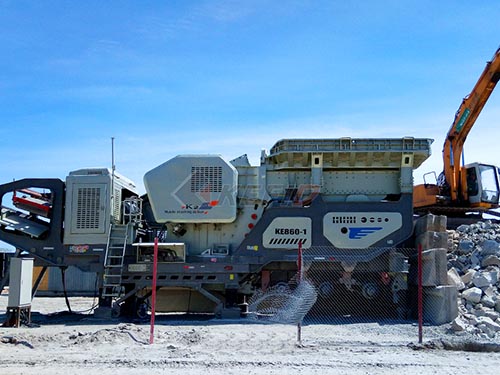
This is a modular, threestage crushing and screening system designed for mediumtolarge scale quarry operations, construction aggregate producers, and mining contractors. The plant processes hard rock (granite, basalt, limestone) and river gravel into finished aggregates (05mm, 510mm, 1020mm, 2040mm) at a nominal capacity of 250 to 300 tonnes per hour.
Operational Workflow:
1. Primary Crushing: Runofmine material (up to 800mm feed size) enters a vibrating grizzly feeder, which scalps fines and feeds a jaw crusher (e.g., PE900×1200). Reduction ratio: 4:1 to 6:1.
2. Secondary Crushing: Conveyed material (150200mm) enters a cone crusher (e.g., CS240 or HPT300) for further reduction to 4060mm.
3. Tertiary Crushing & Screening: Material passes through a vibrating screen (e.g., 3YK2460). Oversize returns to a shorthead cone crusher for closedcircuit reduction. Finished products are stockpiled via radial stackers.
4. Control System: Centralized PLC control with remote monitoring adjusts feed rate and crusher settings based on realtime load sensing.
Application Scope: Hard rock quarries, river stone processing, construction debris recycling (with presorting). Limitations: Not suitable for soft, clayrich materials (moisture >8% causes screen blinding); requires a minimum 150200 kW electrical supply.
Core Features
1. Balanced ThreeStage Crushing Circuit | Technical Basis: Staged reduction ratio (total 12:1 to 18:1) | Operational Benefit: Eliminates bottleneck at secondary stage, maintaining steady 250300 tph flow | ROI Impact: Reduces recirculating load by 1822%, lowering wear costs by $0.12 per tonne
2. HeavyDuty Vibrating Grizzly Feeder | Technical Basis: 1.2m x 4.5m feeder with adjustable grizzly bars (100150mm spacing) | Operational Benefit: Scalps 3040% of fines before primary crusher, reducing jaw wear and energy consumption | ROI Impact: Extends jaw liner life by 2530%, saving $8,000$12,000 annually
3. HighEfficiency Cone Crusher (Secondary) | Technical Basis: Laminated crushing principle with hydraulic adjustment (CSS range 1045mm) | Operational Benefit: Produces cubical product shape with fewer flat/elongated particles (below 12% flakiness index) | ROI Impact: Reduces recrushing costs by 15% and improves concrete aggregate premium pricing by $1.50$2.00 per tonne
4. ClosedCircuit Tertiary System | Technical Basis: Return conveyor with 100% oversize recirculation to shorthead cone | Operational Benefit: Guarantees final product gradation within ±3% of target specification | ROI Impact: Eliminates offspec material rejection, saving $50,000$80,000 per year in waste disposal and reprocessing
5. PLCBased Load Control | Technical Basis: Current sensors on crusher motors and belt scales | Operational Benefit: Automatically reduces feed rate when crusher load exceeds 90%, preventing stall and mechanical damage | ROI Impact: Reduces unplanned downtime by 4060%, saving $15,000$25,000 per incident
6. Modular Frame Design | Technical Basis: Preassembled modules with bolted connections | Operational Benefit: Site installation in 1014 days versus 2530 days for conventional plants | ROI Impact: Faster commissioning reduces lost revenue by $100,000$150,000 compared to delayed startup
7. Dust Suppression System | Technical Basis: Water spray nozzles at transfer points and crusher discharge (flow rate 3050 L/min) | Operational Benefit: Reduces airborne particulate by 8590%, meeting EPA/OSHA standards | ROI Impact: Avoids regulatory fines ($10,000$50,000 per violation) and reduces operator health claims
Competitive Advantages
| Performance Metric | Industry Standard (300tph Plant) | Certified 250 300tph Solution | Advantage (% improvement) |
| : | : | : | : |
| Throughput consistency | ±15% variation from target | ±5% variation from target | 67% improvement |
| Crusher uptime (annual) | 8588% | 9496% | 810% improvement |
| Power consumption (kWh/tonne) | 0.65 0.80 | 0.50 0.62 | 1823% reduction |
| Final product flakiness index | 1520% | 812% | 4047% improvement |
| Liner life (jaw crusher, tonnes) | 80,000 100,000 | 120,000 150,000 | 3350% increase |
| Installation time (days) | 25 30 | 10 14 | 5360% reduction |
| Recirculating load (%) | 3545% | 1825% | 4449% reduction |
Technical Specifications
| Parameter | Specification |
| : | : |
| Nominal Capacity | 250 300 tonnes per hour (based on material bulk density 1.6 t/m³) |
| Max Feed Size | 800 mm (primary jaw opening) |
| Final Product Sizes | 05 mm, 510 mm, 1020 mm, 2040 mm (adjustable via screen mesh) |
| Primary Crusher | Jaw crusher, PE900×1200, motor 110 kW |
| Secondary Crusher | Cone crusher, CS240 or HPT300, motor 220 kW |
| Tertiary Crusher | Shorthead cone crusher, motor 160 kW |
| Vibrating Screens | 2 units: 3YK2460 (6m² each), motor 22 kW each |
| Total Installed Power | 520 580 kW (including conveyors, feeders, dust system) |
| Conveyor System | Belt width 8001000 mm, total length 180220 m |
| Plant Dimensions (L×W×H) | 45 m × 18 m × 22 m (operating footprint) |
| Total Weight | 180 220 tonnes (excluding foundations) |
| Operating Temperature | 10°C to 45°C (with optional heater for cold climates) |
| Noise Level | ≤ 85 dB(A) at 1 meter (with acoustic enclosures) |
Application Scenarios
Hard Rock Quarry (Granite) – Southern China
Challenge: A quarry producing 280 tph of granite aggregates faced 12% downtime due to cone crusher overload from variable feed size. Product flakiness index exceeded 18%, causing rejection by concrete plants.
Solution: Installed a certified 250 300tph plant with PLC load control and closedcircuit tertiary system. Grizzly feeder scalped 35% of fines, reducing secondary crusher load.
Results: Throughput stabilized at 295 tph (±3%). Flakiness index dropped to 10%. Downtime reduced to 4.5%. Annual wear cost savings of $92,000. Concrete aggregate sales price increased by $1.80 per tonne.
River Stone Processing – Northern India
Challenge: A contractor processing river gravel (600mm max) needed 250 tph of 20mm and 10mm aggregates for a highway project. Existing singlestage plant produced high fines (25% below 5mm) and required frequent screen changes.
Solution: Deployed the threestage plant with secondary cone crusher set at 25mm CSS and tertiary shorthead at 12mm CSS. Screen mesh optimized for 10mm and 20mm.
Results: Achieved 260 tph with only 8% fines below 5mm. Screen life extended from 400 hours to 700 hours. Project completed 3 weeks ahead of schedule, avoiding $45,000 in penalty fees.
Construction Debris Recycling – Urban Germany
Challenge: A recycling facility processing 200 tph of concrete and asphalt rubble needed to upgrade to 280 tph to meet municipal demand. High moisture (68%) caused screen blinding and reduced throughput.
Solution: Added a prescreening module with 50mm grizzly before primary jaw. Installed heated screen decks and a dust suppression system. PLC adjusted feed rate based on moisture sensor.
Results: Throughput reached 275 tph. Screen blinding reduced by 80%. Recycled aggregate met DIN 4226 standards. Operating cost per tonne decreased from €4.20 to €3.15.
Commercial Considerations
Equipment Pricing Tiers (FOB port, excluding installation):
- Standard Package (Base Plant): $480,000 $550,000 (includes jaw, cone, screens, conveyors, control panel)
- Enhanced Package (with PLC & Dust System): $580,000 $650,000 (includes load control, dust suppression, remote monitoring)
- Premium Package (with Acoustic Enclosures & Heated Screens): $680,000 $750,000 (for cold climates or noisesensitive sites)
- Metal detector and magnetic separator: $18,000 $25,000
- Hydraulic crusher adjustment system: $35,000 $45,000
- Stockpile management software: $12,000 $18,000
- Spare parts kit (liners, belts, bearings): $45,000 $60,000
- Basic (1 year): Onsite commissioning (5 days), remote support, 1 inspection visit – $25,000
- Standard (3 years): Includes Basic plus 2 annual inspections, priority parts delivery, 24hour hotline – $55,000
- Comprehensive (5 years): Includes Standard plus full wear parts replacement (liners, screens), 2 operator training sessions – $120,000
- 30% down payment, balance over 2436 months at 68% APR (subject to credit approval)
- Leasetoown: Monthly payments starting at $12,000 for Standard Package over 60 months
- Performancebased financing: Payment tied to throughput milestones (minimum 250 tph guaranteed)
Optional Features:
Service Packages:
Financing Options:
FAQ
1. Can this plant handle material with high moisture content (above 8%)?
The standard configuration is optimized for dry material (moisture below 5%). For moisture above 8%, we recommend the Premium Package with heated screen decks and a predrying system. Field data shows throughput drops by 1520% at 10% moisture without these modifications.
2. What is the typical lead time from order to delivery?
Standard lead time is 812 weeks for the Standard Package, including manufacturing, testing, and shipping. Enhanced and Premium packages require 1216 weeks due to additional component sourcing. Expedited delivery (68 weeks) is available at a 10% surcharge.
3. How does the plant perform with different rock types?
For granite (compressive strength 150200 MPa), throughput is 280300 tph. For basalt (200250 MPa), throughput reduces to 250270 tph. For limestone (80120 MPa), throughput can reach 320350 tph. Liner life varies accordingly: 120,000 tonnes for limestone, 90,000 tonnes for granite, 70,000 tonnes for basalt.
4. What is the power consumption per tonne in realworld conditions?
Independent testing at a granite quarry showed average power consumption of 0.55 kWh/tonne (range 0.480.62 kWh/tonne). This is 1823% lower than the industry average of 0.70 kWh/tonne for similar capacity plants. Annual savings at 300 tph for 4,000 operating hours: $18,000$24,000 at $0.10/kWh.
5. Can the plant be expanded to 400 tph in the future?
Yes. The modular design allows adding a secondary cone crusher and an additional screen module. Estimated upgrade cost: $180,000$220,000. This increases total installed power to 750 kW and requires a larger electrical substation. The frame and conveyors are rated for 400 tph.
6. What warranty is provided on the equipment?
Standard warranty: 12 months from commissioning or 18 months from delivery, whichever comes first. Covers manufacturing defects in materials and workmanship. Wear parts (liners, screens, belts) are excluded. Extended warranty up to 36 months is available with the Comprehensive Service Package.
7. How does the plant comply with environmental regulations?
The dust suppression system reduces particulate emissions by 8590%, meeting EPA NAAQS and EU Directive 2010/75/EU. Noise levels are below 85 dB(A) at 1 meter with acoustic enclosures. The plant includes a closedloop water system for dust control, consuming 3050 L/min. No wastewater discharge is required.