
Cement Plant Equipment Private Label Manufacturer Minimum Order
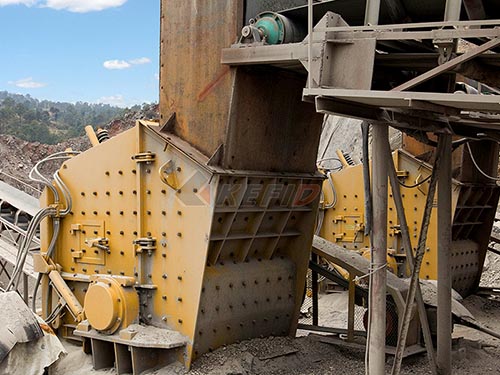

Targeting Plant Managers, Procurement Directors, and Engineering Contractors: A Strategic Approach to Cement Plant Equipment Sourcing
1. Addressing Critical Operational Challenges in Cement Production
Managing a cement plant requires balancing relentless production demands with stringent cost control and equipment reliability. Sourcing critical equipment often presents significant hurdles:
Extended Lead Times & Unplanned Downtime: Waiting months for replacement parts or machinery from overseas OEMs halts production lines. How do you mitigate the financial impact of prolonged, unscheduled stoppages?
Rising Operational & Maintenance Costs: Standard equipment with inefficient designs or suboptimal materials increases energy consumption and the frequency of maintenance cycles, eroding profit margins.
Inconsistent Quality & Compatibility Issues: Offbrand or poorly engineered components fail prematurely, causing cascading failures and compromising final product consistency.
Limited Customization for Specific Process Flows: Your plant has unique characteristics. Can your supplier adapt standard equipment designs to better fit your raw material composition or layout constraints?
Capital Expenditure Constraints: Major CAPEX projects face intense scrutiny. Are there procurement strategies that offer OEMlevel quality without the premium price tag?
This is where a strategic partnership with a dedicated private label manufacturer for cement plant equipment creates tangible value.
2. Product Overview: Private Label Cement Plant Equipment Manufacturing
We operate as your dedicated engineering and manufacturing partner for critical cement plant machinery and components. Our private label model provides you with bespoke equipment that carries your brand, specifications, and performance requirements, built to withstand the abrasive, hightemperature environment of cement production.
Operational Workflow:
1. Design Collaboration: Our engineering team reviews your technical data sheets, process flow diagrams, and specific performance targets.
2. Material Selection & Prototyping: We specify wearresistant alloys, refractory materials, and mechanical configurations suited to your application (e.g., highalumina raw mix vs. limestone).
3. Precision Manufacturing: Equipment is fabricated in our controlled facilities using CNC machining, automated welding, and rigorous quality control checkpoints.
4. Performance Validation: Critical units undergo factory acceptance testing (FAT) to verify capacity, power draw, and operational stability before shipment.
5. Logistics & Branding: Finished equipment is prepared for shipment, applying your specified private label branding, manuals, and documentation.
Application Scope: Custom fabrication for kiln inlet segments, grate cooler plates, crusher hammers & liners, idlers & rollers for conveyor systems, fan impellers, drag chain conveyors, and preheater cyclones.
Limitations: We do not manufacture entire rotary kilns or vertical roller mills as turnkey units but provide major refurbishments, segments, and critical wear parts for these systems.
3. Core Features of Our Private Label Manufacturing Solution
Our approach is engineered to deliver reliability and costefficiency across your operation.
Direct Specification Control | Technical Basis: Clientdriven design authority | Operational Benefit: You dictate material grades, dimensional tolerances, and performance criteria to ensure perfect process integration. | ROI Impact: Eliminates costly field modifications and reduces integration time by an average of 1520%.
Advanced Wear Material Integration | Technical Basis: Applicationspecific selection of chromium carbide overlays, NiHard castings, or heattreated alloys | Operational Benefit: Extends service intervals for components in highabrasion zones like the crushing and raw mill circuits. | ROI Impact: Field data shows a 3050% increase in mean time between failures (MTBF), directly reducing part consumption and labor costs.
Predictive Design Optimization | Technical Basis: Finite Element Analysis (FEA) on stress points and computational fluid dynamics (CFD) for pneumatic components | Operational Benefit: Identifies potential fatigue points in fan housings or ductwork before fabrication, enhancing structural integrity. | ROI Impact: Minimizes risk of inservice catastrophic failure and associated production losses.
Modular Assembly Design | Technical Basis: Component segmentation for major wear parts like kiln inlet tongues | Operational Benefit: Allows sectionbysection replacement during planned maintenance shutdowns without removing entire assemblies. | ROI Impact: Reduces planned downtime duration by up to 40% for specific replacement tasks.
Integrated Condition Monitoring Prep | Technical Basis: Premachined ports/sockets for vibration sensors thermocouples | Operational Benefit: Facilitates easy installation of predictive maintenance systems to monitor equipment health. | ROI Impact: Enables conditionbased maintenance planning preventing unplanned stops.
4. Competitive Advantages: Performance Comparison
The following table illustrates measurable improvements offered by our coengineered private label solutions.
| Performance Metric | Industry Standard Offering | Our Private Label Solution | Advantage (% Improvement) |
| : | : | : | : |
| Lead Time (Standard Wear Parts) | 1216 weeks exworks | 68 weeks exworks | ~50% faster |
| Liner Life in Clinker Crusher (Avg.)| 6080k tonnes processed| 100120k tonnes processed| +4050% longevity |
| Energy Efficiency (ID Fan Impeller)| Standard aerodynamic profile| CFDoptimized profile| 35% reduced power draw |
| Dimensional Consistency / Fitment| Standard catalog tolerances| ISO 2768mK fine tolerances| Reduces installation time by ~25% |
5. Technical Specifications Framework
Specifications are developed collaboratively. The framework below is indicative for a typical private label order of grate cooler plates.
Capacity/Rating: Designed per your cooler width (e.g., 4m) and required clinker throughput (e.g., 5000 TPD).
Power Requirements: N/A (mechanical component).
Material Specifications: Option A HeatResistant Cast Steel (up to 800°C); Option B HighChrome Cast Iron (up to 1100°C); with optional hardened wear strips.
Physical Dimensions: Custom per existing frame; standard thickness range: 4060mm.
Environmental Operating Range: Designed for ambient temperatures from 20°C to +50°C; operating temperature (product side): up to 1300°C clinker exposure.
6. Application Scenarios & Documented Outcomes
Regional Cement Producer – Southeast Asia | Challenge: Chronic failure of preheater cyclone refractories every 1012 months causing frequent kiln line stoppages.| Solution: Codevelopment of a private label cyclone segment with a proprietary anchor system and phased refractory lining.| Results: Achieved a consistent campaign life of 18+ months between major refractory overhauls increasing annual available production time by approximately 7%.
MidSized Plant Expansion – North America | Challenge: Needing a costeffective clinker conveyor system that matched existing OEM layout constraints without paying full OEM pricing.| Solution: Private label design and manufacture of a full drag chain conveyor system including flights,casing,and sprockets to client’s exact layout drawings.| Results:Saved an estimated28% on capital expenditure versus OEM quote while meeting all performance guarantees; system commissioned within agreed timeline.
7.Commercial Considerations
Our private label model is structured for strategic longterm partnerships.
Pricing Tiers
1.Minimum Order Quantity (MOQ) applies per part number typically starting at one set(for wear parts like a full crusher rotor hammer set)or one assembly(for items like fan housing).Specific MOQ is projectdependent.
2.Economy Tier(Standard Materials):Costeffective using proven industrystandard material specifications.
3.Performance Tier(Enhanced Materials):Premium materials offering documented extended service life optimal TCO
Optional Features
Predictive maintenance sensor integration packages advanced nondestructive testing(NDT) reports digital twin data files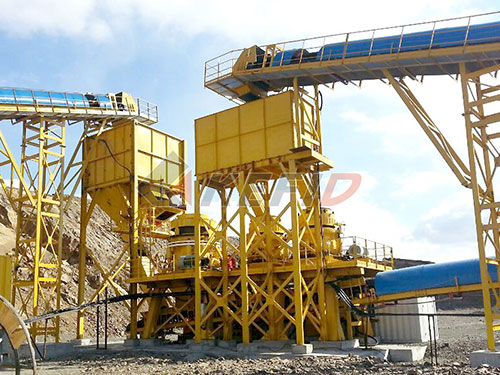
Service Packages
1.Basic:FAT documentation compliance certificates
2.Premium:FAT plus resident engineer support during initial installation/commissioning
3.Comprehensive Spare Parts Forecasting based on your production data
Financing Options
Leasing structures availablefor large orders milestonebased payment plans aligned with manufacturing progress
8.Frequently Asked Questions(FAQ)
Q:What is the typical minimum order quantity(MOQ)for private label equipment?
A:The MOQ is established per part number based on manufacturing efficiency.Commonly it equates to one complete set(e.g.all linersfor one mill chamberor one assembly likea fabricated duct run).We work with clients to consolidate needsfora first orderto meet practical MOQ thresholds
Q How do you ensure technical compatibility with our existing plant equipment?
A Compatibilityis foundational We require detailed OEM drawings serial numbersor physical samplesfor reverse engineering Our process includes creatingand approvinginstallation drawingsprior toany manufacturing
Q Whatisthe expected impacton our maintenance inventoryand operations?
A By specifying longerlife materialsand improving design operators benefit from extended run times Maintenance planners can reduce safety stock levelsfor the privatelabeled items Field data indicatesa reductionin associated inventory carryingcostsby2030%over time
Q What arethe commercial termsexpected?
A Standard terms involvea deposit upon order approvalwith stage payments tiedto key manufacturing milestones(e.g material procurement completionof FAT)Balanceis due priorto shipment We operate under internationally recognized Incoterms
Q Whatisthe implementation timelinefrom orderto delivery?
A For established part designs lead timesrange from6to10weeks exworks Fornew coengineered solutions the timeline includesa46week collaborative designand approval phaseprior tothe manufacturing lead time