
Cement Plant Equipment Exporter
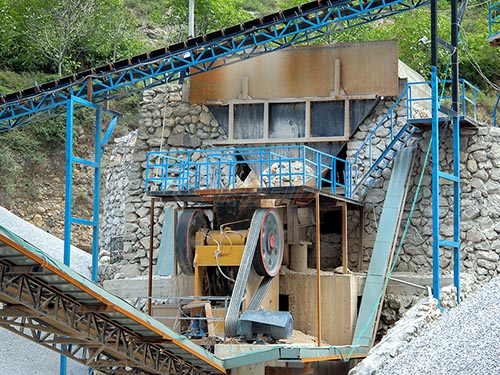

Cement Plant Equipment Exporter: HighPerformance Solutions for Industrial Operations
1. PainPoint Driven Opening
Your cement plant faces three persistent operational challenges: unplanned downtime from equipment failure costing $10,000–$50,000 per hour in lost production, energy consumption accounting for 30–40% of total operational costs, and inconsistent product quality leading to rejected batches and contractual penalties. Are your current equipment suppliers delivering the reliability and efficiency your plant requires? How much are maintenance delays and suboptimal throughput costing your bottom line each quarter? For plant managers and engineering contractors tasked with meeting production targets while controlling capital expenditure, the right cement plant equipment exporter can transform these cost centers into competitive advantages.
2. Product Overview
Equipment Type: Complete cement plant machinery systems, including crushers, raw mills, preheaters, rotary kilns, clinker coolers, cement mills, and packing units.
Operational Workflow (5 Key Steps):
1. Raw Material Preparation – Primary and secondary crushing of limestone, clay, and additives to <25mm particle size
2. Raw Meal Grinding – Vertical roller mill or ball mill processing to achieve 15–20% residue on 90μm sieve
3. Preheating & Calcination – 5stage cyclone preheater with calciner, raising material temperature to 850–900°C
4. Clinker Formation – Rotary kiln operating at 1400–1450°C for complete sintering
5. Finish Grinding & Storage – Cement mill grinding clinker with gypsum to 3500–4000 Blaine fineness
Application Scope: Suitable for dryprocess cement plants with capacities from 500 to 10,000 tons per day. Limitations include requirement for consistent raw material moisture below 8% and ambient temperatures above 10°C for optimal coldstart performance.
3. Core Features
HeavyDuty Girth Gear Drive | Technical Basis: Enclosed helical gear transmission with hardened pinion | Operational Benefit: Eliminates vibration and misalignment common in open gear systems | ROI Impact: Reduces gear replacement costs by 40% over 10year lifecycle
Advanced Seal System | Technical Basis: Triplelabyrinth with pressurized air barrier | Operational Benefit: Prevents dust ingress extending bearing life by 3,000 operating hours | ROI Impact: Saves $15,000–$25,000 per year in bearing replacement and lubrication costs
Variable Frequency Drive Integration | Technical Basis: IGBTbased VFD with torque vector control | Operational Benefit: Reduces motor startup current by 60% and allows precise speed adjustment | ROI Impact: Energy savings of 18–22% compared to fixedspeed operation
WearResistant Liner Configuration | Technical Basis: Chromemolybdenum alloy (HRC 58–62) with optimized profile design | Operational Benefit: Extends liner replacement intervals from 6 to 12 months | ROI Impact: Reduces annual maintenance downtime by 120 hours
Centralized Lubrication System | Technical Basis: Programmable automatic grease injection with flow monitoring | Operational Benefit: Ensures consistent lubrication across 48+ points without operator intervention | ROI Impact: Eliminates 80% of bearing failures caused by improper lubrication
Modular Preheater Tower Design | Technical Basis: Preassembled modules with bolted connections | Operational Benefit: Reduces onsite erection time by 30% compared to welded construction | ROI Impact: Saves $200,000–$500,000 in installation labor and crane costs
Digital Process Control Interface | Technical Basis: PLCbased SCADA with 200+ sensor inputs | Operational Benefit: Realtime monitoring of temperature, pressure, and vibration across all equipment | ROI Impact: Enables predictive maintenance, reducing unplanned downtime by 35%
4. Competitive Advantages
| Performance Metric | Industry Standard | Cement Plant Equipment Exporter Solution | Advantage (% Improvement) |
|||||
| Kiln availability | 92% | 96.5% | +4.9% |
| Specific energy consumption (kWh/ton clinker) | 75–85 | 68–72 | 9.4% to 15.3% |
| Mill throughput variation | ±8% | ±3% | +62.5% consistency |
| Mean time between failures (MTBF) | 1,200 hours | 2,100 hours | +75% |
| Installation timeline (5,000 TPD plant) | 24 months | 18 months | 25% |
| Dust emission (mg/Nm³) | 30–50 | <15 | 50% to 70% |
| Liner replacement interval | 6 months | 12 months | +100% |
5. Technical Specifications
Capacity/Rating:
- Raw mill: 150–450 tons/hour (for 5,000 TPD clinker line)
- Rotary kiln: 4.2m–6.2m diameter, 60m–90m length
- Cement mill: 100–250 tons/hour, 3,500–4,500 Blaine fineness
- Main drive motors: 2,500–6,000 kW (kiln), 3,000–7,000 kW (mill)
- Voltage: 6.6 kV or 11 kV, 50/60 Hz
- Total installed power: 25–45 MW for complete 5,000 TPD line
- Kiln shell: ASTM A516 Grade 70 carbon steel, 30–50mm thickness
- Mill liners: ASTM A532 Class II chromemoly iron
- Girth gear: EN 100833 42CrMo4, induction hardened
- Kiln: 4.8m diameter × 72m length, weight 850 tons
- Preheater tower: 55m height, 12m × 18m footprint
- Ball mill: 4.6m diameter × 15.5m length, weight 320 tons
- Ambient temperature: 10°C to +50°C
- Altitude: up to 3,000m above sea level (derating required above 1,500m)
- Humidity: 10–95% noncondensing
- Standard line (500–1,500 TPD): $8–15 million
- Midcapacity line (2,000–4,000 TPD): $18–35 million
- Largecapacity line (5,000–10,000 TPD): $40–85 million
- Waste heat recovery system: $3–8 million (reduces power consumption by 25–35%)
- Alternative fuel handling system: $1.5–4 million (enables 30–60% fuel substitution)
- Advanced process control software: $250,000–500,000 (improves throughput by 3–5%)
- Extended warranty (5 years): 8–12% of equipment cost
- Basic: Commissioning support + 2 years remote technical support
- Standard: Basic + 3 onsite service visits per year + spare parts inventory
- Premium: Standard + dedicated project manager + 24/7 emergency response + annual performance audit
- 30% down payment, 70% upon commissioning
- Letter of credit (L/C at sight or deferred 180–360 days)
- Export credit agency financing (up to 85% of contract value, 5–10 year terms)
- Performancebased payment linked to throughput guarantees
Power Requirements:
Material Specifications:
Physical Dimensions:
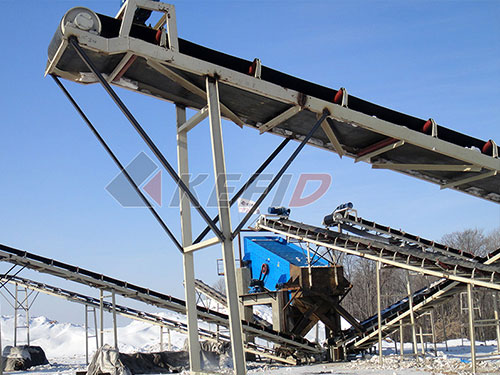
Environmental Operating Range:
6. Application Scenarios
Greenfield Cement Plant in East Africa | Challenge: Remote location with limited skilled labor and 8month rainy season requiring accelerated construction | Solution: Supplied modular preheater tower, preassembled kiln sections, and automated control system with remote diagnostics | Results: Plant commissioned in 16 months (vs. 24month industry average), 98.2% availability in first year, 22% lower energy consumption than regional competitors
Capacity Expansion in Southeast Asia | Challenge: Existing plant needed 50% capacity increase within existing footprint without interrupting current production | Solution: Installed highefficiency vertical roller mill (280 tons/hour) and 5stage preheater with calciner, integrated with existing control system | Results: Capacity increased from 3,000 to 4,500 TPD, specific power consumption reduced from 82 to 71 kWh/ton, payback period of 14 months
Upgrade for European Environmental Compliance | Challenge: Plant required NOx emissions below 200 mg/Nm³ and dust below 10 mg/Nm³ to meet EU Industrial Emissions Directive | Solution: Retrofitted lowNOx burner, selective noncatalytic reduction system, and baghouse filter with pulsejet cleaning | Results: NOx reduced to 180 mg/Nm³, dust emissions at 8 mg/Nm³, avoided €2.5 million in potential fines, qualified for carbon credit trading
7. Commercial Considerations
Equipment Pricing Tiers (FOB basis, complete line):
Optional Features:
Service Packages:
Financing Options:
8. FAQ
Q: What is the typical delivery timeline for a complete cement plant equipment package?
A: For a 5,000 TPD line, manufacturing takes 10–12 months, with shipping requiring 4–8 weeks depending on destination. Total delivery timeline including documentation and inspection: 12–15 months from order confirmation.
Q: Can your equipment process raw materials with high moisture content (above 8%)?
A: Standard equipment is designed for moisture up to 8%. For higher moisture (8–15%), we recommend adding a drying system or pregrinding dryer, which increases capital cost by approximately 5–8% but maintains throughput efficiency.
Q: What spare parts do you recommend keeping onsite for the first year of operation?
A: Minimum recommended inventory includes: 1 set of mill liners (partial), 2 sets of kiln refractory bricks, 3 sets of roller bearings, 5 sets of seals, 10% of conveyor belts, and critical electrical components (VFD modules, PLC cards). Total cost: 3–5% of equipment value.
Q: How does your equipment perform at high altitudes (above 2,000m)?
A: Above 1,500m, we derate motor power by 1% per 100m elevation increase and adjust fan sizing for reduced air density. Our equipment has been installed at sites up to 4,200m with proper engineering modifications.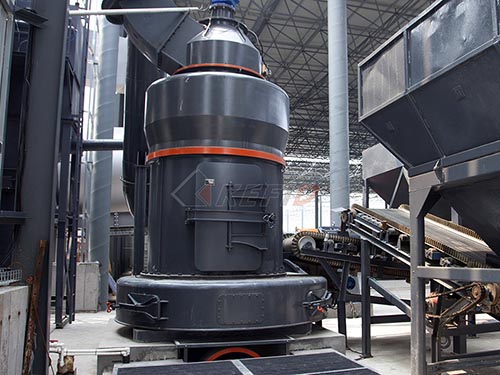
Q: What is the warranty period and what does it cover?
A: Standard warranty is 24 months from commissioning or 30 months from shipment, whichever occurs first. Coverage includes manufacturing defects, material failures, and performance guarantees (throughput, energy consumption, emissions). Exclusions: consumable wear parts, damage from improper operation, force majeure events.
Q: Can your equipment be integrated with existing control systems from other manufacturers?
A: Yes. Our PLC systems support Modbus TCP/IP, Profibus DP, and OPCUA protocols. We have successfully integrated with Siemens, AllenBradley, ABB, and Schneider Electric systems. Integration engineering is included in the standard scope.
Q: What training do you provide for plant operators and maintenance teams?
A: We provide 4 weeks of onsite training during commissioning: 2 weeks for operators (process control, troubleshooting) and 2 weeks for maintenance (mechanical, electrical, lubrication). Additional advanced training available at our facility or onsite at $2,500 per week per trainee.