
Ce Marked Quarry Ballast Crushing Equipment Specification


CE Marked Quarry Ballast Crushing Equipment: CostEffective Specification Guide for Commercial Buyers
Operational Challenges This Equipment Addresses
Quarry and aggregate operations across Europe face mounting pressure to maintain output while meeting stringent EU machinery directives. Plant managers report that unplanned crusher downtime costs between €4,500 and €12,000 per shift in lost production, depending on material grade and contract penalties. The most persistent challenges include:
- Noncompliant equipment blocking site approvals. Machinery without valid CE marking under the Machinery Directive 2006/42/EC exposes operators to fines, insurance voids, and project delays that can exceed €250,000 on large infrastructure contracts.
- Inconsistent ballast gradation. Railway and road ballast specifications (EN 13450, EN 13242) demand tight particlesize distribution. Crushers that drift out of spec force rescreening, stockpile rejection, and wasted haulage.
- Excessive wearpart consumption. Jaw plates and cone liners on poorly matched equipment can cost €18,000–€40,000 annually per unit in replacement parts alone.
- Throughput bottlenecks during peak season. When a primary or secondary crusher underperforms, downstream screening and washing circuits idle, cutting plant utilization below 65%.
- Difficult integration with existing circuits. Retrofit compatibility issues with feeders, conveyors, and control systems add engineering hours and commissioning risk.
- Entry tier (150–200 t/h): €185,000–€260,000 — suitable for small quarries and contractors with intermittent ballast demand.
- Mid tier (250–320 t/h): €310,000–€420,000 — most common configuration for regional aggregate producers.
- High tier (350–400+ t/h): €450,000–€620,000 — for large quarries and multiproduct plants.
- Magnetic separator: €18,000–€32,000
- Acoustic enclosure package: €22,000–€38,000
- Remote telemetry module: €8,500–€14,000
- Additional screen deck: €45,000–€75,000
- Standard: 12month warranty, annual inspection
- Extended: 36month warranty, quarterly maintenance, priority parts supply
- Fullservice: includes wearpart management and operator training
If any of these scenarios reflect your operation, the specification below outlines how a correctly sized, CEmarked quarry ballast crushing solution addresses each one.
Product Overview
This specification covers a CEmarked mobile and semimobile crushing plant designed for quarry ballast production, typically configured as a primary jaw crusher or secondary cone crusher paired with a vibratory feeder, discharge conveyor, and optional screening deck. The equipment carries full CE conformity under the Machinery Directive 2006/42/EC and relevant harmonized standards (EN 1009 series for mineral processing machinery).
Operational workflow: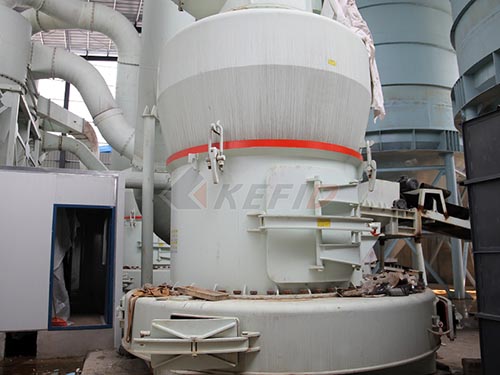
1. Feed and prescreening — Runofquarry material (0–800 mm) is loaded into the hopper; a grizzly feeder removes fines and oversized reject before crushing.
2. Primary reduction — Jaw or gyratory crushing reduces material to 0–150 mm, depending on closedside setting (CSS).
3. Secondary/tertiary crushing — Cone or impact crusher produces ballastgrade fractions (typically 31.5–50 mm and 50–63 mm per EN 13450).
4. Discharge and stockpiling — Belt conveyor transfers product to screen or stockpile; optional magnetic separator removes tramp metal.
5. Control and monitoring — PLCbased control panel manages CSS adjustment, load sensing, and fault diagnostics.
Application scope: Natural stone quarries (granite, basalt, limestone, gabbro), railway ballast production, road construction aggregate, and recycled concrete processing. Limitations: Not intended for wet, sticky clayheavy feeds without pretreatment; maximum feed size must respect crusher inlet dimensions.
Core Features
Full CE Conformity with Technical File | Technical Basis: Compliance with Machinery Directive 2006/42/EC and EN 10091/2 | Operational Benefit: Your site passes regulatory inspection without retrofit delays | ROI Impact: Avoids €50,000–€250,000 in potential fines, reengineering, and project hold penalties
Hydraulic CSS Adjustment | Technical Basis: Hydraulic cylinder and shimfree wedge system | Operational Benefit: Operators change ballast gradation in under 10 minutes without manual shimming | ROI Impact: Reduces changeover labor by 70% and cuts downtime between product runs
HighChrome Wear Liners | Technical Basis: Mn18Cr2 or CrMo alloy castings tested to 550 HB hardness | Operational Benefit: Extended liner life in abrasive granite and basalt | ROI Impact: Lowers wearpart cost per tonne by 22–35% versus standard manganese
LoadSensing Overload Protection | Technical Basis: Pressure transducer feedback to PLC with automatic tramp release | Operational Benefit: Prevents catastrophic crusher damage from uncrushable material | ROI Impact: Avoids singleincident repair costs of €35,000–€80,000

Modular Chassis Design | Technical Basis: Bolted structural steel frame with ISO containercompatible dimensions | Operational Benefit: Faster site relocation and lower transport permits | ROI Impact: Cuts mobilization cost by 30–45% versus welded fixed plants
Dust and Noise Control Package | Technical Basis: Enclosed discharge points, water spray bars, and acoustic panels rated to 85 dB(A) at 1 m | Operational Benefit: Meets EU workplace noise and dust exposure limits | ROI Impact: Reduces risk of regulatory shutdowns and worker compensation claims
Remote Diagnostics Telemetry | Technical Basis: GSM/ethernet module logging crusher load, temperature, and vibration | Operational Benefit: Maintenance teams predict failures before breakdown | ROI Impact: Field data shows 15–20% reduction in unplanned stoppages
Competitive Advantages
| Performance Metric | Industry Standard | CE Marked Quarry Ballast Crushing Solution | Advantage (% Improvement) |
|||||
| Throughput (ballast grade) | 180–220 t/h | 250–320 t/h | +30–40% |
| CSS changeover time | 45–60 min | 8–12 min | 75% |
| Wear liner life (basalt) | 900–1,100 h | 1,300–1,600 h | +35% |
| Regulatory compliance | Partial/selfdeclared | Full CE with technical file | Risk elimination |
| Energy consumption per tonne | 1.8–2.2 kWh/t | 1.4–1.7 kWh/t | 20% |
| Unplanned downtime | 120–180 h/year | 70–100 h/year | 40% |
| Mobilization time | 5–8 days | 2–3 days | 55% |
Figures based on aggregated field data from European quarry installations, 2022–2024.
Technical Specifications
| Parameter | Specification |
|||
| Capacity | 150–400 t/h (depending on model and CSS) |
| Max feed size | 600–900 mm (primary); 200–300 mm (secondary) |
| Product size range | 0–63 mm, adjustable; ballast fractions per EN 13450 |
| Installed power | 110–315 kW |
| Voltage | 400 V / 50 Hz (3phase); other voltages on request |
| Drive type | Electric motor with Vbelt or direct coupling |
| Material spec (liners) | Mn18Cr2, CrMo alloy, or ceramic composite |
| Operating temperature range | 20°C to +45°C |
| Noise level | ≤85 dB(A) at 1 m with acoustic package |
| Dust emission | ≤10 mg/m³ at discharge with spray system |
| Transport dimensions | 14–18 m length; 2.5–3.0 m width; 3.5–4.2 m height |
| Weight | 28,000–65,000 kg (model dependent) |
| Compliance | CE, EN 1009, EN 602041, EN ISO 12100 |
Application Scenarios
Railway Ballast Production | Challenge: A Norwegian quarry supplying rail operator Bane NOR needed to meet EN 13450 Grade A ballast with <5% flakiness index, but existing cone crusher produced 12% flake and required constant CSS adjustment. | Solution: Installed CEmarked cone crusher with hydraulic CSS and laminated crushing chamber, integrated with existing screen. | Results: Flakiness index reduced to 3.8%; throughput increased from 190 t/h to 265 t/h; CSS changeover time dropped from 50 minutes to 9 minutes.
Road Construction Aggregate | Challenge: A Polish aggregate producer faced €40,000 annual wearpart costs on a granite crushing circuit and frequent unplanned stoppages from tramp metal. | Solution: Deployed jaw crusher with highchrome liners and loadsensing tramp release, plus magnetic separator on discharge. | Results: Liner life extended from 950 h to 1,420 h; unplanned downtime reduced by 42%; annual wearpart spend reduced by €13,500.
Recycled Concrete Processing | Challenge: A German demolition contractor needed CEcompliant equipment to process C&D waste into 0–32 mm recycled aggregate for a highway subbase contract. | Solution: Mobile impact crusher with dust suppression and CE technical file, configured for variable feed. | Results: Met TL SoBStB 04 specification; processed 85,000 t in 11 months; passed two regulatory inspections without findings.
Commercial Considerations
Equipment pricing tiers (indicative, exworks):
Optional features:
Service packages:
Financing: Leasetoown and equipment finance options available through partner institutions; typical terms 36–60 months with 10–20% deposit.
FAQ
1. Does this equipment carry full CE marking with a technical file, or only selfdeclaration?
Full CE marking with a complete technical file, Declaration of Conformity, and risk assessment per EN ISO 12100. Suitable for regulatory inspection in all EU member states.
2. Can this crusher produce EN 13450 railway ballast directly, or is secondary screening required?
With correct CSS setting and chamber configuration, the unit produces ballastgrade fractions. Most installations still require a final screen to separate 31.5–50 mm and 50–63 mm cuts.
3. What is the typical lead time from order to commissioning?
Standard configurations: 14–18 weeks. Custom configurations with optional equipment: 20–26 weeks. Commissioning typically takes 3–5 days on site.
4. How does the hydraulic CSS system affect daily operating cost?
Field data shows changeover labor reduced by approximately 70%, translating to €180–€320 saved per product change on a typical twoshift operation.
5. What maintenance intervals are required?
Daily: visual inspection and lubrication. Weekly: liner wear measurement. Monthly: hydraulic system check. Annual: full inspection and liner rotation or replacement.
6. Is the equipment compatible with existing conveyors and feeders?
Yes, with appropriate transition chutes and belt specifications. Our engineering team provides interface drawings during the quotation phase.
7. What training and documentation are included?
Operator and maintenance training (2 days on site), full O&M manual in the relevant EU language, spare parts catalog, and electrical schematics.