
Ce Marked Harga Hammer Mill Catalog
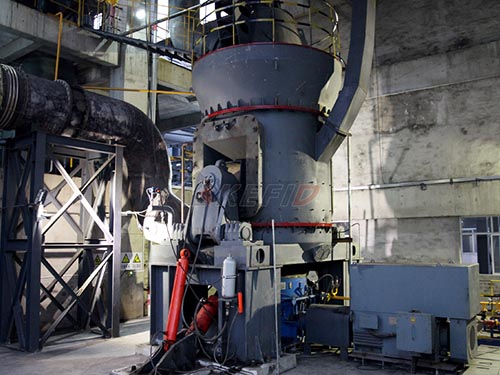

H1: CEMarked Hammer Mills: Engineered for Predictable Throughput and Reduced Operational Cost
Are you managing inconsistent particle size distribution that affects your downstream process efficiency? Is unscheduled downtime for wear part replacement disrupting your production schedule and increasing maintenance labor costs? Are you concerned about energy consumption per ton processed squeezing your operational margins? For plant managers and engineering contractors, these aren't minor inconveniences—they are direct hits to profitability and plant reliability. How do you achieve consistent, specificationcompliant output while controlling the total cost of ownership? The solution lies in selecting a robust, CEmarked hammer mill designed not just to crush, but to optimize your entire size reduction circuit.
Product Overview: Industrial Hammer Mill for Precision Size Reduction
A CEmarked hammer mill is a heavyduty impact crusher designed for the continuous reduction of raw materials—from aggregates and limestone to recycled construction materials and industrial minerals. Its operation is based on a highspeed rotor assembly fitted with hammers that repeatedly strike incoming feed, shattering it against breaker plates until it passes through a screen of specified aperture. This ensures controlled topsize output.
Key Operational Workflow: 1) Feed material is introduced via a regulated conveyor or vibratory feeder into the crushing chamber. 2) Rotating hammers impact the material, propelling it against the static breaker plates for repeated fragmentation. 3) Reduced particles continue this cycle until they are small enough to pass through the interchangeable discharge screen, ensuring precise final particle size control.
Application Scope: Ideal for secondary crushing, fine grinding, and pulverizing of mediumhard to soft nonabrasive materials. Common applications include aggregate production, limestone preparation for flue gas desulfurization, glass cullet recycling, and mineral processing.
Key Limitation: Not suitable for highly abrasive materials (e.g., certain silicas) without incurring excessive wear part costs; alternative crusher types like roll crushers may be more appropriate in such cases.
Core Features: Engineering Meets Operational Pragmatism
Reversible Rotor System | Technical Basis: Symmetrical hammer mounting & dualfunction leading edges | Operational Benefit: Extends service life by approximately 100% by allowing operators to reverse hammers or rotate the rotor direction once the first leading edge is worn | ROI Impact: Reduces hammer inventory costs and halves frequency of major rotor service downtime.
QuickChange Screen Cassettes | Technical Basis: Modular, bolted screen frames with handling aids | Operational Benefit: Enables screen changeover in under 30 minutes versus several hours with welded designs | ROI Impact: Increases plant availability for product changeovers, allowing more flexible production scheduling with less labor.
Dynamic Balancing & HeavyDuty Bearings | Technical Basis: ISO 1940 G6.3 balance grade on rotor assembly paired with spherical roller bearings | Operational Benefit: Eliminates destructive vibration at operational speeds, leading to smoother running and reduced structural stress | ROI Impact: Predictable bearing service intervals exceeding 20,000 hours, preventing catastrophic failure and associated secondary damage.
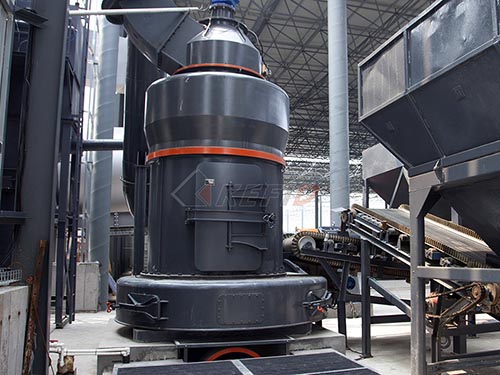
Segmented Breaker Plates with Wear Monitoring | Technical Basis: Cast manganese steel plates divided into sections with builtin wear indicators | Operational Benefit: Allows for sectional replacement only where wear occurs and provides visual warning of plate thinning | ROI Impact: Cuts liner replacement material costs by up to 40% compared to full onepiece plates and prevents unexpected breakthrough failures.
PLCIntegrated Condition Monitoring Ports | Technical Basis: Preinstalled vibration sensor mounts and temperature probe ports wired to a central junction box | Operational Benefit: Facilitates easy integration into plantwide predictive maintenance systems for realtime health checks | ROI Impact: Transforms maintenance from scheduled to conditionbased, optimizing part utilization and preventing unplanned stops.
Competitive Advantages: Quantifiable Performance Metrics
| Performance Metric | Industry Standard Benchmark | This CEMarked Hammer Mill Solution | Documented Advantage |
| : | : | : | : |
| Tons per Hour Consistency (for given kW & feed) | +/ 15% variance over an 8hour shift due to wear & feed fluctuation. Maintains within +/ 5% variance through optimized chamber geometry & feed control. Up to 67% improvement in output predictability. |
| Specific Energy Consumption (kWh/t)| Varies widely; older designs often exceed calculated theoretical minimum by >35%. Engineered airflow & impact efficiency reduces excess consumption to <20% above theoretical minimum. Up to 15% reduction in energy cost per ton processed. |
| Mean Time Between Failure (MTBF) Major Components| ~1218 months for rotors/bearings under continuous duty. Field data indicates MTBF of >24 months under equivalent conditions due to enhanced protection systems. At least a 33% increase in operational reliability. |
| Wear Part Changeover Time (Screen & Hammers)| Full changeover typically requires 48 hours of downtime.| Designed access and modular components enable changeover in 23 hours.| Up to 60% reduction in downtime for routine maintenance. |
Technical Specifications
Capacity Range: Models available from 50 TPH up to 600 TPH, depending on material density (bulk density ~1.6 t/m³) and required reduction ratio.
Power Requirements: Drive motor ratings from 160 kW up to 2500 kW, compliant with IEC standards. Supply voltage: Typically 400V/690V/3300V/6000V/11000V AC.
Material Specifications: Rotor Discs: Hightensile strength steel (S355J2). Hammers/Breaker Plates/Breaker Bars/Screens Options:
Manganese Steel (14%,18%,22%) – For highimpact strength.
Chromium Alloy Steel – For improved abrasion resistance.
Tungsten Carbide Overlay – For extreme abrasion applications.
Physical Dimensions: Varies by model; example midrange unit (~250 TPH): Approx. Length x Width x Height = ~5m x ~4m x ~3m; Weight approx.: ~28 tonnes.
Environmental Operating Range: Designed for ambient temperatures from 20°C to +40°C; dustproofed electrical components standard; optional packages available for highhumidity or corrosive atmospheres.
Application Scenarios
Aggregate Production Plant Upgrade
Challenge A quarry's secondary crushing circuit suffered from low throughput due to frequent clogging in the existing hammer mill when processing slightly damp feed material, causing daily downtime.
Solution Installation of a CEmarked hammer mill featuring an oversized crushing chamber optimized airflow design.
Results Throughput increased by an average of TPH Cloggingrelated stoppages were eliminated Annual production rose by enabling consistent shift output
Mineral Processing Circuit
Challenge A processing plant required a consistent mm top size feed for its downstream ball mill but experienced wide particle size distribution from its old crusher leading to inefficient grinding media consumption
Solution Implementation of a hammer mill with quickchange screen cassettes allowing precise calibration of final particle size
Results Achieved PSD consistency with oversize reduced from Particle size stability contributed an estimated improvement in grinding circuit energy efficiency
Commercial Considerations
Equipment pricing is tiered based on drive power capacity construction material grade:
Standard Duty Tier kW Models: Engineered for lowerabrasion materials like limestone or recycled concrete Offers core features with standard manganese steel wear parts
Heavy Duty Tier kW Models: Includes upgraded bearing assemblies heavierduty rotor construction options for higherabrasion feeds
ProcessSpecific Tier: Fully customized configurations including special alloys airhandling systems or integrated automation packages
Optional Features Include acoustic damping enclosures advanced rock tramp release systems automated lubrication systems customdesigned feeding solutions
Service Packages Available:
Basic Warranty months on machinery months on bearings
Extended Service Plan Includes scheduled inspections parts discounts
Full Maintenance Contract Covers all parts labor condition monitoring providing fixedcost operation
Financing Options Capital purchase leasetoown operating lease structures can be arranged through partner financial institutions subject to credit approval
Frequently Asked Questions FAQ
Q What does CE marking signify specifically for a hammer mill?
A It certifies that the equipment meets all applicable EU health safety environmental protection directives including the Machinery Directive EMC Directive demonstrating compliance with stringent design manufacturing documentation standards essential for operation within Europe
Q How do I determine if my existing feed system conveyors bins is compatible?
A Our technical specifications include detailed interface dimensions load points required hopper pressures We provide engineering support during prepurchase audits A key compatibility factor is ensuring your feeder can deliver material evenly across the full width of the rotor
Q What is the expected operational impact on my overall plant noise levels?
A While hammer mills are inherently noisy equipment our models designed with heavyduty housings optional acoustic enclosures typically achieve sound power levels below dB A at one meter when properly installed meeting common workplace regulations
Q Are commercial terms negotiable based on order volume?
A Yes volume discounts are available for multipleunit orders or fleet standardization agreements We also offer preferential terms on longterm service contracts which can reduce overall operational expenditure
Q What does implementation typically involve from order placement commissioning?
A Lead time varies by model complexity Standard units ship within weeks Delivery includes foundational drawings mechanical erection is typically handled by customer or contractor teams we provide comprehensive commissioning supervision operator training ensure optimal performance from startup