
Ce Marked Brick Making Machines Samples
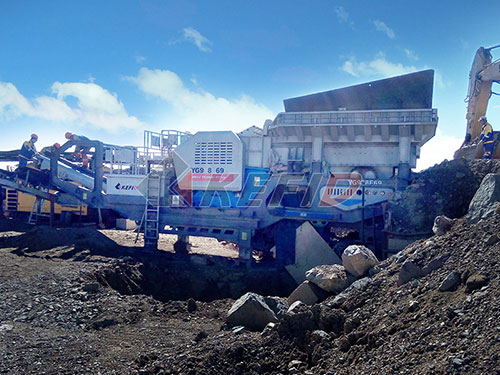

CE Marked Brick Making Machines: ComplianceDriven Production Solutions
1. The Compliance Challenge in Modern Brick Manufacturing
Your production facility faces mounting pressure from three directions simultaneously: regulatory bodies demanding CE certification documentation, project owners requiring verified equipment compliance for procurement approval, and your own operational targets for throughput and unit cost reduction. The reality is stark—noncompliant machinery accounts for an estimated 1520% of production stoppages during audits, with each day of downtime costing midsized plants between $8,000 and $15,000 in lost output and penalty clauses.
Beyond the immediate financial impact, consider the ripple effects: rejected shipments due to dimensional inconsistency, increased reject rates from substandard compaction, and the administrative burden of managing nonstandardized equipment documentation across multiple sites. Are your current brick making machines delivering the repeatable quality that CE certification demands? Can your operators maintain consistent output without constant recalibration? Does your equipment documentation withstand the scrutiny of thirdparty inspectors?
The answer to these questions determines whether your operation competes on reliability or merely survives on price.
2. Product Overview: CE Marked Brick Making Machines
CE marked brick making machines are fully automated production systems designed and manufactured in accordance with the European Machinery Directive 2006/42/EC, ensuring compliance with essential health and safety requirements (EHSR). These machines produce standard and customshaped bricks, blocks, and pavers through a controlled process of material feeding, mixing, pressing, and curing.
Operational Workflow
1. Raw Material Loading: Aggregates, cement, and water are proportionally fed into the mixer via automated hoppers, with load cells ensuring ±0.5% accuracy in material ratios.
2. Homogeneous Mixing: Dualshaft paddle mixers achieve consistent moisture content (812% optimal range) within 90second cycles, preventing weak zones in finished products.
3. Hydraulic Pressing: The mixed material is transferred to the molding station where hydraulic pressure (ranging from 80 to 150 tons depending on model) compacts the brick to specified density.
4. Automated Curing: Green bricks move to controlled curing racks where temperature (2035°C) and humidity (6090% RH) are maintained for 1224 hours before stacking.
5. Quality Inspection: Inline sensors measure dimensional tolerance (±1mm), weight consistency, and surface integrity before palletizing.
Application Scope
These machines serve mediumtolarge brick manufacturers producing 5,000 to 30,000 bricks per shift. They are suitable for producing solid bricks, hollow blocks, interlocking pavers, and fly ash bricks. Limitations include reduced flexibility for extremely small batch custom orders (under 500 units) and the requirement for consistent raw material quality to maintain CE compliance standards.
3. Core Features
CE Certification Compliance | Technical Basis: Full adherence to Machinery Directive 2006/42/EC, including risk assessment documentation, safety circuit design, and technical file preparation | Operational Benefit: Your plant passes EU and international audits without corrective action notices, eliminating compliancerelated production halts | ROI Impact: Reduces audit preparation time by 60% and eliminates potential fines ranging from €10,000 to €50,000 per noncompliance finding
ServoControlled Hydraulic System | Technical Basis: Closedloop servo valves regulating pressure within ±1% of setpoint, replacing traditional proportional valves | Operational Benefit: Your operators achieve consistent brick density across production runs, reducing reject rates from typical 5% to under 1.5% | ROI Impact: Annual savings of $45,000$120,000 on material waste and rework costs for a 10,000 bricks/day operation
PLCBased Process Automation | Technical Basis: Siemens S71200 or equivalent controller with 15inch HMI touchscreen, storing up to 50 production recipes | Operational Benefit: Changeover between brick formats takes 8 minutes instead of 45 minutes, allowing your plant to respond to order variations without sacrificing output | ROI Impact: Recovers 34 hours of production time weekly, equivalent to 57% additional annual capacity
WearResistant Molding Components | Technical Basis: Hardox 450 steel liners and inductionhardened mold inserts with 62 HRC surface hardness | Operational Benefit: Mold replacement intervals extend to 500,000 cycles versus industry average of 200,000, reducing maintenance frequency for your engineering team | ROI Impact: Cuts annual spare parts expenditure by $18,000$35,000 depending on production volume
Integrated Safety System | Technical Basis: Light curtains, twohand operation controls, and emergency stop circuits meeting ISO 138491 Performance Level d | Operational Benefit: Your safety officers receive documented risk reduction evidence, simplifying worker training and insurance negotiations | ROI Impact: Potential 1015% reduction in worker compensation insurance premiums
Energy Recovery Technology | Technical Basis: Regenerative hydraulic circuits capturing 30% of pressing energy for subsequent cycles | Operational Benefit: Your facility reduces power consumption from 45 kWh to 31 kWh per 1,000 bricks, addressing rising energy costs | ROI Impact: Annual electricity savings of $12,000$28,000 for continuous operation
Remote Diagnostics Module | Technical Basis: IoTenabled sensors transmitting operational data to cloudbased monitoring platforms | Operational Benefit: Your maintenance team receives predictive alerts 48 hours before potential failures, enabling scheduled interventions rather than emergency repairs | ROI Impact: Reduces unplanned downtime by 40%, preserving $5,000$10,000 in daily production value
4. Competitive Advantages
| Performance Metric | Industry Standard | CE Marked Solution | Advantage (% Improvement) |
|||||
| Dimensional Accuracy | ±3mm tolerance | ±1mm tolerance | 66% improvement |
| Reject Rate | 46% of production | 11.5% of production | 7075% reduction |
| Changeover Time | 3045 minutes | 810 minutes | 7382% faster |
| Energy Consumption | 4555 kWh/1000 bricks | 3138 kWh/1000 bricks | 2531% reduction |
| Mold Lifespan | 200,000 cycles | 500,000 cycles | 150% longer |
| Compliance Documentation | Partial/Manual | Complete CE Technical File | 100% auditready |
| Operator Training Time | 35 days | 12 days | 5060% reduction |
5. Technical Specifications
| Parameter | Specification |
|||
| Production Capacity | 5,00030,000 bricks/shift (model dependent) |
| Brick Dimensions | 200400mm length, 100200mm width, 60200mm height |
| Hydraulic Pressure | 80150 tons (adjustable per recipe) |
| Power Requirement | 380V/50Hz, 3phase (custom voltages available) |
| Installed Power | 4575 kW depending on configuration |
| Air Consumption | 0.51.2 m³/min at 68 bar |
| Machine Dimensions | 8.5m × 3.2m × 3.0m (L×W×H) |
| Machine Weight | 12,00018,000 kg |
| Operating Temperature | 5°C to 45°C ambient |
| Humidity Range | 2090% RH noncondensing |
| Noise Level | ≤85 dB(A) at 1m distance |
| Control System | Siemens S71200 PLC with 15" HMI |
| Safety Category | ISO 138491 PL d, SIL 2 |
6. Application Scenarios
LargeScale Housing Project Supplier | Challenge: A construction materials supplier in Poland faced 8% reject rates and inconsistent brick dimensions, resulting in two major contract penalties totaling €45,000 within six months. Their existing machinery lacked the precision to meet EU construction standards consistently. | Solution: Implementation of a CE marked brick making machine with servocontrolled hydraulics and automated quality inspection. The supplier integrated the machine into their existing material handling line without major facility modifications. | Results: Reject rates dropped to 1.2% within the first month of operation. Dimensional consistency improved to ±0.8mm, enabling the supplier to secure a threeyear contract with a major housing developer. Production efficiency increased 22%, and the compliance documentation satisfied all EU audit requirements without additional administrative burden.
Municipal Infrastructure Contractor | Challenge: A municipal contractor in Spain needed to produce 500,000 interlocking pavers annually for urban renewal projects. Their manual production process required 14 workers per shift and delivered inconsistent compaction, leading to premature paver failure in hightraffic areas. | Solution: Deployment of a CE marked brick making machine with 120ton pressing capacity and recipebased automation. The contractor implemented a twoshift operation with 6 workers per shift, reallocating 8 workers to quality control and logistics roles. | Results: Production output increased from 1,800 to 2,400 pavers per shift while labor costs decreased 35%. Paver compressive strength improved from 25 MPa to 35 MPa, exceeding municipal specifications. The contractor reported zero field failures in the first 18 months of installation, compared to 34% failure rates previously.
ExportOriented Brick Manufacturer | Challenge: A brick manufacturer in Turkey exporting to EU markets faced repeated customs holds and documentation requests due to noncertified equipment. Each shipment delay cost approximately $12,000 in storage fees and contractual penalties. Their compliance documentation was fragmented across multiple suppliers and lacked unified technical verification. | Solution: Complete replacement of their production line with CE marked brick making machines, including comprehensive technical file preparation, risk assessment documentation, and Declaration of Conformity. The manufacturer received training for their quality team on maintaining compliance records. | Results: Export processing time reduced from 14 days to 3 days per shipment. The manufacturer eliminated all customsrelated delays in the first year, recovering their equipment investment through reduced penalty payments and improved customer retention. Export volume increased 40% as EU buyers gained confidence in their compliance status.
7. Commercial Considerations
Equipment Pricing Tiers
| Tier | Configuration | Price Range (USD) | Best Suited For |
|||||
| Entry | 80ton press, basic automation, 5,000 bricks/shift | $85,000$120,000 | Small producers upgrading from manual operations |
| Standard | 120ton press, full PLC automation, 12,000 bricks/shift | $150,000$210,000 | Midsize manufacturers with growth plans |
| Enterprise | 150ton press, complete IoT integration, 25,000+ bricks/shift | $280,000$380,000 | Large operations with multisite requirements |
Optional Features
- Automated palletizing system: $25,000$40,000
- Raw material moisture sensor package: $8,500$12,000
- Extended warranty (3 years): 57% of equipment cost
- Remote monitoring subscription: $200$400/month
- Basic Package (included): Installation supervision (5 days), operator training (2 days), 12month warranty on parts and labor
- Premium Package ($12,000$18,000): Includes basic package plus quarterly preventive maintenance visits, priority technical support (4hour response), and annual compliance documentation review
- FullService Package ($28,000$35,000/year): Includes premium package plus full maintenance coverage, spare parts inventory management, and dedicated account engineer
- Equipment leasing: 3660 month terms with monthly payments starting at $2,800
- Deferred payment plans: 30% down payment, balance over 12 months postinstallation
- Tradein programs: Credit of 1020% of new equipment cost for qualifying used machinery
- Performancebased financing: Payment structure tied to production milestones (available for enterprise tier)
Service Packages
Financing Options
8. FAQ
Q: What specific documentation does CE certification include for brick making machines?
A: The CE technical file includes the Declaration of Conformity, risk assessment per ISO 12100, safety circuit diagrams, electrical schematics, user manuals, and test reports for safety components. This documentation is maintained and updated as part of the machine's service history.
Q: Can CE marked brick making machines operate with locally available raw materials?
A: Yes, the machines accommodate standard raw materials including clay, fly ash, sand, cement, and recycled aggregates. The PLC system allows recipe adjustments for material variations. However, materials must maintain consistent particle size distribution (within ±5% variation) to preserve CE compliance and product quality.
Q: What is the typical installation timeline from delivery to full production?
A: Standard installation requires 710 working days, including mechanical assembly, electrical connection, calibration, and operator training. Full production capacity is typically achieved within 23 weeks as operators gain familiarity with the control system.
Q: How does the CE marked machine handle different brick formats without losing production time?
A: The recipebased automation system stores up to 50 format configurations. Changeover involves selecting the recipe on the HMI and swapping the mold, which takes 810 minutes. The machine automatically adjusts pressure, cycle time, and vibration parameters for each format.
Q: What maintenance schedule is required to maintain CE compliance?
A: Daily checks include safety device functionality and lubrication levels. Weekly inspections cover hydraulic fluid levels and filter conditions. Monthly preventive maintenance addresses wear components and calibration verification. The fullservice package includes quarterly compliance audits to ensure documentation remains current.
Q: Are CE marked machines compatible with existing brick production lines?
A: Yes, the machines integrate with standard conveyor systems (800mm height), existing mixers, and curing racks. The control system supports Modbus TCP and Profinet protocols for connection to plant management systems. Site assessment is recommended to confirm compatibility with your specific layout.
Q: What training do operators require for CE marked brick making machines?
A: Basic operator training requires 12 days and covers machine operation, recipe management, and safety procedures. Advanced training (additional 2 days) covers troubleshooting, preventive maintenance, and quality inspection. No specialized engineering background is required, though basic computer literacy is necessary for HMI operation.