
Ce Marked 500 Tph Gold Mining Washing Plant

1. PAINPOINT DRIVEN OPENING
Are you managing a highvolume gold operation where consistent throughput and recovery rates are compromised by inefficient material scrubbing and classification? Operational bottlenecks at 500 TPH can translate to significant revenue loss. Consider these common challenges:
Inconsistent Feed & ClayBearing Material: Variable ore with high clay content can blind screens, reduce scrubbing efficiency, and lead to gold losses in the undersize fraction.
High Water & Power Consumption: Traditional washing plants often operate with fixed flow rates and nonoptimized pump systems, leading to unsustainable utility costs.
Excessive Downtime for Maintenance: Poorly designed trommels and scrubbers with inadequate wear protection require frequent liner changes and component repair, halting your primary production line.
Difficulty Meeting Environmental Compliance: Managing water recycling and tailings from a highcapacity plant is complex; inefficient solids removal overloads settling ponds and filtration systems.
How do you ensure your 500 TPH operation maximizes gold recovery while controlling operational expenditure and maintaining continuous runtime? The solution requires a purposeengineered washing plant designed for industrialscale efficiency.
2. PRODUCT OVERVIEW
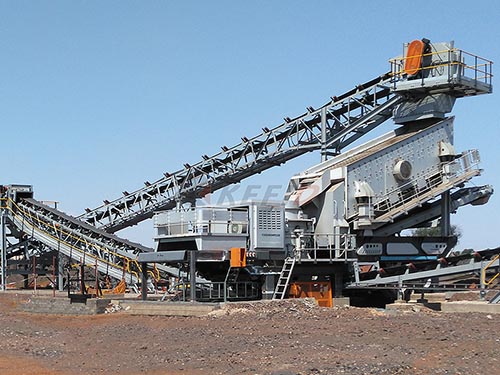
The CE Marked 500 TPH Gold Mining Washing Plant is a complete, modular processing system engineered for the primary scrubbing, clay breakdown, size classification, and material preparation of alluvial or hard rock gold ores. It serves as the critical frontend to your recovery circuit, ensuring optimal feed material for downstream concentration units like centrifugal concentrators or sluice arrays.
Operational Workflow:
1. Feed & Primary Scrubbing: Runofmine ore is introduced into a robust trommel scrubber, where lifters aggressively break down clay conglomerates and soft oxides.
2. Size Classification: The rotating trommel screen separates material into two key streams: oversize (gravels/rocks) and undersize (sand, silt, and goldbearing fines).
3. Material Handling: Oversize material is conveyed to waste stockpile. The undersize slurry is efficiently distributed to subsequent recovery modules.
4. Optional Secondary Screening: A vibrating screen deck can further classify undersize material to optimize feed grade for specific recovery technologies.
5. Water Management: Effluent is channeled to a integrated settling/sump system for water recycling, minimizing fresh water requirements.
Application Scope & Limitations:
Scope: Ideal for alluvial/eluvial deposits, weathered saprolite zones, and placer operations requiring highvolume clay removal. Effective as a preconcentration plant for hard rock operations where ore requires liberation.
Limitations: Not a standalone recovery solution; requires downstream gold capture units. Performance is dependent on accurate feed characterization (clay content, moisture, rock size distribution).
3. CORE FEATURES
HeavyDuty Trommel Scrubber | Technical Basis: Variablespeed drum drive with internal lifters and spray bars | Operational Benefit: Adjustable retention time ensures complete disintegration of claybound ores without overscrubbing softer minerals | ROI Impact: Increases effective feed grade to recovery circuits by up to 30%, reducing load on downstream equipment.
Modular Skid Design | Technical Basis: Preassembled structural steel skids with integrated walkways and connection points | Operational Benefit: Reduces site installation time by an estimated 60% compared to fieldfabricated plants | ROI Impact: Lowers capital installation costs and accelerates timetoproduction.
HighEfficiency Pump System | Technical Basis: Variable frequency drives (VFDs) on slurry pumps matched to system curve requirements | Operational Benefit: Operators can precisely match power draw to feed rate, eliminating energy waste during partial load conditions | ROI Impact: Field data shows up to 25% reduction in pumping energy consumption over fixedspeed systems.
Advanced Wear Protection | Technical Basis: Bolton wear liners on scrubber interior, screen sections, and slurry launders made from AR400 steel or polyurethane composites | Operational Benefit: Liner replacement is simplified, reducing mean time to repair (MTTR) during scheduled maintenance | ROI Impact: Extends service intervals by approximately 40%, decreasing annual parts expenditure and labor hours.
Integrated Water Recycling System | Technical Basis: Multistage settling tanks with flocculant dosing points for rapid solids settlement | Operational Benefit: Clarified water recirculation reduces fresh water demand by over 80% in closedloop configurations | ROI Impact: Drastically lowers water sourcing costs and simplifies permitting for environmental compliance.
CE Certified Safety & Control System | Technical Basis: Centralized PLC control panel with motor protection devices, emergency stops, and guarding per EU Machinery Directive | Operational Benefit: Provides a safe operating environment with clear system diagnostics, reducing operational risk | ROI Impact: Mitigates potential for costly accidents and ensures market access within regulated regions.
4. COMPETITIVE ADVANTAGES
| Performance Metric | Industry Standard (500 TPH Plant) | Our CE Marked 500 TPH Solution | Advantage (% Improvement) |
| : | : | : | : |
| Clay Disintegration Efficiency| ~7080% liberation after first pass| >95% liberation after first pass| +18% improvement |
| Total Installed Power Draw| ~450500 kW typical| ~380420 kW optimized design| Up to 15% reduction |
| Average Liner Life (Trommel)| 800 1,200 hours| 1,500 1,800 hours| +50% improvement |
| OnSite Installation Time| 45 weeks with full crew| 23 weeks with reduced crew| ~40% faster deployment |
| Water Consumption per Tonne| ~34 m³/tonne in open circuit|<1 m³/tonne in closed circuit|<75% reduction |
_Based on standardized testing with mediumplasticity clay samples._
5. TECHNICAL SPECIFICATIONS
Nominal Processing Capacity: 500 tonnes per hour (dry feed basis).
Trommel Scrubber Dimensions: Diameter: 3.0m; Length: 10m; Drive Power: 2 x 110kW motors with VFD control.
Screen Classification: Trommel screen aperture sizes configurable from 10mm to 50mm; Optional secondary vibrating screen (3m x 2m) available.
Power Requirements: Total Connected Load approximately 480kW; Main Supply Voltage 400V/50Hz or 480V/60Hz (configurable).
Material Specifications:
Main Frame & Skids : Painted structural steel (S355).
Chutes & Launders : AR400 wear steel (6mm minimum).
Trommel Shell : Mild steel with bolton liner system.
Physical Dimensions (Modular): Comprised of 4 main skids; Largest skid footprint approx 12m (L) x 4m (W) x 5m (H).
Environmental Operating Range:
Ambient Temperature Range : 20°C to +45°C
Dust Emissions Control : Fully enclosed conveyor transfer points
Noise Level at 10 meters <85 dB(A)
6. APPLICATION SCENARIOS
West African Alluvial Gold Operation
Challenge A largescale placer mine faced severe downtime due to sticky clay blinding their screening system every 72 hours Recovery rates dropped as fine gold was lost with the discarded undersize material
Solution Implementation of the CE Marked 500 TPH plant featuring the heavyduty trommel scrubber with intensive spray bars The modular design allowed integration into their existing conveyor network within 16 days
Results Clay blinding was eliminated extending continuous runtime to over 720 hours between planned maintenance Overall recovery yield improved by an estimated 22 due to more effective liberation of fine gold
Southeast Asian Saprolite Processing Plant
Challenge Processing deeply weathered ore required excessive water use creating tailings management issues that threatened their operating license Fresh water costs were prohibitive
Solution The washing plant was configured with the integrated highcapacity water recycling system including flocculant dosing automation This created a nearclosed water loop
Results Fresh water consumption reduced from approximately 15 million liters per day to under 3 million liters Tailings pond area required was reduced by 60 ensuring compliance
7 COMMERCIAL CONSIDERATIONS
Equipment pricing is structured around core configuration needs
Base Plant Tier Includes the primary trommel scrubber module feed hopper oversize conveyor undersize slurry distribution launder basic control system
Premium Plant Tier Adds the secondary vibrating screen module fully automated polymer dosing system advanced PLC control with data logging remote monitoring capability extended wear package on critical components
Service Packages Available options include supervised installation commissioning operator training programs annual inspection contracts guaranteed spare parts delivery within 48 hours
Financing Options Flexible commercial arrangements can be discussed including leasing structures milestonebased project payment plans or tradein programs for existing equipment
8 FAQ
What upstream equipment is required To operate at full capacity this plant typically requires a consistent feed provided by a large frontend loader or a properly sized apron feeder from a surge bin
Can this plant be reconfigured for different ore types Yes The trommel screen panels spray bar configuration scrubber speed are adjustable Modularity allows adding or removing classification stages based on specific deposit characteristics
How does CE marking benefit us as an international operator CE certification demonstrates compliance with stringent European health safety environmental standards It reduces your regulatory risk facilitates equipment insurance often simplifies importation into other global markets requiring certified machinery
What are the typical ongoing operational costs Primary costs are power wear liners replacement parts electricity consumption averages between kWh per tonne processed depending on ore hardness Liner life expectancy detailed in specifications allows accurate cost forecasting
What site preparation is required A level compacted pad capable of supporting loaded skids foundations for any optional fixed structures such as settling tanks Adequate fresh water supply initial fill power connection point as per specification sheet
Is operator training provided Yes Comprehensive training onsite during commissioning covering normal operation routine maintenance procedures troubleshooting safety protocols is included Documentation includes full operational manuals parts lists schematic diagrams