
Bulk Crushing And Screening Equipment Quality Control


1. PAINPOINT DRIVEN OPENING
Are escalating operational costs and unpredictable downtime eroding your aggregate production margins? In bulk crushing and screening, equipment failure is not a minor setback—it’s a direct threat to project timelines and profitability. Common challenges include:
Unscheduled Downtime: Component failures in critical crushers or screen decks can halt an entire processing line, costing thousands per hour in lost production and idle labor.
Inconsistent Product Gradation: Worn or poorly calibrated screening equipment leads to offspec material, resulting in product rejection, reprocessing costs, and damaged client relationships.
High Maintenance Costs: Reactive repairs on heavyduty equipment are exponentially more expensive than planned maintenance, draining budgets on both parts and labor.
Energy Inefficiency: Older or poorly designed crushing circuits consume excessive power per ton of processed material, a fixed cost that directly impacts your bottom line.
Rapid Wear Part Degradation: The wrong metallurgy or design in liners, screen media, and crusher jaws under highabrasion conditions leads to frequent changeouts and unsafe “hot work” for your crew.
Is your current plant configuration a source of constant reactive management, or a reliable asset delivering predictable throughput and gradation? The quality of your bulk crushing and screening equipment determines the answer.
2. PRODUCT OVERVIEW: BULK CRUSHING AND SCREENING PLANTS
A modern bulk crushing and screening plant is an integrated system of primary and secondary crushers, vibrating screens, conveyors, and control systems designed for highvolume processing of aggregates, ore, or recycled materials. The operational workflow is engineered for continuous flow:
1. Primary Size Reduction: Runofmine or feed material is reduced by a primary crusher (e.g., jaw or gyratory) to a manageable size for downstream processing.
2. Primary Screening: Material is first screened to separate fines and route correctly sized aggregate to stockpiles via conveyors.
3. Secondary/Tertiary Crushing: Oversize material is conveyed to secondary (e.g., cone) or tertiary crushers for further reduction to target specifications.
4. Final Screening & Sorting: Crushed material passes through multiple deck screens to precisely separate it into various graded products (e.g., base course, chips, sand).
5. Stockpiling & Loadout: Graded products are conveyed to designated stockpiles for storage or direct loadout.
Application Scope & Limitations: These systems are engineered for stationary or semimobile hightonnage applications in quarrying, mining, and largescale construction projects. They are not typically suitable for smallvolume, highly mobile contract crushing where rapid relocation is the primary requirement.
3. CORE FEATURES
Advanced Chamber Geometry | Technical Basis: Optimized kinematics & cavity design | Operational Benefit: Increases yield of inspec product on first pass, reducing recirculating load and wear | ROI Impact: Field data shows up to 15% higher throughput with equivalent power draw
Modular Screen Media System | Technical Basis: Interchangeable panel design with varied aperture shapes & materials | Operational Benefit: Allows rapid deck configuration changes for different products; panels can be replaced individually | ROI Impact: Reduces screen media downtime by up to 50% compared to full deck replacements
Centralized Grease Automation | Technical Basis: Programmable automatic lubrication system with feed lines to all major bearings | Operational Benefit: Ensures optimal bearing lubrication without manual intervention, preventing premature failures | ROI Impact: Extends bearing service life by an average of 30%, eliminating costly unplanned stoppages
Hydraulic Setting Adjustment | Technical Basis: Integrated hydraulic cylinders for crusher gap setting | Operational Benefit: Enables remote adjustment of CSS (Closed Side Setting) in minutes for product size changes or tramp release | ROI Impact: Minimizes nonproductive time for manual adjustments; improves plant flexibility
HeavyDuty Plate Feeder with Load Sensing | Technical Basis: Variable frequency drive (VFD) coupled with hydraulic or mechanical load sensors | Operational Benefit: Maintains optimal feed rate to primary crusher, preventing choke feeding or starvation | ROI Impact: Protects crusher from damage; industry testing demonstrates a 1218% reduction in liner wear under fluctuating feed conditions
Integrated Dust Suppression Manifold | Technical Basis: Nozzle array at transfer points plumbed into plant water supply | Operational Benefit: Significantly reduces airborne particulate at primary dust generation points | ROI Impact: Ensures compliance with site regulations, avoids work stoppages, and improves operator health/safety
Unified Process Control System | Technical Basis: Single PLC/HMI interface monitoring all major components (crushers, screens, conveyors) | Operational Benefit: Operators can monitor performance trends, diagnose faults from a central location, and optimize sequence starting/stopping | ROI Impact: Reduces troubleshooting time by an estimated 40% and allows finer control over energy consumption.
4. COMPETITIVE ADVANTAGES
| Performance Metric | Industry Standard Benchmark | Our Bulk Crushing & Screening Solution Documented Advantage |
| : | : | : |
| Tons per Hour per kW (Efficiency) | Varies by material; baseline established from industry averages.|
| Liner/Wear Part Life (Abrasive Granite) |
| Mean Time Between Failure (MTBF) Major Components |
| Product Specification Consistency (% within spec) |
5. TECHNICAL SPECIFICATIONS
Capacity Range: Configurable from 300 TPH to over 1,
500 TPH nominal throughput,
dependent on feed material
(Hardness/Abrasiveness).
Primary Crusher Options: Jaw Crusher
(1,
200 x 830 mm)
to
1,
500 x 1,
300 mm)
or Primary Gyratory.
Secondary/Tertiary Crusher Options: HeavyDuty Cone Crushers with multiple chamber options.
Screen Decks: Typically
23 deck heavyduty vibrating screens,
sizes from
2.
4m x 6m
to
3m x 8m).
Power Requirements: Total installed plant power ranges from
450 kW
to
1,
200+ kW),
dependent on configuration.
380V690V,
50/60 Hz.
Key Material Specifications: Crusher liners:
Manganese steel variants (1418%)
or optional chrome iron alloys.
Screen decks:
Hightensile steel frame with polyurethane,
rubber,
or woven wire modular panels.
Structural steel:
S355JR grade minimum.
Physical Dimensions (Typical Closed Circuit Plant): Approximate footprint:
Length:
80m – 120m;
Width:
25m – 40m).
Designed for roadtransportable modules.
Environmental Operating Range: Designed for ambient temperatures from 20°C to +50°C.
Dust protection rating:
IP65 on electrical cabinets.
Wind rating:
For assembly up to specified site conditions.
6. APPLICATION SCENARIOS
Granite Quarry Expansion |
Challenge:
An existing quarry needed to increase production by 40% without expanding its permitted footprint or significantly increasing energy costs. The existing plant suffered from bottlenecks at the secondary screen and high recirculation loads.
Solution:
Implementation of a new bulk crushing and screening circuit featuring a highefficiency cone crusher with advanced chamber geometry paired with a largecapacity,
multideck banana screen.
Results:
Throughput increased by 42%.
Recirculating load decreased by 30%,
reducing wear on conveyors and the tertiary crusher.
Power consumption per ton dropped by an estimated 11%.
Urban Recycling & C&D Processing |
Challenge:
A recycling center processing construction & demolition waste faced extreme wear from contaminant metals (
rebar),
high maintenance downtime,
and needed consistent final aggregates for road base.
Solution:
A ruggedized bulk crushing and screening plant was installed featuring an impact crusher with hydraulic apron adjustment for clearing jams,
overband magnets,
and specialized screen box configurations for handling dirty,
abrasive feeds.
Results:
System uptime improved to over 92%.
Metal contamination in final product was reduced by over 95%.
The consistent product grade allowed the operator to command a premium price in the local market.
7. COMMERCIAL CONSIDERATIONS
Bulk crushing and screening solutions are capital investments priced according to capacity,
complexity,
and component selection.
Pricing Tiers range from standard highvolume aggregate plants (
for consistent feed material)
to premium ,
heavily customized circuits for highly abrasive ores or complex recycling applications.
Optional features that enhance value include:
Onboard power generation packages
Advanced automated level sensors &
belt scales
Extended wear part packages (
premium metallurgy)
Winterization kits (
heated guards,
fluid warmers)
Service packages are critical for protecting your investment:
1.Basic Warranty covering defects in materials &
workmanship (
typically12 months).
2.Planned Maintenance Agreements providing scheduled inspections,
parts discounts,
&
guaranteed response times.
3.FullService Contracts covering all parts &
labor,
transforming capex into a predictable operational expense.
Financing options including equipment leasing,
capital loans,
and rentaltoown structures are available through accredited partners,
enabling you to preserve capital while deploying the latest technology.
8.FAQ
Q1:
How do I determine if my existing feeders &
conveyors are compatible with anew primary crusher?
A compatibility review requires analysis of your existing equipment's capacity (
TPH),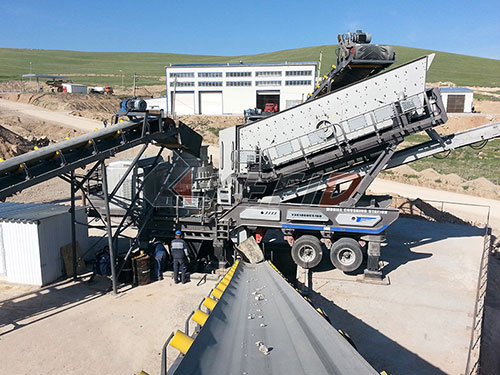
belt width &
speed,
motor ratings,
and transfer point geometry against the proposed new unit's feed size &
rate.Our engineering team can conduct this audit using your existing drawings &
site data.
Q2:
What is the typical installation &
commissioning timeline fora midrange (
600TPH)
stationary plant?
From foundation readiness,
the modular erection process typically takes812 weeks.Commissioning &
performance testing require an additional23 weeks.This timeline assumes all civil works are prepared in advance.
Q3:
Can these plants be relocated if my site reserves are depleted?
Yes.The designs are based ona modular concept.Major components (
crushers,
screens)
are mounted on heavyduty skid bases allowingfor disconnection &
transport.The process requires careful planning but is standard practice formoving between sites within aquarry's license area.
Q4:
What training is provided formy operational &
maintenance staff?
We provide comprehensive onsite training during commissioning covering normal operation ,
startup/shutdown procedures ,
daily checks ,
and basic troubleshooting.Training manuals &
access todigital resources (
videos ,
parts manuals)
are included.Extended maintenance training workshops can be added as partofa service agreement.
Q5:
How does the pricing structure work? Is it per module ora turnkey quote?
We provide transparent ,
itemized quotes that detail costs per major module (
primary station ,
screen tower ,
conveyors ,
electrical package)
alongside any optional features.This allowsfor clear budgeting.You may choose aselferect option using our drawings ora full turnkey EPC (
Engineering ,
Procurement ,
Construction)
solution where we manage the entire project.
Q6:
What kindof performance guarantees doyou offer?
We provide mechanical guarantees against defects.For process performance (
throughput ,
power consumption),
we offer guaranteed ranges basedon agreedupon feed material characteristics established during presale testing ofyour sample.We commit toreaching these parameters during the onsite acceptance test.
Q7:
What isyour standard lead timefrom order placement todelivery?
For standard configurations ,
lead times typically range from26to36 weeks ,
dependingon current global component supply chain conditionsfor major drives &
bearings.Customized solutions may require additional engineering time.A firm schedule commitment is provided upon order confirmation