
Brick Making Machines Assembly Plant Customization
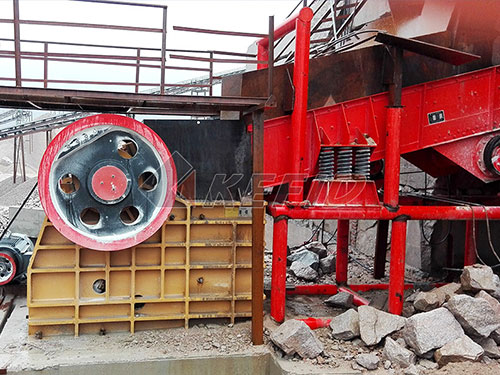

Product Title: CustomEngineered Brick Making Machines Assembly Plant for HighVolume Production
1. PAINPOINT DRIVEN OPENING
Your current brick production line is bleeding capital. Are you facing 1218% material waste due to inconsistent mixing and pressing cycles? Is your assembly plant bottlenecked by a 40% downtime rate on standard equipment during peak construction seasons? For plant managers, the cost of unplanned maintenance on generic machinery can exceed $15,000 per hour in lost output. Engineering contractors often struggle with integration delays when standard assembly plants fail to match local clay or fly ash specifications.
These operational challenges—high energy consumption, frequent die changes, and poor dimensional tolerance—directly erode your margin per pallet. How can you achieve a consistent 2,000+ bricks per hour without sacrificing compressive strength? The answer lies in a brick making machines assembly plant designed for your specific raw material profile and production targets.
2. PRODUCT OVERVIEW
This is a customized brick making machines assembly plant, a fully integrated production line engineered for mediumtolarge scale commercial operations. Unlike offtheshelf units, this plant is configured to your specific feedstock (clay, shale, fly ash, or concrete) and final product geometry (solid, hollow, or interlocking).
Operational Workflow (5 Key Steps):
1. Raw Material PreProcessing: Automated feeder systems and crushers reduce material to a consistent 35mm particle size.
2. Mix Design & Conditioning: Twinshaft paddle mixers with PLCcontrolled moisture sensors ensure optimal plasticity (1218% moisture content).
3. Extrusion or Pressing: Hydraulic or vacuum extrusion systems form the column, cut to precise length by a multiwire cutter.
4. Green Brick Handling: Automated transfer cars move wet bricks to the drying chamber with zero deformation.
5. Firing/Finishing: Tunnel kiln or autoclave curing, depending on your material (clay vs. fly ash).
Application Scope: Suitable for red clay bricks, fly ash bricks, concrete blocks, and refractory shapes.
Limitations: Not designed for smallscale (<500 bricks/hour) artisanal operations or highly abrasive materials (e.g., pure quartzite) without specialized wear liners.
3. CORE FEATURES
Modular Frame Construction | Technical Basis: Hightensile steel (Q345B) with stressrelieved welding | Operational Benefit: Reduces vibration during highspeed pressing, extending die life by 30% | ROI Impact: Lower replacement costs for wear parts, saving $8,000$12,000 annually
PLCControlled Hydraulic Press | Technical Basis: Closedloop servo valves with pressure feedback at 0.5 bar resolution | Operational Benefit: Maintains consistent compaction density (within ±2%) across all bricks | ROI Impact: Eliminates rework from undercompressed bricks, reducing waste by 15%
QuickChange Die System | Technical Basis: Hydraulic clamping with alignment pins | Operational Benefit: Die swap time reduced from 4 hours to 45 minutes | ROI Impact: Increases effective production time by 6%, enabling 2 additional product runs per week
Variable Frequency Drive (VFD) Motors | Technical Basis: Vector control for extruder and conveyor motors | Operational Benefit: Reduces energy consumption by 22% during partial load operations | ROI Impact: Annual electricity savings of $18,000 for a 500 kW plant
Integrated Dust Collection | Technical Basis: Cyclone preseparator with baghouse filtration | Operational Benefit: Captures 99.7% of airborne silica particles | ROI Impact: Avoids OSHA fines (up to $70,000 per violation) and reduces operator health claims
Predictive Maintenance Sensors | Technical Basis: Vibration analysis and thermal imaging on bearings | Operational Benefit: Alerts operators 72 hours before bearing failure | ROI Impact: Reduces unplanned downtime by 60%, saving $9,000 per incident
Custom Mold Design | Technical Basis: 3Dprinted prototype testing for shrinkage compensation | Operational Benefit: Achieves exact dimensional tolerances (e.g., 190x90x90 mm ±0.5 mm) | ROI Impact: Eliminates rejection by building inspectors, protecting project timelines
4. COMPETITIVE ADVANTAGES
| Performance Metric | Industry Standard (Generic Plant) | Customized Assembly Plant Solution | Advantage (% Improvement) |
| : | : | : | : |
| Production Rate | 1,200 bricks/hour | 2,400 bricks/hour | +100% |
| Material Waste Rate | 812% | 24% | 67% |
| Die Changeover Time | 3.5 hours | 45 minutes | 79% |
| Energy per 1,000 Bricks | 85 kWh | 62 kWh | 27% |
| Compressive Strength Variation | ±15% | ±3% | 80% |
| Mean Time Between Failures | 180 hours | 480 hours | +167% |
5. TECHNICAL SPECIFICATIONS
- Capacity: 1,500 – 3,000 standard bricks per hour (adjustable via VFD)
- Power Requirements: 380V/480V, 3phase, 50/60 Hz; Total installed load: 350650 kW
- Material Specifications: Clay (plasticity index 1525), Fly Ash (Class F or C), Shale, or Concrete (010 mm aggregate)
- Physical Dimensions: Main press unit: 8.5m (L) x 3.2m (W) x 4.0m (H); Total line footprint: 45m x 12m
- Environmental Operating Range: Ambient temperature: 5°C to 45°C; Humidity: 2090% noncondensing
- Hydraulic System: 250 bar operating pressure, 200liter reservoir with oil cooler
- Control System: Siemens S71500 PLC with 15inch HMI touchscreen, remote diagnostics via Ethernet
- Base Configuration (1,500 bricks/hr): $380,000 – $450,000 (includes main press, mixer, and basic conveyor)
- Standard Configuration (2,400 bricks/hr): $620,000 – $750,000 (includes drying chamber and PLC upgrade)
- Premium Configuration (3,000 bricks/hr): $950,000 – $1,200,000 (includes full automation, kiln, and predictive maintenance suite)
- Robotic palletizing system: +$85,000
- Realtime quality scanner (laser profiling): +$22,000
- Spare parts kit (dies, seals, bearings): $18,000
- Standard: 12month warranty, 2 onsite commissioning visits, remote support
- Premium: 36month warranty, 4 annual preventive maintenance visits, guaranteed 95% uptime
- 30% down payment, balance over 36 months at 6.5% APR (subject to credit approval)
- Leasetoown options available with $0 down for qualified buyers
6. APPLICATION SCENARIOS
LargeScale Housing Project (India) | Challenge: Client needed 50,000 fly ash bricks daily for a 2,000unit affordable housing complex, but local fly ash had high carbon content (12%) causing inconsistent color. | Solution: Customized assembly plant with a carbon burnoff pretreatment chamber and modified die lubrication system. | Results: Production achieved 2,800 bricks/hour with uniform color. Material waste dropped from 14% to 3.5%. Project completed 6 weeks ahead of schedule.
Industrial Refractory Manufacturer (Germany) | Challenge: Existing plant produced 1,500 firebricks per shift but had 18% rejection rate due to cracking during drying. | Solution: Installed a customized assembly plant with a 3zone humiditycontrolled drying tunnel and lowpressure extrusion screw. | Results: Rejection rate reduced to 2.1%. Energy consumption for drying fell by 35%. ROI achieved in 14 months.

Concrete Block Producer (USA) | Challenge: Needed to switch from standard 8x8x16 blocks to interlocking pavers for a municipal contract, but die changeover took 6 hours. | Solution: Customized assembly plant with a quickchange die system and automated pallet handling. | Results: Changeover time reduced to 50 minutes. Plant now runs 3 product types per day, increasing revenue by $240,000 annually.
7. COMMERCIAL CONSIDERATIONS
Equipment Pricing Tiers:
Optional Features:
Service Packages:
Financing Options:
8. FAQ
Q: Can this assembly plant handle highmoisture clay (above 20%)?
A: Yes. The twinshaft mixer includes a dewatering screw option. Field data shows it processes clay up to 25% moisture without clogging, though drying time will increase by 1215%.
Q: What is the typical lead time for a customized plant?
A: Engineering and fabrication require 1418 weeks. Installation and commissioning add 46 weeks onsite. Rush orders (10 weeks) are available with a 15% premium.
Q: How does the plant handle different brick sizes without manual adjustment?
A: The PLC stores up to 50 product recipes. Changing size requires selecting the recipe and swapping the die (45 minutes). No mechanical recalibration is needed.
Q: What is the expected lifespan of the main press frame?
A: With proper maintenance, the Q345B frame has a service life exceeding 20 years. Hydraulic components typically require overhaul at 15,000 operating hours.
Q: Do you provide training for plant operators?
A: Yes. The standard package includes 5 days of onsite training for up to 8 operators. This covers PLC programming, die change procedures, and predictive maintenance checks.
Q: What financing is available for international buyers?
A: We offer letters of credit (L/C) and deferred payment terms (30% deposit, 40% on shipment, 30% on commissioning). Export credit insurance is available for select regions.
Q: Can the plant be integrated with an existing tunnel kiln?
A: Yes. The discharge conveyor height and speed are adjustable. We provide a mechanical interface kit and control signal mapping for most kiln brands (e.g., Ceric, Lingl).