
Bespoke Stone Crusher Plant Quality Control


1. PAINPOINT DRIVEN OPENING
Are inconsistent feed materials and unplanned maintenance cycles eroding your aggregate production margins? For plant managers and engineering contractors, a standard crushing plant often introduces critical vulnerabilities. Consider these common operational challenges:
Variable Product Quality: Fluctuations in feed size and hardness lead to inconsistent final aggregate gradation, causing product rejections and failing to meet precise project specifications.
Excessive Operational Downtime: Component failures in critical paths, like crusher blockages or conveyor breakdowns, halt the entire production line. Industry averages indicate that unscheduled downtime can cost over $10,000 per hour in lost production and labor.
High Maintenance Costs & Complexity: Modular plants with components from multiple OEMs create a spare parts labyrinth. This complexity increases inventory costs and requires crews to be trained on disparate systems, slowing repair times.
Inefficient Material Flow & Bottlenecks: A mismatch between primary crushing capacity, screening efficiency, and secondary crushing throughput creates idle equipment at one stage while overloading another, capping overall plant output.
Rigid Plant Configuration: Fixed layouts cannot adapt to changing project demands or new site constraints, forcing expensive reengineering or acceptance of suboptimal performance.
Is your operation managing these issues reactively? What would a 1520% improvement in overall equipment effectiveness (OEE) mean for your annual profitability? The solution lies not in an offtheshelf unit, but in a precisionengineered system designed around your specific material and output goals.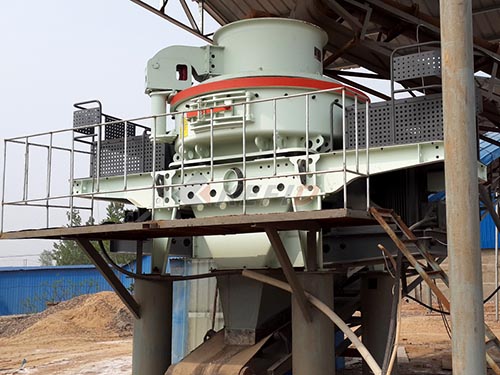
2. PRODUCT OVERVIEW: BESPOKE STONE CRUSHER PLANT
A Bespoke Stone Crusher Plant is a fully integrated, customengineered aggregate processing system. Unlike modular or standardized setups, every aspect—from crusher selection and sizing to conveyor angles and control logic—is designed from first principles to match a client’s unique feed material, target product mix, site topography, and production targets.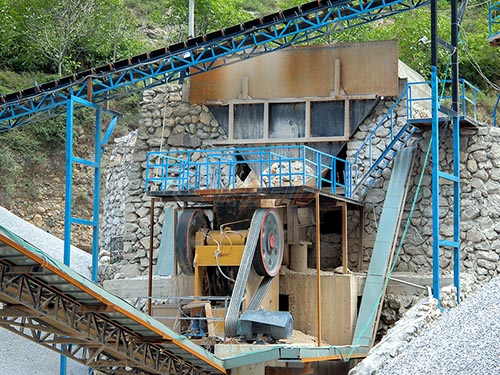
Operational Workflow:
1. Intelligent Primary Feeding: ROM (RunofMine) material is metered via an apron feeder or vibrating grizzly feeder to the primary crusher, prescreening fines to bypass crushing where possible.
2. MultiStage Reduction & Classification: Material undergoes staged size reduction (primary → secondary → tertiary) with interstage screening. Closedcircuit designs recirculate oversize material for recrushing.
3. Precise Product Sorting: Final screening decks separate crushed aggregate into precise specification piles (e.g., ¾” chip, ½” aggregate, manufactured sand).
4. Integrated Material Handling: A network of customlength and incline conveyors transfers material between stages with minimal transfer points to reduce spillage and dust.
5. Centralized Process Control: A single automation panel provides operators with realtime monitoring of all plant functions, allowing for immediate adjustment of crusher settings and feed rates.
Application Scope & Limitations:
Scope: Ideal for highvolume stationary quarries, large infrastructure projects requiring onsite aggregate production (e.g., dam construction, highway development), and mining operations processing nonmetallic minerals.
Limitations: Not suitable for highly mobile or shortterm (<6 month) projects due to higher initial engineering investment and longer setup times. Site requires stable ground for permanent or semipermanent installation.
3. CORE FEATURES
Engineered Flow Dynamics | Technical Basis: Discrete Element Modeling (DEM) & transfer point analysis | Operational Benefit: Eliminates bottlenecks by ensuring optimal material trajectory between all crushing and screening stages | ROI Impact: Maximizes designed throughput capacity; reduces spillage/wear by up to 30%
Unified PLC Automation System | Technical Basis: Singlepoint control architecture with IoTenabled sensors | Operational Benefit: Operators manage the entire plant from one station with realtime alerts for wear parts monitoring and performance analytics | ROI Impact: Reduces operator headcount requirements; enables predictive maintenance to prevent catastrophic failures
CrusherScreen Synchronization | Technical Basis: Dynamic load management software linking VFD crusher motors with screen feed rates | Operational Benefit: Automatically balances load across stages to prevent plugging or running empty | ROI Impact: Protects major capital components from damage; improves energy efficiency by matching power draw to actual load
CommonPlatform Component Design | Technical Basis: Strategic selection of crushers, screens, and motors from aligned OEM families | Operational Benefit: Standardizes wear parts (bearings, seals), reduces required spare part SKUs by an estimated 40% | ROI Impact: Lowers inventory carrying costs; simplifies technician training
Structural Integrity Design | Technical Basis: Finite Element Analysis (FEA) on support structures and hoppers for dynamic load stresses | Operational Benefit: Withstands years of highcycle vibration without structural fatigue or failure points | ROI Impact: Eliminates costly structural repairs; ensures longterm asset integrity
Environmentally Sealed Critical Paths | Technical Basis: Integrated dust suppression spray bars at all transfer points + optional enclosed conveying | Operational Benefit: Dramatically reduces fugitive dust emissions within the plant envelope | ROI Impact: Ensures compliance with site environmental regulations; improves worker health/safety conditions
4. COMPETITIVE ADVANTAGES
| Performance Metric | Industry Standard (Modular Plant) | Bespoke Stone Crusher Plant Solution | Advantage (% Improvement) |
| : | : | : | : |
| Overall Equipment Effectiveness (OEE) | 7075% average utilization rate | Designed for sustained 8590% utilization rate| +1520% |
| Mean Time Between Failure (MTBF) – Drivetrain| Varies widely by component brand; frequent alignment issues| Engineered as a unified system; extended MTBF due to harmonic design| +25% (estimated) |
| Energy Consumption per Ton Crushed| Inefficient due to component mismatch & constant fullspeed operation| Optimized motor sizing & VFDcontrolled load matching reduces kWh/ton| 18% |
| Setup/Reconfiguration Time for New Site| 23 weeks for disassembly/transport/reassembly of modular units| Designed as permanent/semipermanent; relocation requires engineered planning.| Not Applicable – Designed for longevity |
| Spare Parts Inventory Cost Requirement| High – requires stock for multiple OEM components.| Reduced – commonality across major subsystems lowers SKU count.| 40% |
5. TECHNICAL SPECIFICATIONS
Capacity Range: Configurable from 200 TPH to 1,500+ TPH nominal throughput.
Power Requirements: Total connected load typically ranges from 500 kW to 2.5 MW depending on configuration; designed for grid connection with softstart systems.
Material Specifications: Engineered for compressive strengths up to 350 MPa (e.g., granite, basalt). Wear liners available in AR400 manganese steel or specialized alloys for highly abrasive feeds.
Physical Dimensions: Sitespecific layout. Typical footprint for a 500 TPH plant ranges from 60m x 40m. Vertical elevation changes are engineered per site topography.
Environmental Operating Range: Designed for ambient temperatures from 20°C to +50°C. Electrical components rated IP65 minimum. Dust emission control meets <10 mg/Nm³ at point sources with integrated systems.
6. APPLICATION SCENARIOS
Granite Quarry Expansion Project
Challenge: An existing quarry’s aging threestage plant could not meet new demand for railway ballast spec (+1½” ¾”) while simultaneously producing concrete aggregates (¾”). Throughput was capped at 350 TPH with poor yield on the ballast product.
Solution: Implementation of a bespoke stone crusher plant featuring a highreduction ratio primary jaw crusher feeding a conedominant secondary/tertiary circuit with dedicated screening decks for ballast separation.
Results: Plant throughput increased to 550 TPH dedicated spec yield on ballast improved from ~65% to over ~92%. The unified control system reduced operational staff requirements by one fulltime equivalent.
Major Highway Construction Corridor
Challenge: A contractor needed multiple aggregate products along a remote 50km corridor but faced prohibitive costs of trucking materials from distant quarries. Required consistent quality across multiple temporary sites.
Solution: Deployment of two semimobile bespoke stone crusher plants designed around local river gravel deposits.Each plant was containerized in key modulesfor faster relocation between preplanned sites along the corridor.
Results: Enabled onsite production meeting100%of project aggregate needs.Eliminated over8000 truckloadsof imported material,saving an estimated12%on total project bulk material costs.Plants were relocated twice within the project timeline as planned.
7 COMMERCIAL CONSIDERATIONS
Bespoke stone crusher plants are capital investments priced based on scope complexity capacityand specified component tiers
Pricing Tiers
Base Engineering Package: Includes core design primary/secondary crushing basic screeningand structural steelFrom $12Mto $45M
Premium Optimization Package: Adds advanced automation tertiary shaping crushersfor cubicityhighefficiency washing sand recovery systemsand full environmental enclosuresFrom $35Mto $8M+
Optional Features
Onboard diesel generator packsfor remote sites
Automated wear part monitoringwith laser scanning
Advanced air classificationfor ultrafine mineral separation
Complete sound attenuation enclosuresfor urban fringe sites
Service Packages
1 Commissioning & Operator Training: Standard inclusion
2 Planned Maintenance Agreement: Covers scheduled inspectionsparts discountsand annual shutdown support
3 FullService Contract: Includes guaranteed uptimeperformance monitoringand lifecycle management
Financing Options
Available through partnered financial institutions including:
Capital lease structures
Projectbased financing
Operating lease arrangements
8 FAQ
Q1 How do you ensure the bespoke design will perform with our specific rock geology?
A We conduct comprehensive material testing including abrasion index crushability work indexand particle shape analysisThis data is used as the foundational inputfor our simulation softwareto model production flowand predict wear ratesbefore any fabrication begins
Q2 What is the typical lead timefrom design approvalto operational commissioning?
A For a standard scope projectthe timeline is typically812 monthsThis includes12 weeksfor detailed engineering1014 weeksfor major component procurementand1418 weeksfor fabrication assemblyand factory acceptance testingSite commissioning requires an additional46 weeks
Q3 Can you integrate existing equipment we own intoa new bespoke plant?
A Yeswhere technically feasibleOur engineering assessment will evaluate the compatibilityof your existing crushers screensor feederswith the new system’s performance goalsIntegration often requires interface modificationsand control system upgradeswhich are includedin the scoping analysis
Q4 How does operating costper ton comparetoa patchedtogether modular plant?
A Field data shows bespoke plants achievea1525% lower operating costper ton producedThis stems from optimized energy usehigher yieldreduced manpower needsdue to automationand lower spare part consumptionfrom commonalitydesignOperational cost modelingis providedas part ofthe feasibility proposal
Q5 What happens if our feedstock characteristics change significantlyoverthe mine’s life?
A The control systemis designedwith adjustable parametersThe physical designcan also include provisionslike future addon modulesor adjustable screen decksInitial scoping always includesa review ofthe mine planWe engineer flexibilitywhere possibleFor major changeswear part metallurgycan be adjustedor circuit flowscan be modifiedduring planned major maintenance periods
Q6 Who owns the intellectual propertyforthe customplant design?
A The functional specificationand overall layout IPare typically codevelopedThe detailed mechanical electricaland control schematicsremain our proprietary engineering worksClients receivefull asbuilt drawingsfor maintenance purposesLicensing agreementscan be discussedfor multisite deploymentsbythe same client
Q7 What kindof performance guaranteesare offered?
A We provide guaranteed minimum throughputcapacityunder defined feed conditionsproduct gradation curveswithin specified tolerancesand maximum power consumptionper tonGuaranteesare backedby comprehensive factory testingof subsystemsPerformance bondsare standardin commercial contracts