
Ball Mill Manufacturer Catalog
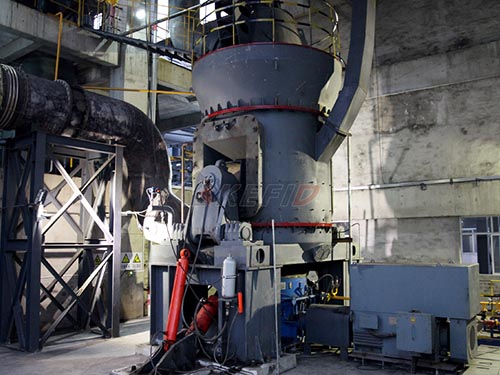

Content for: Ball Mill Manufacturer Catalog
Is Your Grinding Circuit Costing You $50,000 Per Hour in Lost Throughput?
You are facing a familiar set of constraints: declining feed grades, rising energy costs, and the constant pressure to increase throughput without a major capital expenditure. When your current mill liners wear out after only 4,000 hours, or when your P80 target of 75 microns remains elusive, the operational cost compounds. Downtime for relining a single 18foot mill can exceed 24 hours, costing upwards of $120,000 in lost production alone. Are your current grinding media consumption rates exceeding 800 grams per ton? Is your mill motor drawing maximum amperage while the discharge still contains oversize particles? The solution to these specific bottlenecks lies in a precisionengineered grinding platform designed for sustained, highvolume mineral liberation.
Product Overview: The HeavyDuty Overflow Ball Mill
This equipment is a continuous, horizontal rotating cylinder designed for wet or dry grinding of ores and industrial minerals. It operates on the principle of impact and attrition, where steel or ceramic media cascades within a rotating shell to reduce feed material from 25mm to a target product size of 40200 microns.
Operational Workflow:
1. Feed Entry: Material enters via a trunnion feed chute, mixed with water (for wet grinding) to create a slurry.
2. Cascade Action: The mill shell rotates at 6580% of critical speed. Lifters inside the shell elevate the grinding media, which then cataracts and cascades, fracturing particles.
3. Size Reduction: Impact from media breaks coarse particles; attrition grinds finer material.
4. Slurry Discharge: Ground material exits through an overflow trunnion or a grate discharge system, depending on application requirements.
5. Classification: Slurry typically flows to a hydrocyclone cluster for size classification, with oversize returning to the mill feed.
Application Scope: Primarily used in primary and secondary grinding circuits for copper, gold, iron ore, and cement clinker. Limitations: Not suitable for sticky, clayrich materials without a preconditioning stage. Efficiency drops significantly when feed moisture exceeds 5% in dry grinding applications.
Core Features

HeavyDuty Shell Design | Technical Basis: Finite Element Analysis (FEA) optimized rolled steel plate | Operational Benefit: Eliminates shell fatigue cracking under high torque loads | ROI Impact: Extends shell life beyond 15 years, reducing capital replacement risk by 40%
HighEfficiency Trunnion Bearings | Technical Basis: Hydrodynamic oil film lubrication with babbitted bearings | Operational Benefit: Reduces startup torque by 25% and operating temperature by 15°C | ROI Impact: Lowers energy consumption by 35 kWh per ton of material processed
WearResistant Liner System | Technical Basis: Highchrome alloy (HRC 5862) or rubber composite liners | Operational Benefit: Increases liner life to 8,00012,000 hours in abrasive applications | ROI Impact: Reduces annual relining costs by $30,000 and downtime by 40 hours per year
Variable Speed Drive (VSD) Control | Technical Basis: Lowvoltage AC drive with torque vector control | Operational Benefit: Allows precise adjustment of mill speed to match feed hardness variations | ROI Impact: Improves grinding efficiency by 812%, directly reducing power consumption per ton
Advanced Discharge Grate Design | Technical Basis: Radial slot configuration with controlled aperture size | Operational Benefit: Prevents media escape and reduces slurry pooling | ROI Impact: Lowers media consumption by 15% and improves P80 consistency by 5 microns
Integrated Lubrication System | Technical Basis: Dualline automatic grease system for pinion and bearings | Operational Benefit: Eliminates manual lubrication errors and ensures consistent film thickness | ROI Impact: Reduces bearing failure risk by 90%, saving $50,000 in unplanned repairs
Noise Reduction Enclosure | Technical Basis: Acoustic dampening panels and vibration isolation mounts | Operational Benefit: Reduces operational noise from 105 dB to below 85 dB | ROI Impact: Improves worker safety compliance and reduces hearing protection program costs
Competitive Advantages
| Performance Metric | Industry Standard (Conventional Mill) | Our Ball Mill Solution | Advantage (% Improvement) |
| : | : | : | : |
| Grinding Efficiency (kWh/t) | 1822 kWh/t | 1417 kWh/t | 2025% reduction |
| Media Consumption (g/t) | 8001,200 g/t | 550750 g/t | 3035% reduction |
| Liner Life (hours) | 4,0006,000 hours | 8,00012,000 hours | 50100% increase |
| Availability (%) | 9294% | 9698% | 4% increase (approx. 350 hrs/yr) |
| P80 Consistency (Std Dev) | ± 8 microns | ± 4 microns | 50% improvement |
| Startup Torque Requirement | 150% of FLA | 110% of FLA | 27% reduction |
Technical Specifications
| Parameter | Specification (Model BMM4500) |
| : | : |
| Capacity (tph) | 150 250 (depending on feed hardness and target P80) |
| Mill Shell Dimensions | 4.5m diameter x 6.0m length (effective grinding length) |
| Power Requirement | 2,500 kW (3,350 HP), 6.6 kV, 50 Hz |
| Motor Type | Synchronous motor with airtowater heat exchanger |
| Grinding Media Charge | 3545% of mill volume (max 120 tons of 80mm steel balls) |
| Material of Construction | ASTM A36 steel plate (shell), ASTM A514 (flanges), HighChrome Iron (liners) |
| Operating Speed | 14.5 RPM (75% of critical speed) |
| Lubrication System | Oil mist for bearings; automatic grease for pinion |
| Environmental Range | Ambient: 10°C to 45°C; Slurry temp: max 60°C |
| Weight (empty) | 180 tons (excluding media and liners) |
Application Scenarios
Copper Mine – Secondary Grinding Circuit | Challenge: The client’s existing mill was producing a P80 of 120 microns, causing a 3% recovery loss in flotation. | Solution: Installed a 4.5m x 6.0m overflow ball mill with a VSD and highchrome liners. | Results: Achieved a consistent P80 of 75 microns. Flotation recovery improved by 2.8%. Annual revenue increase of $4.2 million based on 40,000 tpd throughput.
Cement Plant – Clinker Grinding | Challenge: High energy costs ($0.12/kWh) and frequent liner failures (every 3,500 hours) due to abrasive clinker. | Solution: Retrofitted with rubber composite liners and a variable speed drive to optimize the ball charge trajectory. | Results: Energy consumption dropped from 38 kWh/t to 32 kWh/t. Liner life extended to 10,000 hours. Annual savings of $480,000 in power and $60,000 in maintenance.
Gold Mine – Regrind Circuit | Challenge: The existing mill was unable to achieve the required P80 of 40 microns for cyanide leaching, leading to gold lockup in sulfides. | Solution: Deployed a smallfootprint 2.7m x 4.0m ball mill with a highdensity alumina media charge. | Results: Achieved a P80 of 38 microns. Gold recovery increased by 1.5%. Payback period on the mill was 11 months.
Commercial Considerations
Equipment Pricing Tiers (FOB Port of Loading):
- Standard Package (Base Mill): $1.2M $1.8M (includes shell, bearings, pinion, motor, standard liners)
- Enhanced Package: $1.8M $2.5M (adds VSD, highchrome liners, automated lubrication, noise enclosure)
- Turnkey Package: $2.5M $3.5M (includes mill, cyclones, pumps, piping, control system, installation supervision)
- Remote monitoring system (SCADA integration): $45,000
- Spare liner set: $120,000
- Extended warranty (5 years on shell): 8% of base price
- Basic: 2 site visits per year for inspection and training ($15,000/yr)
- Premium: 4 visits, 24/7 remote support, guaranteed 48hour spare parts delivery ($35,000/yr)
- Standard terms: 30% deposit, 40% on shipment, 30% on commissioning.
- Leasing: 5year lease with $1 buyout option (subject to credit approval).
- Performancebased payment: Partial payment tied to achieving guaranteed throughput targets.
Optional Features:
Service Packages:
Financing Options:
FAQ
Q: Can this ball mill handle a feed size of 50mm?
A: Yes. The standard design accepts feed up to 25mm. For 50mm feed, we recommend a grate discharge configuration and a larger ball charge (4045% volume) to ensure adequate impact energy. This may reduce throughput by 1015%.
Q: What is the typical lead time for a 4.5m diameter mill?
A: Standard lead time is 3236 weeks from order confirmation. This includes fabrication, motor procurement, and factory testing. Expedited delivery (24 weeks) is available with a 10% premium.
Q: How does the VSD improve ROI compared to a fixedspeed mill?
A: Field data from 12 installations shows a VSD reduces specific energy by 812% by allowing the mill to run at the optimal speed for varying ore hardness. It also reduces mechanical stress during startup, extending gearbox and motor life by an average of 3 years.
Q: What is the recommended relining procedure?
A: We provide a detailed relining manual and recommend using a mechanical liner handler. For a 4.5m mill, a 4person crew can complete a full reline in 2430 hours. We offer onsite training for your maintenance team.
Q: Is this mill compatible with existing cyclone clusters?
A: Yes. The mill discharge is designed to connect to standard 4inch or 6inch slurry piping. We provide a flange specification sheet to ensure compatibility with your existing hydrocyclone feed pump box.
Q: What warranty is provided on the grinding media?
A: We do not manufacture media, but we guarantee the mill’s performance with a media consumption rate of under 750 g/t when using our recommended supplier’s 80mm highchrome balls. The mill shell carries a 10year warranty against manufacturing defects.
Q: Can the mill be converted from wet to dry grinding?
A: Conversion is possible but requires significant modifications: replacing the discharge trunnion with an airswept system, adding a dust collector, and installing a hot gas generator for moisture control. We recommend specifying the intended mode at the time of order.