
Verminderingsverhouding van breker
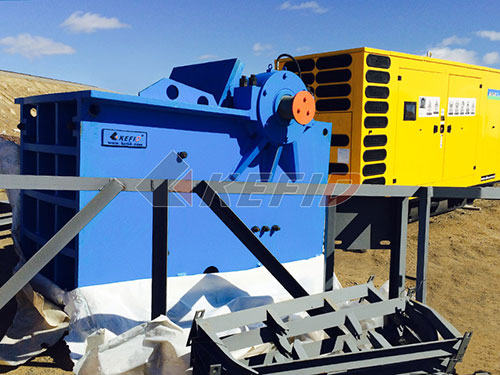

The Critical Role of Reduction Ratio in Crushing Operations
In the realm of mineral processing, totale produksie, en herwinningsbedrywe, crushing stands as a fundamental unit operation for size reduction of raw materials like rock and ore. At the heart of understanding and optimizing this process lies a seemingly simple yet profoundly significant parameter: the Reduction Ratio (RR). This article delves into the concept of reduction ratio for crushers – its definition, calculation methods, beïnvloedende faktore, practical implications for equipment selection and circuit design, and its overarching importance in achieving efficient and economical comminution.
1. Defining Reduction Ratio: Beyond Simple Division
In sy kern, the reduction ratio quantifies the degree of size reduction achieved by a crusher during a single pass or stage of crushing. It represents the relationship between the feed size entering the crusher and the product size exiting it.
Common Calculation Methods:
Ratio Based on Feed Opening & Ontladingsinstelling: Often used for primary jaw or gyratory crushers where discharge openings are adjustable.
`RR = Gap Feed Opening Size (G) / Geslote kant-instelling (CSS)`
(bv., If G = 1500 mm and CSS = 150 mm, RR ≈ 10)
Ratio Based on Particle Sizes (T80 Method): A more representative method reflecting actual particle size distributions rather than theoretical gaps.
`RR = Feed Size at which 80% passes (F80) / Product Size at which 80% passes (P80)`
(bv., If F80 = 500 mm and P80 = 50 mm after crushing, RR = 10)
Nominal Ratio: Sometimes used based on manufacturer specifications relating maximum feed size to maximum product size under ideal conditions.
The T80 method is generally considered the most accurate reflection of actual crushing performance as it accounts for variations in feed gradation and particle shape.
2. Why Reduction Ratio Matters: The Engine of Efficiency
Understanding and controlling reduction ratio is critical for several reasons:
Keuse van toerusting & Grootte: Different types of crushers are inherently designed for specific reduction ratio ranges:
Primêre Brekers (Jaw/Gyratory): Typically handle large feed sizes (>1m) achieving RRs between 4:1 aan 9:1.
Sekondêre Brekers (Cone/Impact): Designed for moderate feed sizes achieving higher RRs