
Kaakbreker te koop

The Ultimate Guide to Jaw Crushers: Krag, Prestasie, and Purchasing Wisdom
In die meedoënlose wêreld van mineraalverwerking, totale produksie, sloping herwinning, en mynbou, raw materials rarely arrive ready-made. They demand transformation – reduction from formidable boulders or hefty chunks into manageable, usable sizes. Standing as the undisputed workhorse at the very frontline of this size reduction battle is the jaw crusher. Its robust simplicity, formidable power, and proven reliability have cemented its place as the primary crusher of choice across countless industries globally. If you're navigating the market for heavy-duty crushing equipment, understanding jaw crushers is paramount.
Understanding the Mighty Jaw: Core Principles
In sy hart, a jaw crusher operates on a beautifully straightforward yet incredibly effective principle: kompressie. Imagine two rigid jaws – one stationary (vaste kakebeen), the other moving (swaai kakebeen) – positioned in a "V" konfigurasie. The material to be crushed is fed into this top-opening "V", termed the crushing chamber.
Die verpletterende siklus: As the swing jaw moves cyclically towards the fixed jaw (driven by an eccentric shaft), it exerts immense compressive force on the rock or ore trapped between them.
Breakage: This force exceeds the material's natural strength, causing it to fracture and break.
Ontslag: The broken fragments fall downward through the narrowing gap at the bottom of the chamber (the discharge opening or CSS - Geslote kant-instelling). The size of this gap determines the final product size.
Repetition: The swing jaw then retracts, allowing new material to enter the chamber from above. The cycle repeats relentlessly.
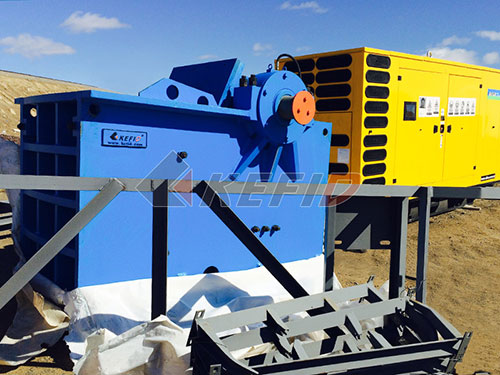
This fundamental mechanism delivers exceptional efficiency in breaking hard, abrasive materials with minimal fines generation compared to impact crushers – a key advantage for many applications requiring specific particle shapes.
Anatomie van krag: Components Explained
A jaw crusher's ruggedness stems from its critical components:
1. Raam: The heavy-duty structural backbone, typically made of welded steel plate or cast steel sections, designed to withstand immense crushing forces and vibrations.
2. Vaste kakebeen sterf: A replaceable wear liner bolted securely to the front of the frame. It forms one side of the crushing chamber and bears significant abrasion.
3. Swing Jaw Die: The moving counterpart liner bolted onto the swing jaw assembly (also called movable jaw). This is where most direct impact and wear occur.
4. Swing Jaw Assembly: Comprising