
Jaw Crusher-animasie

Beyond the Crunch: How Jaw Crusher Animations Revolutionize Understanding and Optimization
The relentless reduction of rock and ore lies at the very foundation of modern civilization – from the aggregates forming our roads and buildings to the minerals fueling our industries. At the heart of this primary size reduction process stands an enduring workhorse: die kakebeenbreker. While its core principle – a fixed jaw opposing a moving jaw – appears deceptively simple on blueprints or static diagrams, truly grasping its intricate dynamics under load has traditionally required hands-on experience or complex mathematical modeling. This is where jaw crusher animations emerge as an indispensable tool, transforming abstract concepts into vivid visual narratives that unlock profound understanding for operators, ingenieurs, designers, sowel as studente.
Visualizing the Invisible Dance
A static diagram can show you where components are located; an animation shows you how they interact dynamically under operating conditions:
1. The Eccentric Shaft's Pivotal Role: Animations brilliantly illustrate how rotation of the eccentric shaft translates into that characteristic elliptical motion at the top of the movable jaw (swaai kakebeen). You see precisely how this motion generates both vertical displacement (essential for drawing material down into the crushing chamber) and horizontal displacement (applying compressive force).
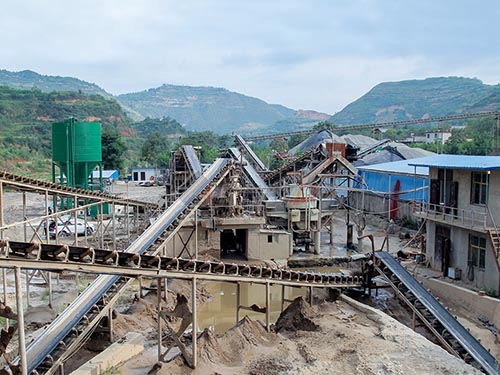
2. Material Flow Dynamics: Witnessing simulated rock particles enter the chamber is key. Animations show how material slides down between the jaws as they open ("open side setting"), then gets progressively nipped and crushed as they close ("geslote kant instelling"). The critical importance of proper feed size relative to gap settings becomes visually undeniable.
3. Nip Angle Nuances: This fundamental angle formed between the fixed and moving jaws dictates efficiency and wear patterns but is hard to conceptualize statically. Animations dynamically demonstrate how different nip angles affect material trajectory within the chamber – too steep risks ejection; too shallow reduces capacity.
4. Beroerte kenmerke: The amplitude and shape of the movable jaw's stroke profoundly influence capacity and product gradation. Animations allow clear visualization of differences between aggressive strokes optimized for harder materials versus gentler strokes for softer ones.
5. Toggle Plate Mechanics: Often overlooked but vital for safety and overload protection, animations vividly depict how toggle plates transmit crushing force from one linkage point to another and their crucial role in allowing momentary yield during uncrushable events.
6. Wear Progression Visualization: Sophisticated animations can simulate wear over time on liners (kakebeen plate), showing preferential wear zones based on particle