
Kakebeen Vloeker

'n Kaakbreker is 'n primêre breekmasjien wat in mynbou gebruik word, steengroef, and construction industries to reduce large rocks, ertse, or other hard materials into smaller, meer hanteerbare stukke. Hier is 'n gedetailleerde uiteensetting:
Hoe dit werk
1. Verpletteringsmeganisme:
- A jaw crusher consists of two vertical jaws—one fixed (stilstaande) and one movable (swaai kakebeen).
- The movable jaw exerts force on the material by pressing it against the fixed jaw.
- Material is crushed progressively until small enough to pass through the bottom gap (afvoer opening).
2. Sleutelkomponente:
- Vaste kakebeenplaat: Attached to the crusher frame.
- Movable Jaw Plate: Driven by an eccentric shaft (pitman) that creates an elliptical motion.
- Wissel plaat: Safety mechanism to protect the crusher from overload.
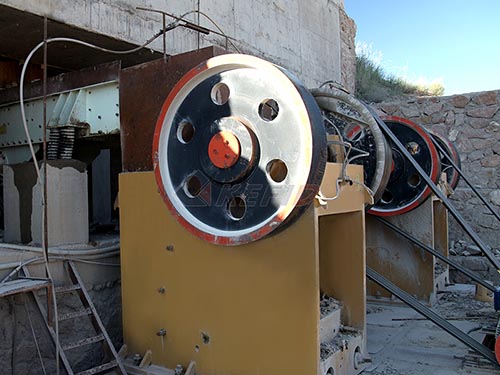
- Vliegwiel: Stores energy for consistent crushing force.
Tipes kakebeenbrekers
1. Blake (Dubbel wissel): Older design with a pivoted swing jaw; robust but less efficient.
2. Dodge (Enkelwissel): Movable jaw pivots at the bottom; simpler but limited in capacity.
3. Universal (Overhead Eccentric): Modern single-toggle design with higher efficiency and adjustability.
Aansoeke
- Primary crushing of hard materials (graniet, basalt, ystererts).
- Recycling concrete and demolition waste.
- Laboratory-scale crushing for research.
Voordele
- Simple structure, low maintenance.
- High reduction ratio (tipies 6:1 aan 8:1).
- Handles abrasive materials well.
Nadele
- Less efficient than gyratory crushers for high-capacity needs.
- Wear-prone parts (kakebeen plate) require regular replacement.
Onderhoudswenke
- Regularly check jaw plates for wear and replace as needed.
- Lubricate bearings and eccentric shafts to prevent overheating.
- Monitor discharge settings to ensure optimal particle size output.
Would you like details on sizing, operational parameters, or comparisons with other crushers (bv., keël/impak)?