
Breker Batu
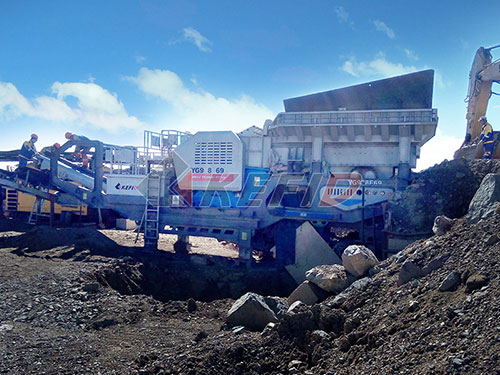

The Indispensable Powerhouse: Unveiling the Stone Crusher
In the foundational realms of construction, mynbou, en infrastruktuurontwikkeling, few machines are as fundamentally crucial as the stone crusher (often referred to regionally as Crusher Batu). This robust piece of engineering serves as the primary workhorse, transforming colossal boulders and rocky debris into precisely sized aggregates essential for countless applications. Verstaan die funksie daarvan, tipes, and significance reveals why it remains an irreplaceable pillar of modern industry.
Die Kernmissie: Grootte verkleining
In sy wese, a stone crusher applies immense mechanical force to break down large rocks into smaller fragments. This process, known as comminution, involves compression, impak, skeer, or attrition – or often a combination – to fracture the material. The primary goal is to achieve specific particle sizes required for subsequent use:
1. Aggregates: Crushed stone forms the bedrock (literally and figuratively) of concrete production (sand, gruis), padbasislae, spoorweg ballas, and drainage systems.
2. Grondstofverwerking: In mining operations, crushers reduce extracted ore to manageable sizes for further processing like grinding or chemical treatment.
3. Herwinning: Modern crushers are vital for processing demolition waste (beton, asfalt) into reusable recycled aggregates.
4. Landscaping & Specialty Applications: Producing decorative stones or specific grades for agricultural lime or other industrial minerals.
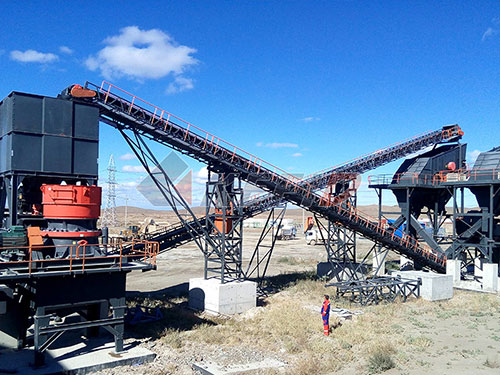
The Mechanics: How Force Transforms Rock
While designs vary significantly between types (discussed next), the core principle involves forcing rock between rigid surfaces:
Kompressie Brekers (bv., Kaakbrekers): Utilize two rigid jaws – one fixed, one moving – that create a progressively narrowing V-shaped chamber. Rock is fed into the top and crushed by the squeezing action as the moving jaw cycles.
Impak Brekers (bv., Horisontale skag-impaktors - HSI): Employ high-speed rotors fitted with hammers or blow bars that violently strike incoming rock against breaker plates or aprons. This rapid impact shatters the material.
Kegelbrekers: Feature a gyrating inner cone within a fixed outer concave bowl liner. Rock is fed into the top and crushed continuously as it falls through the narrowing gap between the mantle and concave.
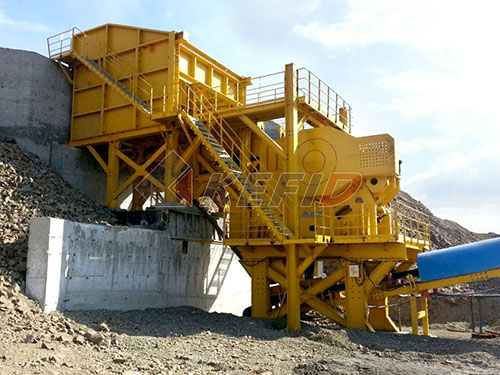
Rolbrekers: Use two counter-rotating cylinders that pull rock fragments into the gap between them, crushing primarily by compression.
Each mechanism offers distinct advantages