
Sementbreekaanleg

The Critical Role of Crushing in Cement Production
Cement manufacturing is a complex process transforming raw materials into the vital binding agent used globally in construction. While pyroprocessing in the kiln often receives significant attention, the initial stages of raw material preparation are equally fundamental. Onder hierdie, the Cement Crushing Plant serves as the indispensable first step, setting the stage for efficiency and quality throughout the entire production line.
Purpose and Significance:
The primary objective of a cement crushing plant is to reduce large chunks of quarried raw materials – predominantly limestone, klei, skalie, mergel, or sand – into smaller fragments suitable for subsequent processing. reasons for its critical importance include:
1. Grootte verkleining: Raw materials extracted from quarries are often massive boulders or slabs (tot 1 meter or more). Crushing reduces them to manageable sizes (typically 100-250mm after primary crushing), essential for efficient handling by conveyors and feeding into grinding mills.
2. Homogenisering: Crushing helps create a more uniform particle size distribution within the raw material feed stream. This consistency is vital for stable operation in downstream processes like grinding and blending.
3. Bevryding: For materials containing different components (bv., limestone with clay nodules), crushing helps liberate these constituents, facilitating better mixing during blending.
4. Slyp doeltreffendheid: Pre-crushing significantly reduces the energy required by downstream grinding mills (raw mills and cement mills). Smaller feed particles are much easier and less energy-intensive to grind into fine powder.
5. Hantering & Vervoer: Smaller fragments are far easier and safer to transport via conveyors and store in stockpiles compared to large boulders.
Components of a Cement Crushing Plant:
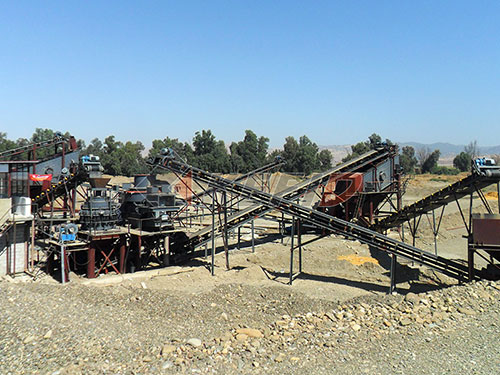
A typical plant involves several stages and equipment types:
1. Primêre Brekers: These handle the largest feed sizes directly from the quarry dump trucks or loaders.
Kaakbrekers: Robust machines using compressive force between fixed and moving jaws; ideal for hard and abrasive materials like granite or basalt supplements.
Giratory Brekers: Similar principle but conical; offer high capacity for large-scale operations handling softer rocks like limestone.
Impak Brekers: Utilize high-speed impact forces; effective for softer materials like limestone or clay/shale where cubicity is desired.
2. Sekondêre Brekers: Further reduce material size after primary crushing.
Impak Brekers (Horisontale skag-impaktors